Over the last 48 hours, search interest for 'ethical AI art style' has exploded. This isn't a coincidence. On July 4, 2026, a company called ArtisanAI launched 'Styleguard,' a tool for artists to license their styles. The same day, word got out about Midjourney's new '--style-dna' parameter. Suddenly, everyone is talking about the right way to be inspired by an artist's work without infringing on it.
But new tools are only part of the answer. The real solution isn't a new parameter or a marketplace — it's a better creative process. The habit of prompting with 'in the style of [artist name]' is a crutch. It produces generic results, creates ethical headaches, and robs you of creative control. There is a better way, and it leads to more original, higher-quality work.
Why 'in the style of [artist name]' is a creative dead end
Relying on an artist's name in your prompt is a shortcut with serious drawbacks. First, the ethical and legal ground is shaky at best, especially for living artists. Second, it flattens a complex body of work into a stereotyped 'vibe,' often missing the nuance of what makes the art great. The AI gives you a caricature of the style, not a thoughtful interpretation. Finally, it limits your control. You can't easily dial up the brushwork while dialing down the color saturation; you're stuck with the AI's all-or-nothing interpretation. To create truly unique work, you need to speak the language of art, not just name-drop artists.
The deconstruction workflow: how to build a reusable 'style kit'
Great artists have always learned from the masters by studying their techniques, not by tracing their work. Your AI should do the same. Instead of asking for a 'Van Gogh,' you should ask for the specific elements that define his style: a palette of vibrant yellows and deep blues, thick impasto brushstrokes, and swirling, energetic compositions. This is the deconstruction workflow. You break any style down into its core components, turning them into a descriptive vocabulary your AI can understand. In MyUP, you can save these components as a reusable Brandkit. This 'style kit' becomes a powerful tool you can apply to any project, giving you consistent, sophisticated results that are inspired by a master's technique but are entirely your own creation.
Step 1: Deconstruct the color palette
Color is a style's most immediate signature. Start by finding a representative work by the artist who inspires you. Use a browser extension or an online tool to pick out the 5-7 most dominant colors. Get their hex codes. This isn't about matching every single shade, but capturing the overall mood and relationship between the colors.
In MyUP, you can build this palette directly into your Brandkit. Simply create a new Brandkit, name it after the style you're building (e.g., 'Impressionist Sunrise Style'), and add the hex codes to the color palette section. From now on, any content you create using this Brandkit can automatically pull from these exact colors, ensuring perfect consistency without you ever having to copy-paste a hex code again.
Step 2: Deconstruct texture, medium, and brushwork
How was the art originally made? Is it a smooth vector illustration or a gritty, textured screen print? Learning the vocabulary of physical media is a superpower for AI art. Instead of a generic 'painting' prompt, get specific. Use terms like:
- 'Thick impasto brushstrokes'
- 'Subtle pointillism dots'
- 'Coarse woodblock print texture'
- 'Halftone dots and slight misregistration of a risograph print'
- 'Smooth, airbrushed gradients'
- 'Cross-hatching linework'
These descriptive phrases give you precise control over the final look and feel. You can save your most effective phrases as prompt snippets in your MyUP Brandkit. For example, a zine-inspired style kit could include a prompt snippet for 'gritty photocopy texture, high contrast, paper grain'.
To see this in action, try generating a poster that relies heavily on a specific print texture. The workflow below is built to replicate the distinct feel of a retro zine.
Workflow code: #myup-msop-hlxf
Retro Zine Style Event Poster
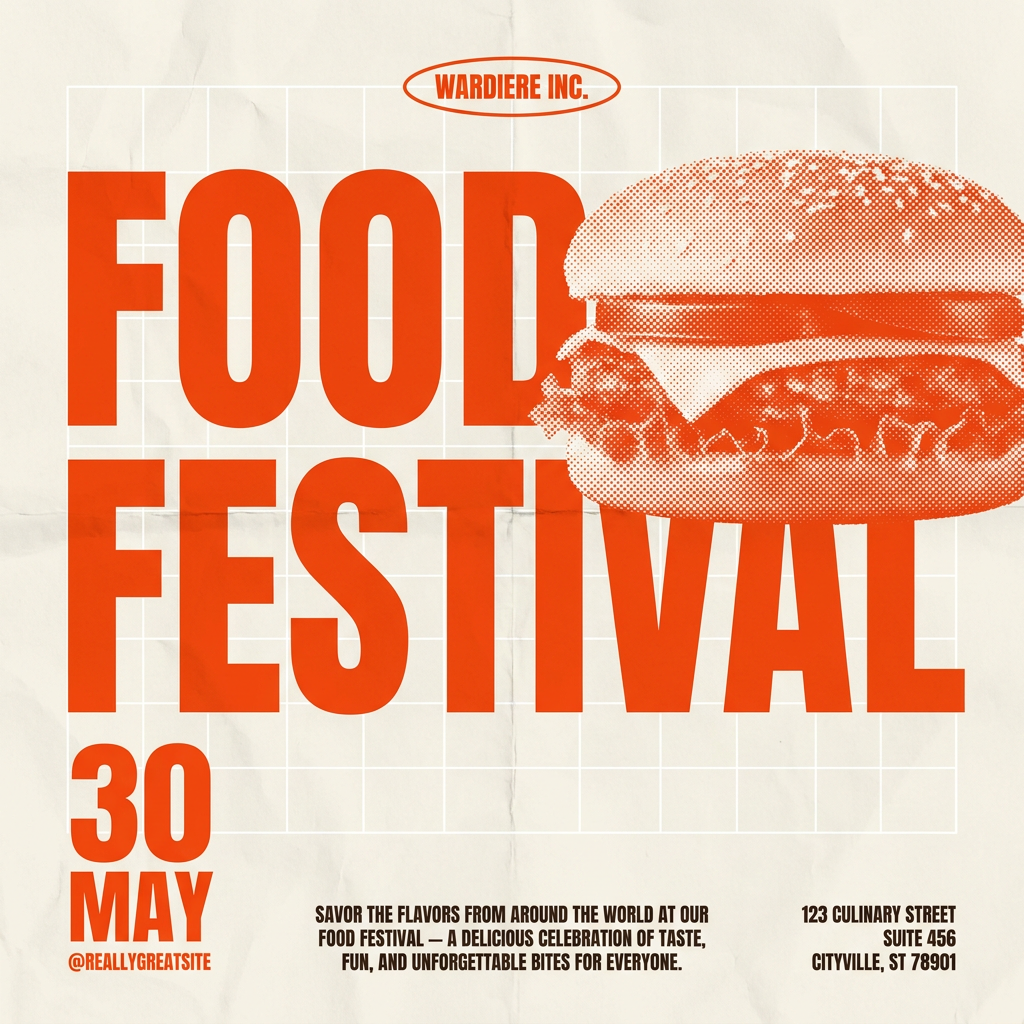
Give your social posts a gritty, analog zine aesthetic. It layers a crumpled paper texture and a subtle grid over a warm cream background to make any event graphic look like a tactile, photocopied flyer. Perfect for DIY gigs and bold promos.
Regenerate using your own assets.
Step 3: Deconstruct composition and lighting
Composition is the architecture of an image. How are the elements arranged? Is it chaotic and crowded, or minimalist and centered? Does it follow a clear grid? Similarly, how is the scene lit? Is it dramatic and high-contrast, or soft and diffused?
Build a vocabulary for these elements, too:
- Composition: 'symmetrical composition,' 'rule of thirds,' 'dynamic diagonal lines,' 'golden spiral,' 'flat lay perspective,' 'minimalist negative space.'
- Lighting: 'dramatic chiaroscuro lighting,' 'soft, diffused morning light,' 'golden hour backlighting,' 'harsh direct flash photography,' 'neon ambient glow.'
An elegant, minimalist product shot, for example, relies entirely on composition and lighting for its impact. This workflow for an advertising poster uses prompts that define a clean, focused composition to create a high-end feel.
Workflow code: #myup-fy77-jljs
Minimalist Elegant Product Advertising Poster
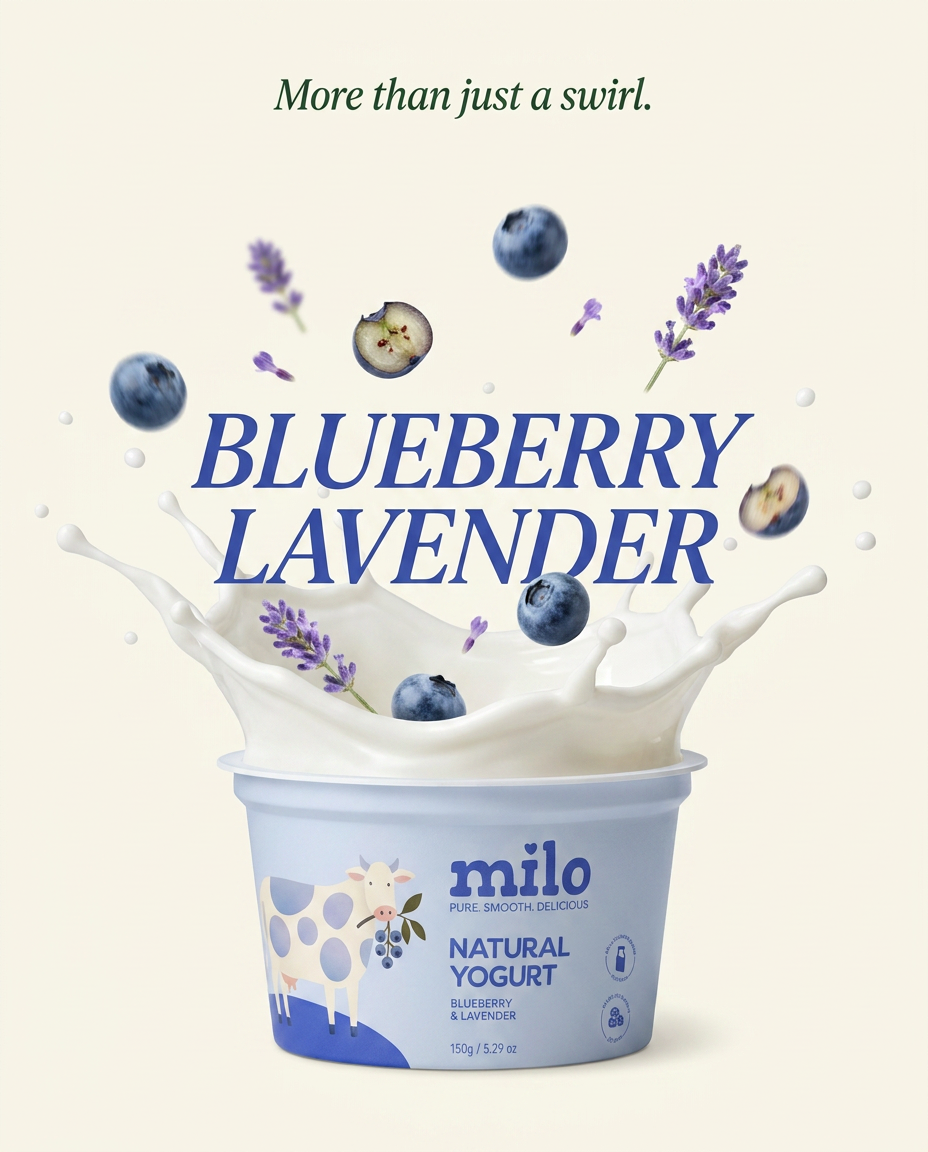
Turn any product shot into a high-end editorial ad. It places your item against a soft cream background with airy spacing and adds elegant, small serif typography at the top. Great for wellness or luxury brands wanting a calm, minimal aesthetic.
Regenerate using your own assets.
Putting it together: create original art with your style kit in MyUP
Now, you combine these deconstructed elements in MyUP. Your 'Impressionist Sunrise Style' Brandkit now contains a specific color palette and prompt snippets like 'visible, thick impasto brushstrokes' and 'swirling, energetic motion'.
Here's how to use it:
- Start a new creation in MyUP.
- Select your custom style Brandkit. MyUP automatically makes its colors and saved prompts available.
- Write your subject prompt, for example, 'a futuristic city skyline at dawn'.
- Add your stylistic prompt snippets from the Brandkit. Your final prompt might be: 'A futuristic city skyline at dawn, visible thick impasto brushstrokes, swirling energetic motion, dramatic golden hour backlighting.'
MyUP applies your Brandkit, using your defined style to generate something entirely new. The result is not a copy of Van Gogh's 'The Starry Night'; it's your own concept, executed with the techniques you studied and codified. The human creator (you) provides the concept and validates the output; MyUP handles the production. This is how you move from being a prompt operator to an art director. This process is essential for creating everything from consistent AI illustration styles to more abstract, on-brand conceptual art.
Use the workflow below to generate a poster with a strong compositional grid, and try applying your own deconstructed style elements to it.
Workflow code: #myup-n0bi-2wzk
Bold Editorial Grid Poster
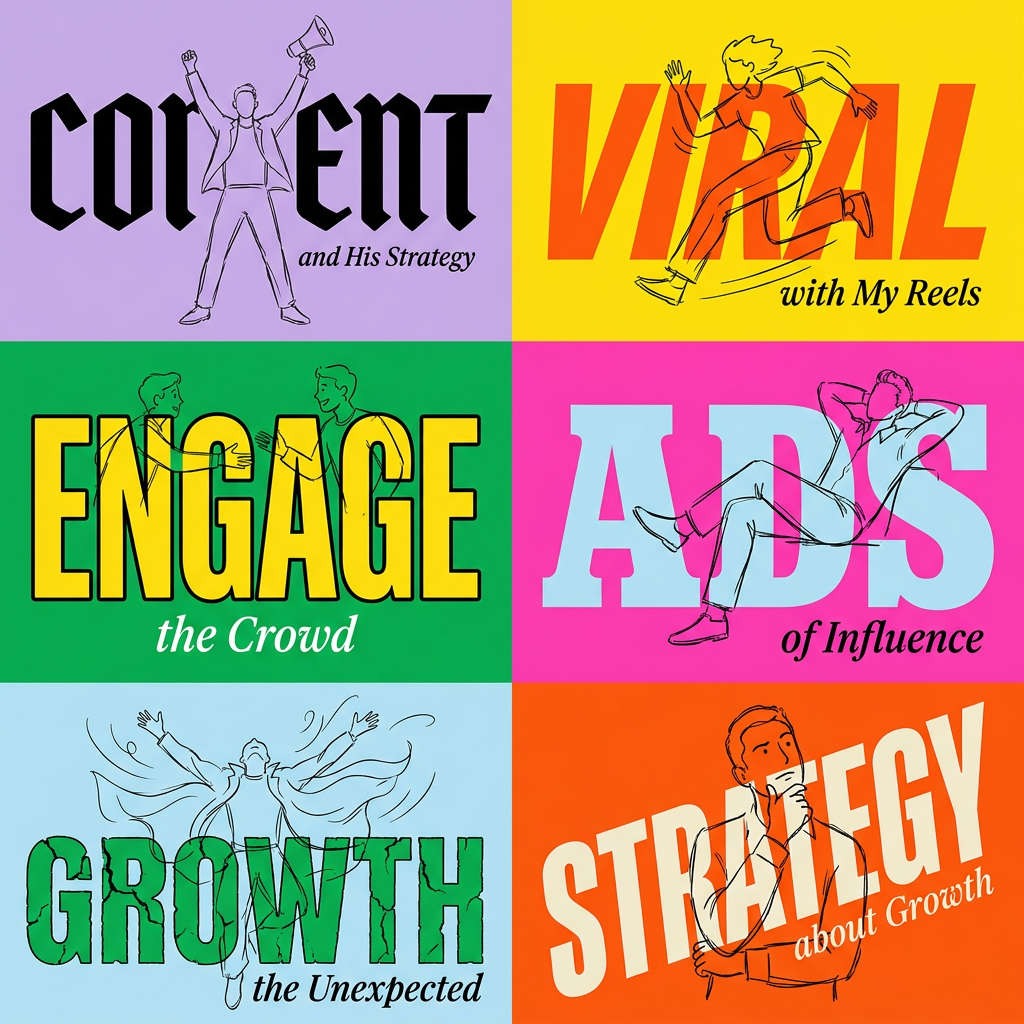
Create striking 2x3 editorial posters with six seamless, flat-color square cards in a perfect 4:5 grid. There are absolutely no gaps between the blocks, giving your content a bold, high-contrast magazine layout. It looks incredibly clean on any social feed.
Regenerate using your own assets.
Learn from the masters, don't just copy them
The conversation about AI art ethics isn't just about what tools can do; it's about how we choose to use them. Deconstructing artistic styles into their fundamental components—color, texture, composition—is more than just an ethical workaround. It's a more disciplined, more creative, and ultimately more powerful way to work. It forces you to truly see and understand the art that inspires you. By building these elements into a reusable MyUP Brandkit, you're not just creating images; you're building a system for originality and consistency. You're learning the craft, not just referencing the catalog.