You know the drill. You spend twenty minutes wrestling with a prompt in Midjourney to get the perfect image for slide one of your Instagram carousel. You love it. Then, you spend the next forty minutes trying to replicate that magic for slides two through five, only to end up with a disconnected mess of slightly-off characters and jarringly different backgrounds.
This problem has become so universal that the entire industry is racing to fix it. You saw the chatter in June 2026 as creators voiced their frustration, and you probably saw Adobe's announcement on June 24th for its new 'Structure Reference' feature in Firefly, designed to enforce compositional consistency. These are good steps, but they only solve half the problem. Getting five consistent images is just the beginning. You still have to manually pull them into Canva or Figma, apply your brand templates, add your text, and hope it all looks cohesive.
The professional method isn't a better image generator; it's a better workflow. A single, automated process that creates the visual sequence *and* lays it out into finished, on-brand assets. This is how you stop stitching posts together and start producing at scale. Here’s the workflow to do it.
Workflow code: #myup-3sro-edbt
Brand Clothes Post

Turn any outfit photo into a high-end fashion promo poster. It centers your subject in a full-body shot against a dark, dramatic studio backdrop, perfectly cropped for social feeds. It gives your apparel a moody, editorial look instantly.
Regenerate using your own assets.
The two problems you need to solve: visual story and brand system
A great carousel isn't just a collection of images; it's a coherent experience. To generate one with AI, you have to solve two distinct problems at once:
1. Narrative Consistency (The Visual Story)This is about making sure the images feel like they belong to the same series. The subject, lighting, style, color grading, and composition must be stable from one slide to the next. This is the challenge that features like Midjourney's --sref and Adobe's Structure Reference are designed to tackle. They help ensure that if slide one is a 'moody, cinematic shot of a coffee cup,' slide two doesn't look like a 'bright, cartoon illustration of tea.' Without this, the story falls apart and the viewer loses interest.
2. Brand Consistency (The Brand System)This is the part most AI tools completely ignore. Once you have your five consistent images, they need to look like *your* brand. That means applying your specific fonts, your exact hex color codes, your logo, and your established layout templates. The 45-minute shuffle—generating in one app, downloading, then manually designing in another—is where brand consistency breaks down. It’s tedious, inefficient, and invites small errors that dilute your visual identity.
A true AI carousel generator doesn't just make images. It understands your brand system and applies it automatically, solving both problems in a single pass.
The one-workflow method for generating a complete carousel
Instead of thinking in separate tasks (generate, then design), a workflow approach combines them into one fluid operation. In MyUP, this is built around your Brandkit—a saved visual identity that the AI uses for every creation.
Here’s how the process works from start to finish:
Step 1: Set the Carousel ConceptYou start with a single brief. Instead of writing five different prompts, you write one that describes the entire carousel. For example: "Create a 5-slide Instagram carousel about the benefits of our new moisturizer. Start with a texture shot, then a product-in-hand shot, then a lifestyle shot of someone applying it, and end with the full product line."
Step 2: Generate the Visual SequenceThe MyUP workflow takes your brief and generates all five images in a single batch. Because it's a unified process, it maintains stylistic and thematic consistency across the entire set. There's no need to manually reference previous images; the workflow is designed for sequential content.
Step 3: Automate the Brand LayoutThis is where the workflow replaces the manual design step. As the images are generated, they are automatically fed into your pre-designed carousel templates stored in your Brandkit. Your logo is placed in the top right, the headline font is applied, and the background color matches your brand palette—all without manual intervention. The user's role shifts from tedious production to creative validation.
Step 4: Review and ExportThe output is a complete, ready-to-post carousel. You can review the slides, adjust any text overlays, and export the finished assets in seconds. The entire production, from prompt to final PNGs, is handled in one place.
Case study: A 5-slide fashion carousel in 3 minutes
Let's make this concrete. A fashion brand needs a carousel for a new collection. The old way is a time sink. The workflow method is a production machine.
Using the 'Brand Clothes Post' workflow (Workflow code: #myup-3sro-edbt), the input is simple: "A 5-slide carousel for a new minimalist wool sweater in charcoal grey. Show a close-up of the knit texture, the sweater on a hanger, a model wearing it in a cozy cafe, a detail of the cuff, and the sweater folded neatly."
In about three minutes, the MyUP workflow delivers:
- Slide 1: A macro shot of the charcoal wool, placed in a template with the headline "Feel the Difference."
- Slide 2: The sweater on a wooden hanger against a clean background, with a text overlay listing "100% Merino Wool."
- Slide 3: The lifestyle shot, perfectly framed in a branded slide.
- Slide 4: A detail shot of the ribbed cuff, with a small caption.
- Slide 5: The final product shot with a call-to-action: "Shop the Collection."
Each slide automatically includes the brand's logo and uses its defined fonts and colors. The entire asset is visually consistent and on-brand, created in less time than it takes to get a single image right in a standalone generator. For a more editorial, high-fashion look, a workflow like the 'High-End Editorial Fashion Magazine Cover' can be used instead. (Workflow code: #myup-yk1h-uqy8)
High-End Editorial Fashion Magazine Cover
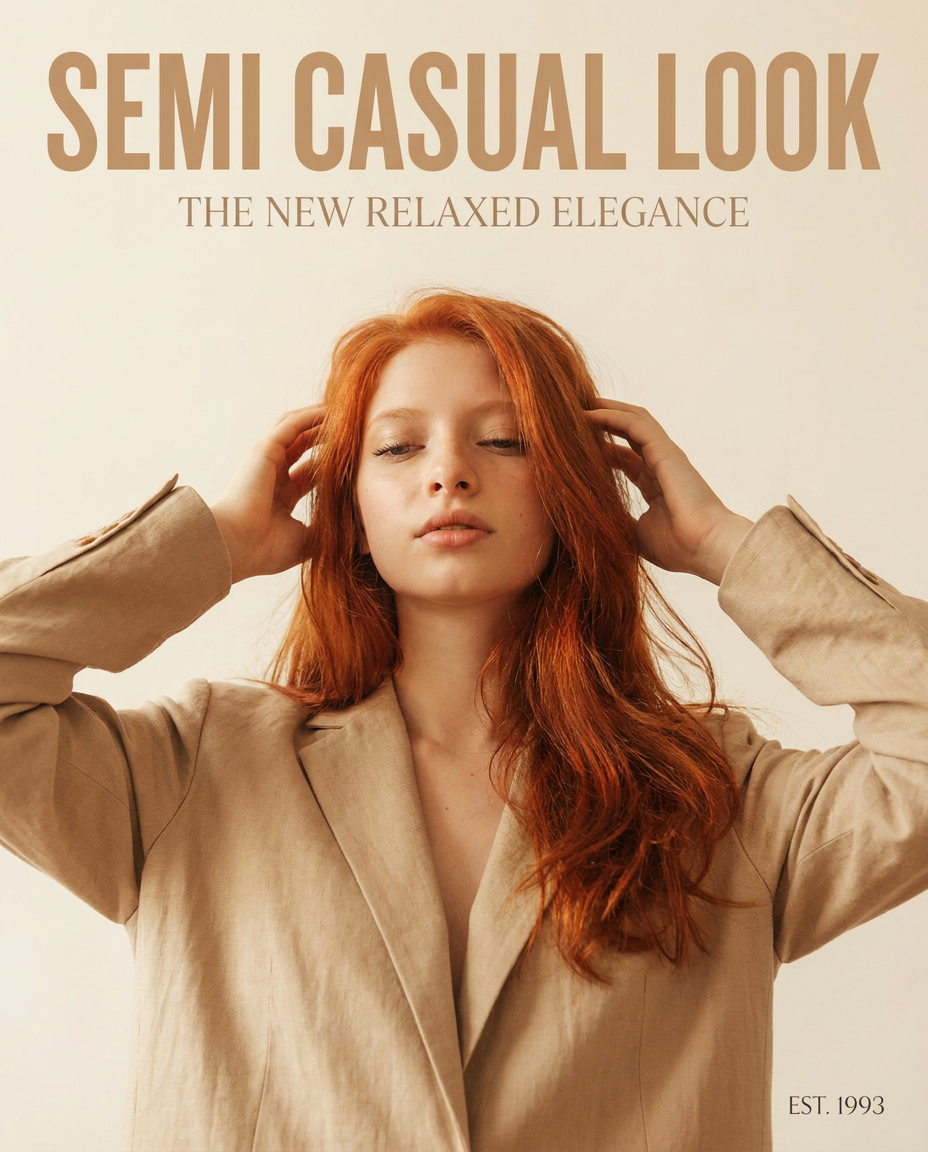
Drop in any portrait and turn it into a high-end editorial magazine cover. It frames your subject beautifully with relaxed, high-fashion posing and soft styling for a polished print aesthetic.
Regenerate using your own assets.
Beyond carousels: Applying the workflow to other multi-asset campaigns
This workflow-first approach to content creation isn't limited to Instagram carousels. Once you stop thinking about creating single assets and start thinking in terms of automated systems, you can apply the same logic to other repetitive production tasks.
The same core process—generate a consistent visual series, then automatically apply branded templates—can be used to:
- Create Pinterest Pin Sets: Generate 5-10 vertical images for a new product or blog post and instantly turn them into branded, ready-to-pin graphics.
- Develop Ad Creative Variations: Produce a core visual concept and have the workflow automatically adapt it into multiple ad formats (square, story, landscape) with the same branding.
- Build Video Storyboards: Quickly generate a sequence of keyframes for a video ad concept, ensuring a consistent look and feel before moving into production. Read more about workflows for true brand consistency.
By defining the system once with a Brandkit and a workflow, you move from being a manual creator of individual posts to an operator of a content production engine. You can even use this approach to feed a higher-level system, like an AI agent that automates your social media calendar.