The AI creative community is buzzing about Midjourney v7's new style reference parameter, `--sref`, released in late April 2026. It promises one-click aesthetic consistency by mimicking a reference image. But if you've tried using it for a real marketing campaign, you've likely discovered its core limitation: a consistent style is not the same as a consistent brand.
This article explains why that single parameter isn't a business solution and shows you a fundamentally better workflow for creating campaign visuals you can actually rely on.
Yes, Midjourney's new style reference is clever. Here's why it's not a brand solution.
Let's be clear: the `--sref` feature is an impressive piece of engineering. It does an excellent job of capturing the general vibe, color palette, texture, and overall mood of a source image. For artistic exploration, mood boarding, or creating a single, striking image, it's a fantastic shortcut. It allows for a kind of creative alchemy, blending the content of your text prompt with the aesthetic of your visual reference.
The problem for businesses arises from this very strength. The `--sref` parameter is a blunt instrument. It mashes all visual information—character, product, background, lighting, composition—into one monolithic 'style'. It cannot distinguish between the elements you want to keep constant (like a character's face or a product's label) and the elements you want to vary (like the background or pose). For a brand that needs to produce a dozen ads with the same model wearing different outfits, this is a fatal flaw. You don't need a vibe; you need control.
The real job: why brand consistency is more than just a 'style'
To produce a cohesive visual campaign, you need to manage multiple independent variables. A single 'style' reference just won't cut it. True brand consistency requires granular control over several distinct components:
- Character and Model Cohesion: Your brand's human face—whether a realistic model or a stylized mascot—must have the same facial features, hair, and build across every single image. This is non-negotiable for building audience recognition and trust.
- Product Integrity: An e-commerce brand cannot afford for its product to look slightly different in every shot. The shape, color, texture, and branding must be identical and accurate every time.
- Consistent Composition: Your campaign might rely on a specific visual structure, like tight headshots, a certain rule-of-thirds framing, or a consistent use of negative space. This compositional DNA needs to be repeatable on demand.
- Controlled Lighting and Mood: Is your brand's look defined by dramatic studio lighting, soft golden-hour sun, or vibrant neon glow? This isn't just a color palette; it's a deliberate lighting choice that must be maintained for the campaign to feel unified.
Attempting to manage all these distinct elements with a single reference image is like trying to conduct an orchestra with a single drum. You might get the right rhythm, but you lose all the harmony and detail.
Approach 1: The Midjourney `--sref` shortcut
The typical `--sref` workflow is seductive in its simplicity. You find an image you like, feed it to Midjourney to get a reference, and append `--sref [URL]` to your text prompt. The tool then attempts to apply the 'style' of that image to your new subject.
The result is often a frustrating game of chance. You might get a beautiful image that captures the mood perfectly, but the model's face is completely different. Or the product is right, but the background from the reference image has bled into the new scene in a strange, unintended way. For a business user on a deadline, this unpredictability is a workflow killer. You spend more time re-rolling and editing than you would have spent on a traditional photoshoot. It's exploration, not production.
Approach 2: The structured brand workflow in MyUP
A professional workflow treats brand consistency as a system, not a shortcut. Instead of bundling all visual attributes into one 'style', a structured workflow separates them into independent, controllable inputs. This is the core principle behind MyUP's templates.
Consider our "K-pop Streetwear Series" template. Workflow code: #myup-vxlj-1uhf. It doesn't ask for a single style image. Instead, it breaks the creative process into logical, repeatable steps with distinct fields for:
K-pop Streetwear Series
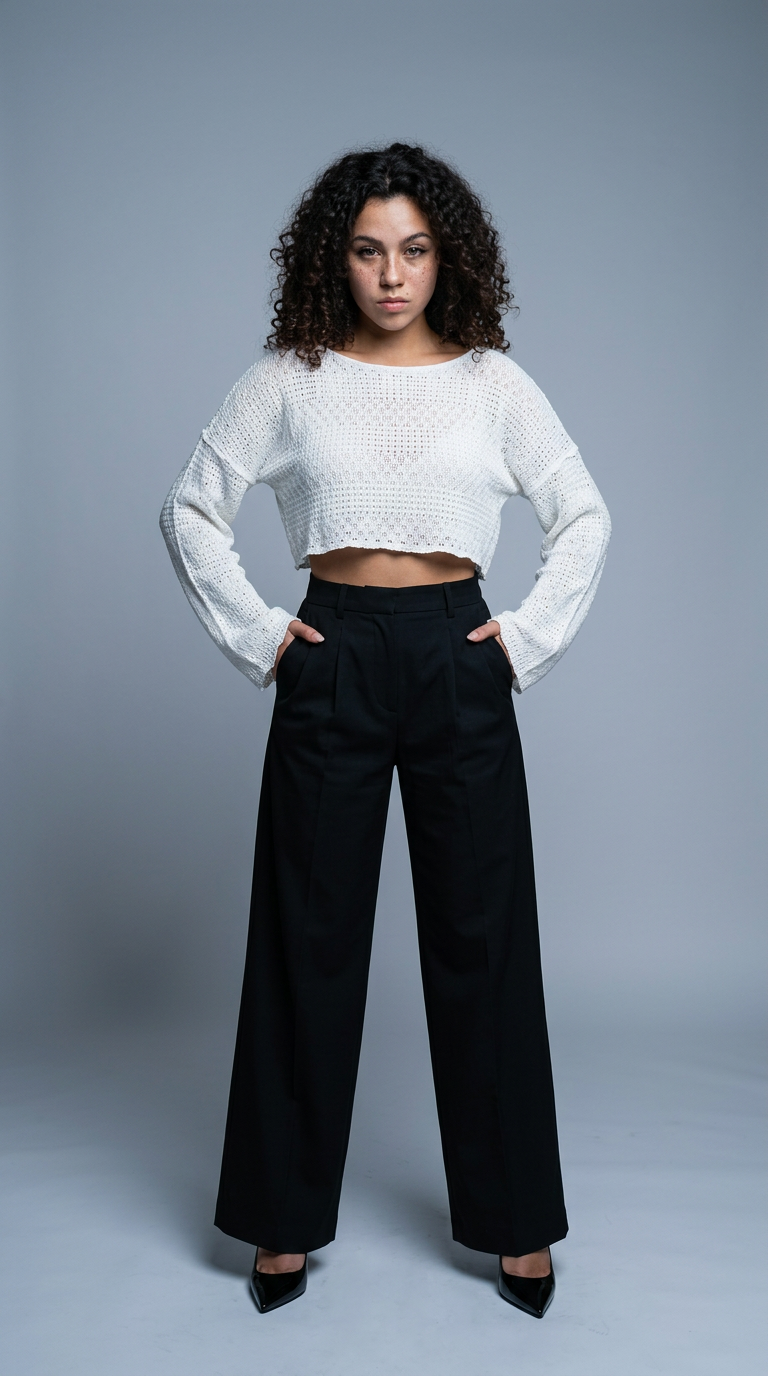
Drop in your character to get a complete streetwear fashion lookbook. It outputs five distinct editorial shots, including sharp close-ups, dramatic low-angle power poses, and realistic walking motion. Super clean way to show off custom apparel designs.
Regenerate using your own assets.
- Character Details (e.g., 'K-pop idol with silver hair, sharp jawline')
- Clothing Style (e.g., 'oversized black hoodie, cargo pants')
- Setting (e.g., 'neon-lit alley in Seoul at night')
- Photography Style (e.g., 'hyperrealistic, cinematic lighting, 85mm lens')
This structure gives you surgical control. You can generate a dozen images of the exact same character simply by changing the 'Clothing Style' input for each one. The lighting, setting, and model's face remain locked in. This is how you build a real campaign. This methodical approach is also essential for creating things like consistent AI characters for storytelling or brand mascots.
When to use a prompt vs. when to use a workflow
Choosing the right tool depends entirely on the job. Acknowledging the tradeoffs is key to working efficiently. Neither approach is universally 'better,' but one is clearly superior for business-critical asset production.
Use a Midjourney-style prompt for:
- Creative exploration and brainstorming new visual directions.
- Generating one-off artistic images for mood boards or internal presentations.
- Projects where serendipity and unexpected results are a feature, not a bug.
Use a MyUP structured workflow for:
- Multi-asset advertising and social media campaigns.
- E-commerce product galleries that require absolute consistency.
- Any project that needs to be handed off to a team member to execute without deviation.
- Scaling up production of on-brand visuals, from animated video ads to static product shots.
For professional teams, the choice is clear. A workflow provides the reliability, scalability, and brand governance that simple prompting lacks. You can explore our pricing plans to see how workflows can fit into your team's production process.
Your brand needs a system, not just a style button
Midjourney's `--sref` feature is a powerful tool and a welcome step toward more controllable AI generation. But for brands, marketers, and agencies, it's a clever feature that solves the wrong problem. It offers the illusion of control while relying on chance.
True brand consistency isn't a style you can copy; it's a system you must build. It requires a process that separates your core brand elements and allows you to manipulate them with intention. Stop gambling on prompts and start building a repeatable system for your brand's visuals. A structured workflow is the difference between making art and making assets that drive results.