You've seen the 15-step YouTube tutorials. You've scrolled past the viral TikToks where an AI-generated manga character morphs into a different person in every frame. You've spent hours wrestling with Midjourney's '--cref' parameter or trying to decipher a complex ComfyUI node graph, only to end up with a comic page where your hero looks like their own long-lost cousin in the next panel. The frustration is real, and it's not your fault. The problem isn't the AI; it's the approach.
The 'prompt-and-pray' method of generating one-off images simply does not work for sequential storytelling. A comic isn't a collection of random illustrations; it's a production. And production requires a system. This guide outlines that system—a professional workflow inside MyUP.ai that replaces random chance with reliable, repeatable execution. It's time to stop fighting for consistency and start building it into your process from the ground up.
Step 1: Stop prompting, start producing with a Character Brandkit
In professional animation and comics, artists don't start drawing page one by guessing. They start with a model sheet: a definitive guide showing the character from multiple angles (a 'turnaround'), with key details and proportions locked in. This is the source of truth. In AI, the equivalent is a MyUP Brandkit.
Instead of writing a new, descriptive prompt for every panel, you need to treat your character like a brand. You define their visual identity once, comprehensively, and then reuse it infinitely. This is the fundamental shift from amateur experimentation to professional production.
Here’s how to build your character's model sheet in MyUP:
- Generate the Turnaround: Start by generating a clean, simple character turnaround sheet. Use a prompt like: 'character sheet for a female sci-fi rogue named Kaelen, front view, side view, back view. She has short silver hair, a cybernetic left arm, and wears a worn leather jacket. Flat lighting, neutral background, minimalist comic art style.'
- Isolate Key Visuals: Generate close-ups of defining features: the character's face, their specific hairstyle, a unique tattoo, or a signature piece of gear. These images become your reference anchors.
- Build the Brandkit: In MyUP.ai, create a new Brandkit for your character. Upload the turnaround sheet and the close-up images. In the style notes, add the core descriptive text prompts that define the character's non-negotiable traits. Think of it as creating a reusable visual DNA.
This Brandkit is now your production bible. Every subsequent image generation will be anchored to this source of truth, not just a vague textual description. It’s the same principle used to create a consistent AI brand mascot, but applied to narrative storytelling.
Step 2: Define your comic's unique artistic style
A character doesn't exist in a void. They live within a world with a specific artistic style. Is your comic a gritty, high-contrast noir? A vibrant, flat-color adventure? Does it use clean lines or a rough, sketchy texture? This style also needs to be systematized, or your panels will look like they were drawn by a committee of different artists.
Expand your Character Brandkit into a full Style Guide for your comic. This means defining and saving the visual rules of your world:
- Line Weight & Inking: Specify the type of line art. Is it 'clean, consistent line art,' 'heavy, expressive ink brush strokes,' or 'thin, delicate pen lines'? Getting this right is crucial for a professional look. For a deep dive, see our guide to generating clean AI line art.
- Color Palette: Define your primary colors. You can upload a color palette swatch to your Brandkit or define it with text, such as 'a muted, desaturated color palette with occasional splashes of neon cyan.'
- Texture & Shading: How is your comic rendered? Is it 'cel-shaded animation style,' 'stippled shading,' 'Ben Day dots,' or 'gritty paper texture overlay'?
Add these style prompts and reference images to your MyUP Brandkit alongside your character assets. Now, you have a single, reusable kit that contains both your character's identity and the visual language of their world. This is your defense against stylistic drift.
Step 3: Generate consistent panels for any scene or action
With your Character Brandkit established, generating panels becomes a matter of direction, not invention. You're no longer describing your character from scratch every time. Instead, you're telling the AI what your established character should be doing.
In MyUP, you simply load your Character Brandkit and write a new prompt focused entirely on the action, expression, and composition of the panel. The Brandkit handles the consistency automatically.
For example:
- Instead of:'A female sci-fi rogue with silver hair and a cybernetic arm, looking surprised...'
- You write:'[Kaelen] looking surprised, medium close-up, Dutch angle shot.'
The workflow applies the Brandkit's visual DNA—the hair, the arm, the jacket, the inking style, the color palette—to the new scene. MyUP executes the production; you validate the result and provide the creative direction. This lets you focus on what matters: storytelling, pacing, and performance.
To apply a unique and consistent texture across all your panels, you can adapt a workflow like this one. It's designed for posters, but its style-locking capability is perfect for creating a signature comic book look, like a vintage risograph print.
Workflow code: #myup-3xus-3l9x
Vintage Risograph Event Poster
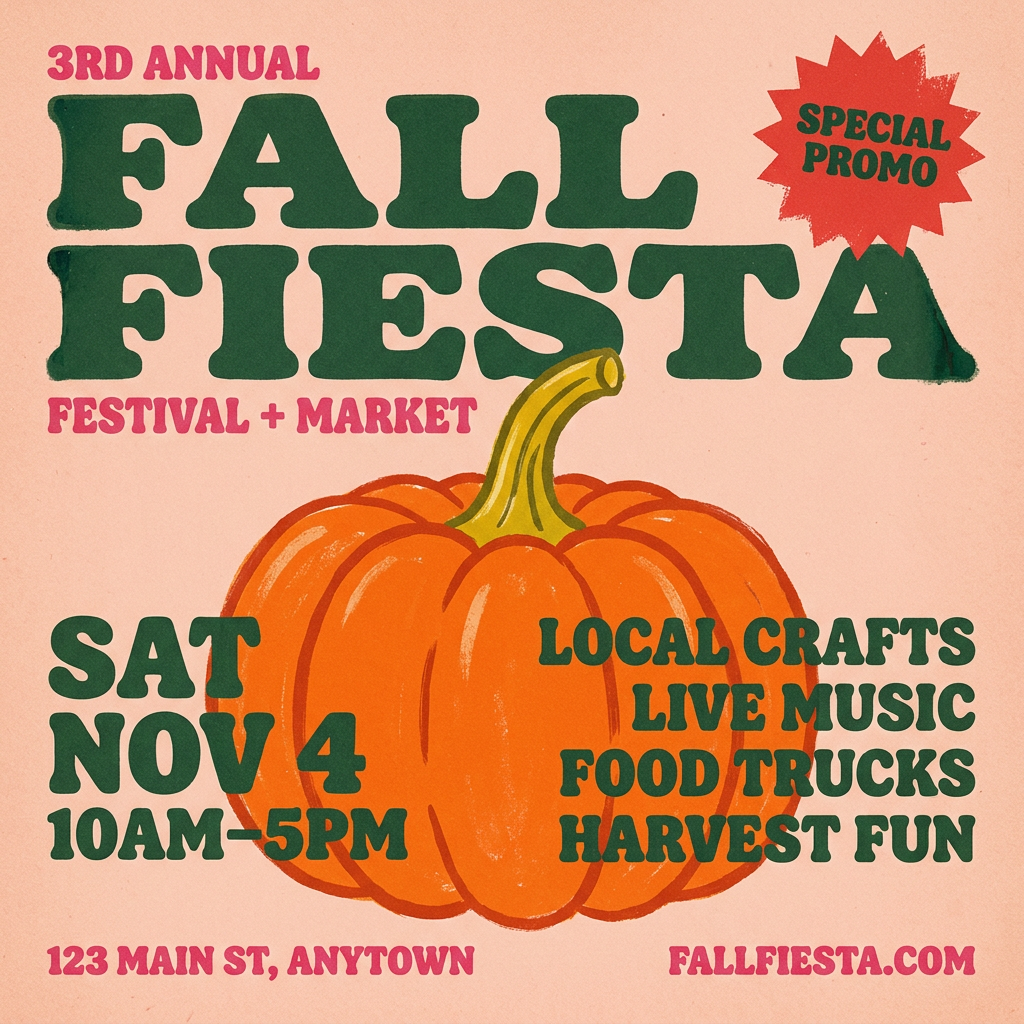
Turn any announcement into a gritty, tactile gig poster. It layers your text with an uneven letterpress ink texture over a dusty, warm pink risograph paper background. It’s perfect for giving social posts a real analog, screenprinted vibe.
Regenerate using your own assets.
Step 4: From panels to pages — mastering AI comic layouts
The final frontier for AI comics isn't just consistent panels, but cohesive pages. As search interest for 'AI comic panel generator' and 'AI comic layout' grows, it's clear creators need to move from single images to full narrative sequences. A page layout isn't just a grid; it's a storytelling tool that controls pacing and focus.
You can use MyUP's workflows to assemble your generated panels into dynamic, compelling layouts. This moves you beyond the rigid, boring grid and into creative page design.
Think of assembling a page like creating a collage. You can use workflows designed for creating complex visual arrangements to lay out your panels. For example, a workflow for creating scrapbook-style collages can be repurposed to build an explosive, overlapping action sequence. The key is to generate your individual panels first, ensuring consistency with your Brandkit, and then use a layout workflow to compose the final page.
Start with these workflows to experiment with different page compositions:
- For dynamic, overlapping layouts: Y2K Scrapbook Collage Creator. Workflow code: #myup-sacz-tjdn
- For structured, grid-based storytelling: Food Magazine Mosaic Cover. Workflow code: #myup-aktp-7jq0
By separating panel generation from page layout, you maintain control over both consistency and composition, building your comic page by page with a reliable, repeatable process.
The workflow that finally makes AI comics possible
The dream of using AI to create long-form comics has been blocked by a single, massive obstacle: consistency. Relying on complex prompts, feature hacks like '--cref', or convoluted multi-tool processes is a recipe for creative burnout. It turns storytelling into a technical troubleshooting session.
The solution is to adopt the mindset of a production artist. By building a Character Brandkit in MyUP, you create a source of truth for your character and style. By using MyUP Workflows, you create a production line that applies that truth consistently to every panel you generate. This system moves you from hoping for a good result to planning for it.
You provide the story, the emotion, and the direction. MyUP provides the tireless artist that never forgets what your character looks like. That's the workflow that makes AI comics not just possible, but practical.