The war for creative identity is here (and you don't have to fight it)
If you're a creator, you've likely felt the tension. A July 3, 2026, article in The Verge crystallized it, describing how creative communities like fanfiction feel they're at war with AI. The core fear is legitimate: that these powerful tools will flatten creativity, averaging out every unique voice into a generic, soulless aesthetic.
This isn't just about 'style theft'. It's about the potential loss of artistic identity in a flood of homogenized content. Many artists see AI as a threat to the very thing that makes their work theirs. But what if the problem isn't the AI, but the way we've been told to use it? The solution isn't to reject the tools; it's to seize control and make them work for you, in your style. The answer isn't conflict, it's direction.
Why generic prompts create generic art
Most AI image generators are trained on vast, diverse datasets. When you enter a simple text prompt like "cyberpunk illustration of a cat," the model draws from thousands of images tagged with those concepts. It doesn't know your specific take on cyberpunk, your preferred color palette, or the way you draw feline eyes. It finds the statistical average—the most common interpretation—which is why the results often feel familiar, derivative, and impersonal.
To get closer to a unique style, creators resort to complex prompt engineering, adding dozens of keywords, artist names, and technical terms. Others venture into the technical deep end, training custom models like LoRAs for Stable Diffusion, a process that requires significant time, technical skill, and a curated dataset. These methods work, but they are inefficient and inaccessible for most creators who just want to make things. They are workarounds for a fundamental problem: you're trying to describe your style instead of showing it.
The shift: from using AI to directing AI with a personal 'Stylekit'
The most effective way to maintain your artistic soul is to stop prompting in a vacuum. You need to teach the AI your visual language before you ask it to create. This is the core philosophy behind MyUP: instead of wrestling with a generic model, you give it a strong identity to work from—your identity.
We call this building a personal 'Stylekit'. It's a digital definition of your unique aesthetic, composed of your reference art, color palettes, and detailed style instructions. In MyUP, this is accomplished through the Brandkit feature. You build it once, and it becomes a permanent, reusable filter for all your AI generations. It's not about finding the perfect prompt; it's about establishing the perfect creative foundation. By locking in your style, you transform the AI from a generic image generator into a dedicated apprentice that has studied your portfolio. To learn more about how this approach applies to complex creative tasks, see our guide on the workflow for AI conceptual art that thinks like your brand.
How to build your Stylekit in MyUP (a step-by-step guide)
Creating your personal Stylekit inside a MyUP Brandkit is a straightforward process designed to capture the DNA of your art. This isn't technical model training; it's you, the artist, curating your identity.
1. Upload Your Style DNA
Start by uploading 5-10 examples of your own work. These images are the most crucial input. The AI analyzes them to understand your composition, lighting, texture, line work, and overall mood. Choose pieces that are representative of the style you want to replicate and expand upon.
2. Define Your Color Palette
Specify your core colors. You can upload your logo to automatically extract them or define them manually with hex codes. This ensures the AI prioritizes your specific shades, preventing the color drift that plagues generic generations and keeping every output visually consistent.
3. Articulate Your Aesthetic
This is where you add the nuance that images alone can't convey. In the style description field, write about your art as if you were describing it to a collaborator. Use descriptive phrases. Is your style 'whimsical and painterly with soft, glowing light'? Or 'bold, graphic, and minimalist with high-contrast shadows'? The more specific you are, the better the AI will understand your intent.
Once saved, this Brandkit becomes your permanent creative partner. MyUP applies it automatically, so you can focus on the 'what' of your creation, knowing the 'how' is already infused with your style.
Putting your style to work: from illustration to event poster
With your Stylekit built, the real work begins. Let's say you're an illustrator with a distinct vintage, textured style. You can now prompt MyUP to create a new piece: "An astronaut discovering a lush alien jungle." Because your Stylekit is active, the AI doesn't generate a generic sci-fi image. It generates one in your signature style—with your color palette, your textures, your mood.
But the power of a Stylekit goes beyond creating portfolio pieces. You can apply that same aesthetic to completely different tasks. Need to promote a local art fair? You don't have to abandon your style for a generic template. You can use a workflow to instantly create a promotional asset that is 100% you. This template, for example, is the perfect starting point.
Workflow code: #myup-3xus-3l9x
Vintage Risograph Event Poster
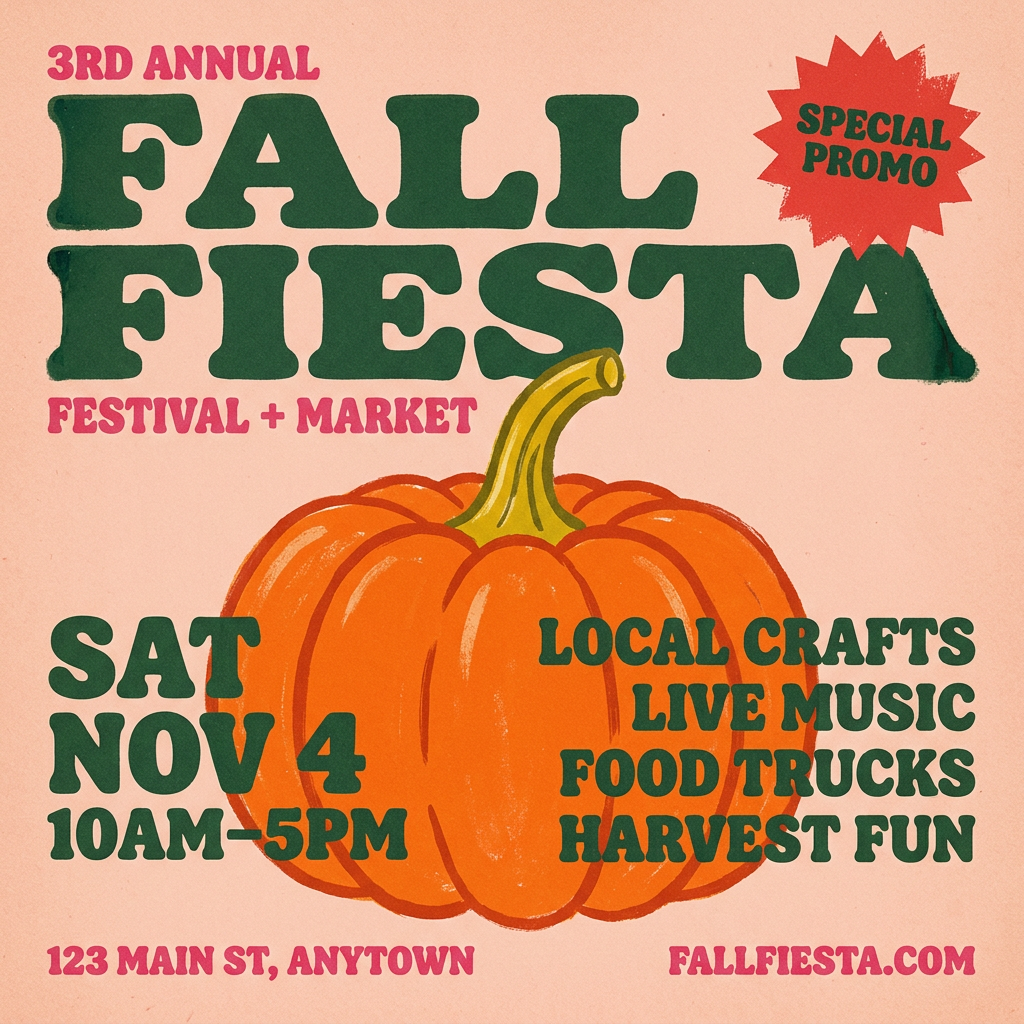
Turn any announcement into a gritty, tactile gig poster. It layers your text with an uneven letterpress ink texture over a dusty, warm pink risograph paper background. It’s perfect for giving social posts a real analog, screenprinted vibe.
Regenerate using your own assets.
Scaling your unique voice across any project
A Stylekit is a system for scaling your identity. The vintage aesthetic you used for the illustration and the event poster can be instantly applied to a zine cover, a series of social media graphics, or slides for a presentation. You're no longer just creating one-off images; you're building a consistent visual world.
This is where MyUP workflows become essential. They take your locked-in style and apply it to structured, repeatable tasks. You simply provide the new content—the event details, the zine title, the post copy—and MyUP handles the production, ensuring every single asset feels like it came from your own hand. For a grittier, cut-and-paste aesthetic that still uses your core style, a zine-style workflow is a great option.
Workflow code: #myup-msop-hlxf
Retro Zine Style Event Poster
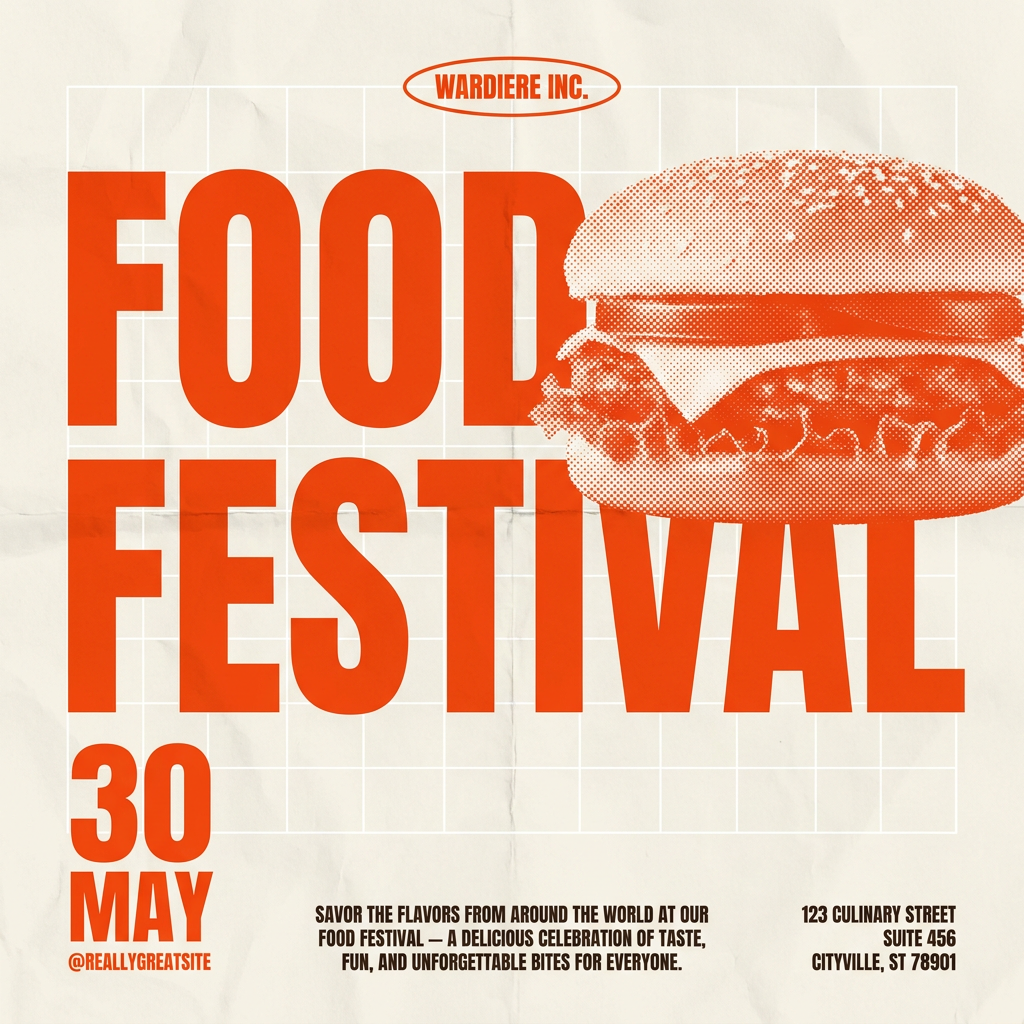
Give your social posts a gritty, analog zine aesthetic. It layers a crumpled paper texture and a subtle grid over a warm cream background to make any event graphic look like a tactile, photocopied flyer. Perfect for DIY gigs and bold promos.
Regenerate using your own assets.
You are the artist, AI is the apprentice
The fear of losing your soul to AI comes from a model of creation where the user is just a prompter and the machine is a black box. That's not a partnership; it's a slot machine. The approach of building a personal Stylekit fundamentally changes that dynamic.
By defining your visual identity first, you establish the creative boundaries. You set the rules. The AI's job is to execute within that framework, generating options that are already aligned with your vision. Your job is to curate, refine, and approve the final output. MyUP executes—you validate. This keeps you in the director's chair, using AI as a powerful apprentice that has learned your style, freeing you to explore more ideas and create more work without ever sacrificing your unique voice.