
A new class of AI tools is here, and it’s aimed squarely at one of the most critical assets for any creator: the video thumbnail. Today, June 25, 2026, a tool called Thumbmagic launched on ProductHunt, joining a growing wave of specialized AI thumbnail generators. Their promise is seductive: feed it a video title, and get a high-CTR thumbnail back, no design skills required. They analyze top-performing videos and apply a proven formula to your content.
The appeal is obvious. It’s a shortcut. But it comes with a serious, often overlooked, trade-off. When you rent a generic visual formula, you risk diluting your own brand. Your content starts to look like everyone else's. The alternative isn't to go back to manual design, but to build your own repeatable system—an engine that produces on-brand, high-performing thumbnails every time. You can start with a structured layout that enforces consistency from the beginning. This workflow, for example, gives you a strong, editable grid to build on.
Workflow code: #myup-n0bi-2wzk
Bold Editorial Grid Poster
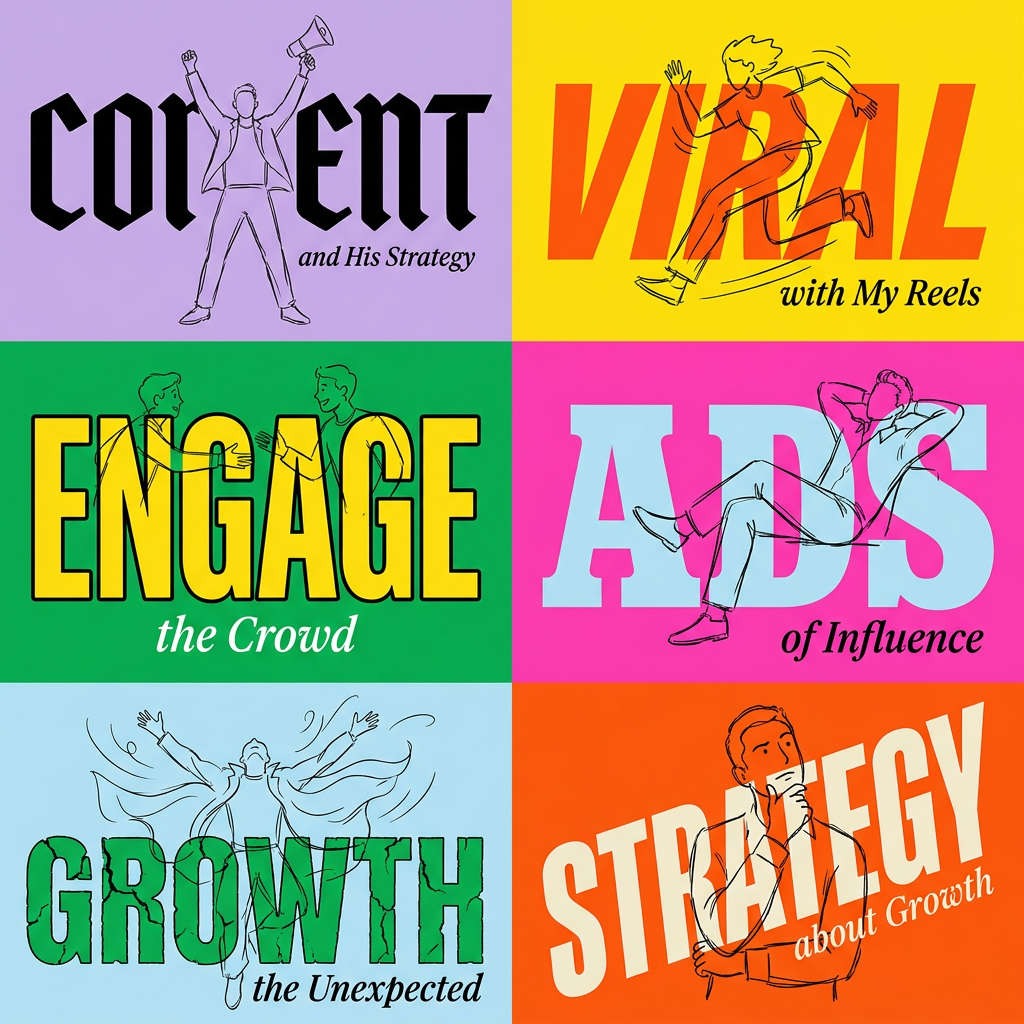
Create striking 2x3 editorial posters with six seamless, flat-color square cards in a perfect 4:5 grid. There are absolutely no gaps between the blocks, giving your content a bold, high-contrast magazine layout. It looks incredibly clean on any social feed.
Regenerate using your own assets.
What these tools are actually selling: a visual formula
These specialized generators aren't creating something entirely new. They are automating a set of well-understood visual formulas known to grab attention on crowded platforms like YouTube. They deconstruct the anatomy of a “viral” thumbnail and codify it into an algorithm.
This typically includes elements like:
- High-Contrast Colors: Bright, saturated palettes that stand out in a feed.
- Expressive Faces: Close-ups with exaggerated emotions—surprise, shock, excitement.
- Bold Text Overlays: Short, punchy text in heavy fonts that summarizes the video's hook.
- Clear Focal Points: Often using arrows, circles, or compositional lines to direct the viewer's eye to a key element.
By analyzing millions of data points, these tools can replicate patterns that correlate with higher click-through rates. The problem is, a formula is not a brand. We've explored the anatomy of these high-CTR formulas before; they are powerful when used as a starting point, but dangerous when they become a creative straitjacket.
The hidden cost of a rented formula
Relying on a third-party, black-box tool to define your visual style carries significant strategic costs that aren't immediately apparent.
First is brand dilution. Your visual identity is your most valuable asset for building a loyal audience. When your thumbnails look like they came from the same factory as a dozen other channels, you lose that distinction. You're borrowing a popular look instead of building your own recognizable style.
Second is the lack of creative control. What happens when you need to slightly adjust the text placement to fit a longer title? Or use a secondary brand color that the algorithm doesn't favor? With most specialized generators, you can't. You get what the AI gives you. This is the opposite of a professional workflow, where the user directs the strategy and the tool executes the production. You should be the one to validate and adjust the final output, not a rigid algorithm.
Finally, you're building your content system on rented land. Your visual strategy becomes dependent on a tool that could change its pricing, alter its formula, or disappear entirely. Owning your creative process means owning the system that produces it.
The alternative: build your own on-brand thumbnail engine
The solution isn't to reject automation, but to use it to power your own unique brand system. Instead of renting a generic formula, you can build your own thumbnail engine. This is a shift from thinking about one-off images to creating a repeatable process.
In MyUP, this system has two core components:
- Your Brandkit: This is the foundation. You set up your brand once—uploading your logo, defining your color palette, and selecting your fonts. MyUP automatically applies these elements to every piece of content you create.
- Saved Workflows: A workflow is a reusable recipe for content creation. It chains together steps like 'Generate an image based on the video's topic,' 'Apply a specific layout,' and 'Add a headline using my brand's primary font.'
When you combine a Brandkit with a saved workflow, you create a powerful engine. It ensures every thumbnail is not only visually effective but also perfectly, consistently on-brand. You're not just making a thumbnail; you're building a scalable asset that strengthens your brand with every video you publish.
How a workflow becomes your repeatable design system
Let's make this concrete. Take the Bold Editorial Grid Poster workflow mentioned earlier. It’s designed to create a strong, structured visual that can be adapted for anything from an event poster to, with a few tweaks, a YouTube thumbnail series.
Here’s how it functions as a system:
- It establishes a structure. The workflow creates a defined grid, giving you a consistent place for your main image and your headline.
- It applies your brand automatically. When you run the workflow, it pulls the fonts and colors directly from your saved Brandkit. The result is instantly recognizable as yours.
- It's repeatable and scalable. For your next video, you simply run the same workflow with a new title. The AI generates a new core visual, but the layout, typography, and branding remain consistent. You can produce a dozen unique, on-brand thumbnails in the time it takes to create one manually.
Most importantly, you retain full control. The AI does the heavy lifting, but you approve the final result. You can regenerate the image, edit the text, or adjust the composition. The workflow executes, but you validate.
Workflow code: #myup-n0bi-2wzk
So, should you use a specialized generator?
For a quick, one-off project where brand identity is not a concern, a specialized tool can be a pragmatic choice. It's fast and requires zero setup.
However, for any creator, marketer, or brand focused on building a durable audience, the answer is no. Long-term success is built on recognition and trust, and that starts with a consistent, unique visual identity. Outsourcing that identity to a generic, black-box formula is a strategic error. For a deeper look at how a workflow approach compares to specific tools, see our head-to-head test of Thumbmagic and Midjourney.
Don't rent a formula. Build an engine. By investing a small amount of time to set up a brand-aware workflow, you create a content system that scales, reinforces your identity, and gives you complete creative control over your most important visual assets.