You’ve been there. You spend an hour wrestling with a Midjourney prompt, finally generating the perfect brand mascot or campaign model. Then you try to put that same character in a new pose or a different setting. Suddenly, the face is slightly off, the hair color shifts, and the brand-specific jacket you described is now a generic hoodie. Despite your best efforts with the --cref (Character Reference) parameter, consistency remains just out of reach.
This isn't a user error; it's a workflow problem. Tools built for artistic exploration are fundamentally different from tools built for professional production. For businesses, consistency isn't a 'nice-to-have'—it's the foundation of brand identity. If you need to create a series of on-brand images reliably, you need to move beyond single prompts and adopt a structured workflow.
The business problem: why brand consistency is non-negotiable
In marketing and branding, consistency builds trust. When a customer sees your visuals across different ads, social media posts, and your website, a coherent look and feel reinforces your identity. It signals professionalism and reliability. Inconsistency, even subtle variations in a brand character or product shot, can make a campaign feel disjointed and cheapen brand perception.
The challenge is that creative campaigns require variation—different angles, expressions, and contexts. A brand mascot needs to appear happy in one ad and thoughtful in another. A product needs to be shown in a studio setting and a lifestyle shot. Relying on a tool that treats each generation as a new artistic roll of the dice is a high-risk strategy for any brand that depends on a recognizable visual identity to connect with its audience.
Midjourney's approach: the art of the perfect (and fragile) prompt
Midjourney's process, conducted primarily through a Discord chat interface, is centered on the art of the prompt. Success depends on crafting a single, often complex string of text combined with parameters like --cref for character reference or --sref for style reference. This method is incredibly powerful for generating singular, breathtaking images and exploring unexpected creative directions.
However, for business use, this approach reveals its fragility. The prompt becomes a black box; it’s difficult to know which part of your input is influencing the output in a specific way. When you need to change just one variable—like the character’s expression—without altering their core features, the entire system can break down. This makes it nearly impossible for a team to collaborate effectively or for a brand to create a library of repeatable, on-brand assets. The workflow is optimized for discovery, not for scalable production.
The alternative: swapping a single prompt for a structured workflow
A production-ready workflow doesn't rely on a single, monolithic prompt. Instead, it deconstructs the creative request into a series of logical, independent inputs. Think of it less like writing a magic spell and more like filling out a creative brief. This is the core philosophy behind MyUP AI.
Instead of one text field, a structured workflow presents you with separate controls for distinct creative elements:
- Character DNA: Define ethnicity, hair color, eye color, and key facial features as separate variables.
- Styling & Wardrobe: Specify clothing items, colors, and overall fashion style.
- Environment & Lighting: Set the scene, time of day, and lighting conditions (e.g., 'golden hour sunlight' or 'studio softbox').
- Composition & Pose: Describe the camera angle and the subject's action or expression.
By isolating these variables, you gain granular control. You can change the pose without scrambling the character's face. You can put the same character in a winter coat for one campaign and a summer dress for another, all while maintaining their core identity. This approach turns a game of chance into a predictable manufacturing process for creative assets.
How to build a consistent campaign series in MyUP
Let's make this concrete. Imagine you're creating a campaign for a streetwear brand targeting a global youth audience. You need a series of images featuring the same model in different urban locations. In Midjourney, this would be a frustrating series of --cref rerolls. In MyUP, you can use a pre-built workflow template like the "K-pop Streetwear Series". Workflow code: #myup-vxlj-1uhf.
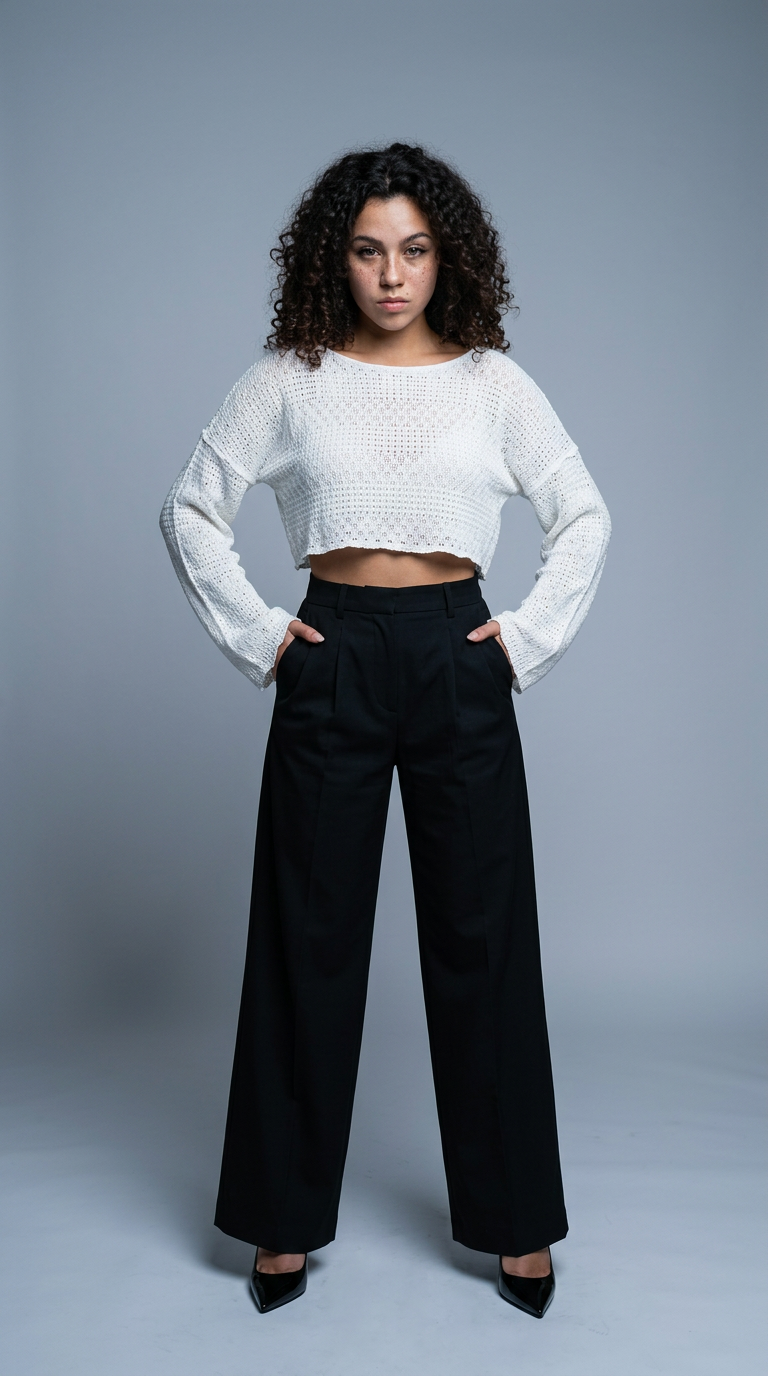
This template doesn't ask for a single giant prompt. Instead, it guides you through a multi-step process with clear inputs:
- Define Your Model: You'll enter specific details for the character's appearance. This establishes the baseline identity that will remain constant.
- Select the Outfit: You can describe the specific clothing items—like 'oversized graphic hoodie,' 'cargo pants,' and 'chunky sneakers'—which can be varied from shot to shot.
- Choose the Setting: You can input different backgrounds, such as 'neon-lit alley in Seoul' for one image and 'daytime skatepark in Tokyo' for the next.
- Set the Pose and Mood: Finally, you define the action or expression for that specific shot.
Because each of these elements is a distinct input, the AI can generate a cohesive series where the model is recognizably the same person across every image. This is the key to building a library of consistent AI characters for your brand. The same principle applies to creating a full AI product photoshoot, where the product remains the hero while the backgrounds and styles change.
Exploration vs. production: choosing the right tool for the job
Midjourney is a phenomenal tool for what it was designed to do: artistic exploration, mood boarding, and generating spectacular one-off visuals. For digital artists, illustrators, and hobbyists, the unpredictability can be a feature, leading to happy accidents and novel ideas. If your goal is to be surprised, it's one of the best tools on the market.
Businesses, however, cannot build campaigns on happy accidents. Marketing teams, e-commerce brands, and social media managers require predictability, scalability, and brand safety. They need a production tool. MyUP is built for this purpose. Our workflow-based system is designed for teams that need to produce a high volume of on-brand assets efficiently. It replaces the guesswork of prompt-crafting with the reliability of a repeatable process.
If you're an artist seeking inspiration, Midjourney is a powerful partner. If you're a business that needs to execute a creative strategy consistently, a workflow-driven platform is the only sustainable choice. You can explore our plans and features to see how a production-focused workflow can transform your content creation.