
On July 2, 2026, Google released Gemini Omni Flash, a new AI video model built for one thing: speed. The demos are impressive, generating short clips from prompts in seconds, not minutes. The immediate question for any marketing team is: should we be using this?
But that's the wrong question. The right question is, 'Is generating a single, raw video clip faster what our brand's content production actually needs?' The answer is almost always no.
Here's the short answer for when to use each platform:
- Use Gemini Flash for: Rapid, raw video clip generation and creative experiments where brand consistency is not the primary goal. It's a powerful engine for creating source material.
- Use MyUP for: Scalable, on-brand video asset production. It's a complete production system for creating finished marketing content that is always consistent with your visual identity.
This article breaks down the comparison based on the actual jobs a marketing team needs to do: scaling production, maintaining brand control, and finishing assets for campaigns.
Round 1: Raw speed vs. scalable production
Gemini Flash is undeniably fast at generating a single clip. But marketing doesn't happen one clip at a time. It happens in campaigns, content calendars, and product launches that require dozens of assets. This is where the distinction between a tool's speed and a workflow's efficiency becomes critical.
The real bottleneck in content production isn't the ten minutes you wait for a video to render; it's the hours spent manually adding logos, headlines, and calls-to-action to twenty different versions of that video for different channels. Gemini Flash accelerates one step, but it doesn't solve the total production timeline. You get a raw ingredient faster, but you still have to cook the entire meal yourself, over and over again.
MyUP is designed to solve the entire production line. By using a template-driven workflow, you define the final asset once—with its layout, typography, and logo placement locked in by your Brandkit. Then, you can generate endless variations of the core video content without ever losing consistency or wasting time in a video editor. The system handles the repetitive production work, and you focus on validating the creative.
Instead of just making one clip, you can produce an entire on-brand ad campaign from a single prompt. This is what true production speed looks like. You can try this workflow right now on MyUP to create a complete, branded video ad, not just a raw clip.
Workflow code: #myup-ywpr-rqz6
Professional Sportswear Ad
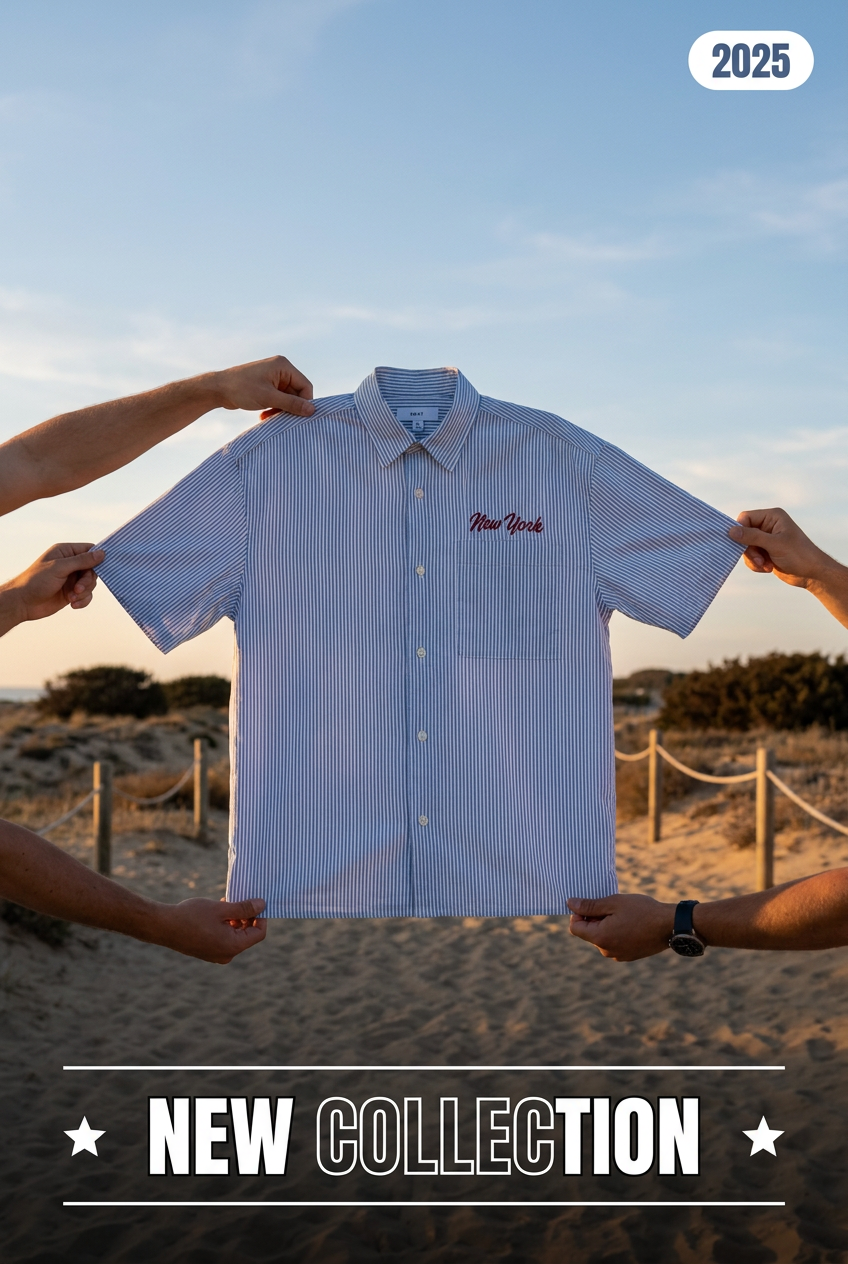
Suspends your apparel right in the center of a high-energy promo shot, held up by hands around the frame. It gives your shirts or jerseys a gritty, collaborative streetwear editorial look that feels alive and physical.
Regenerate using your own assets.
Round 2: Uncontrolled creativity vs. on-brand consistency
Raw generative models like Gemini Flash operate on a principle of creative exploration. This is fantastic for artists but a liability for brands. Every generation is a roll of the dice—you might get something brilliant, but you might also get a video that uses your competitor's primary color, an aesthetic that clashes with your last campaign, or a tone that feels completely off-brand.
For a brand, consistency isn't boring; it's equity. Every piece of content should reinforce your visual identity, not dilute it. This is why MyUP is built around the Brandkit. Before you generate anything, you teach MyUP your brand's DNA: your logos, color palette, fonts, and overall style. This Brandkit then acts as a set of guardrails for every creation.
The AI model's power is channeled through your brand's rules. It's not about stifling creativity; it's about making creativity reliable and brand-safe. You still have full control to guide the AI, but you eliminate the risk of producing something that undermines your brand identity. This fundamental difference between personal and brand AI usage is something we've explored before in our analysis of personalization features from Google and Midjourney.
With a raw tool, the user is responsible for policing every output for brand compliance. With MyUP, the platform ensures compliance by design, letting the user focus on the message.
Round 3: Generating a clip vs. finishing an asset
Gemini Flash delivers a video file. MyUP delivers a finished marketing asset. This is perhaps the most practical difference between the two. A raw video clip is rarely, if ever, the final product for a marketing campaign. It needs to be placed within a layout, overlaid with text, formatted for specific social media dimensions, and stamped with your logo.
With a tool like Gemini Flash, generating the clip is just the first step. The 'last mile' of production—turning that clip into a ready-to-publish Instagram Story, a LinkedIn ad, or a website banner—is entirely manual. This means opening another application like Adobe Premiere or Canva, importing the clip, and doing all the design and layout work by hand.
MyUP integrates generation and design into a single, seamless workflow. When you use a MyUP template, you're not just prompting for a video; you're prompting for a complete, designed asset. The workflow automatically handles the text overlays, applies your brand fonts and colors, and places your logo correctly. The output from MyUP is ready to post, no extra steps required.
This workflow for a minimalist poster shows how MyUP generates the core visual and simultaneously builds the entire finished piece around it, complete with text and layout—a task impossible with a raw video generator.
Workflow code: #myup-sygb-rhnt
Minimalist Vertical Product Advertising Poster
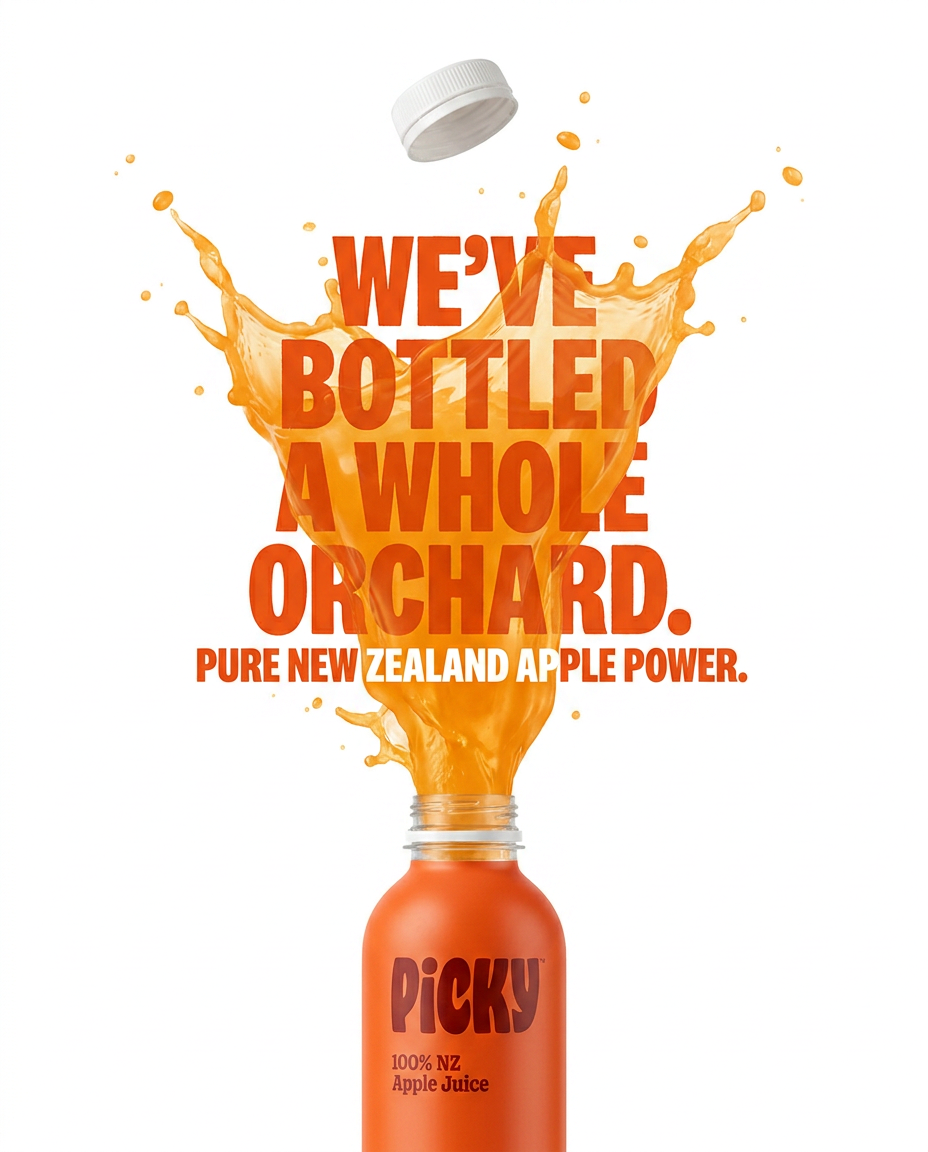
Drop the clutter and put your product in the spotlight. This setup places your item against a pure, seamless white background with a striking vertical flow that draws the eye straight up. It's perfect for creating clean, high-end studio posters.
Regenerate using your own assets.
Workflow code: #myup-k4td-9k6z
Minimalist Poster
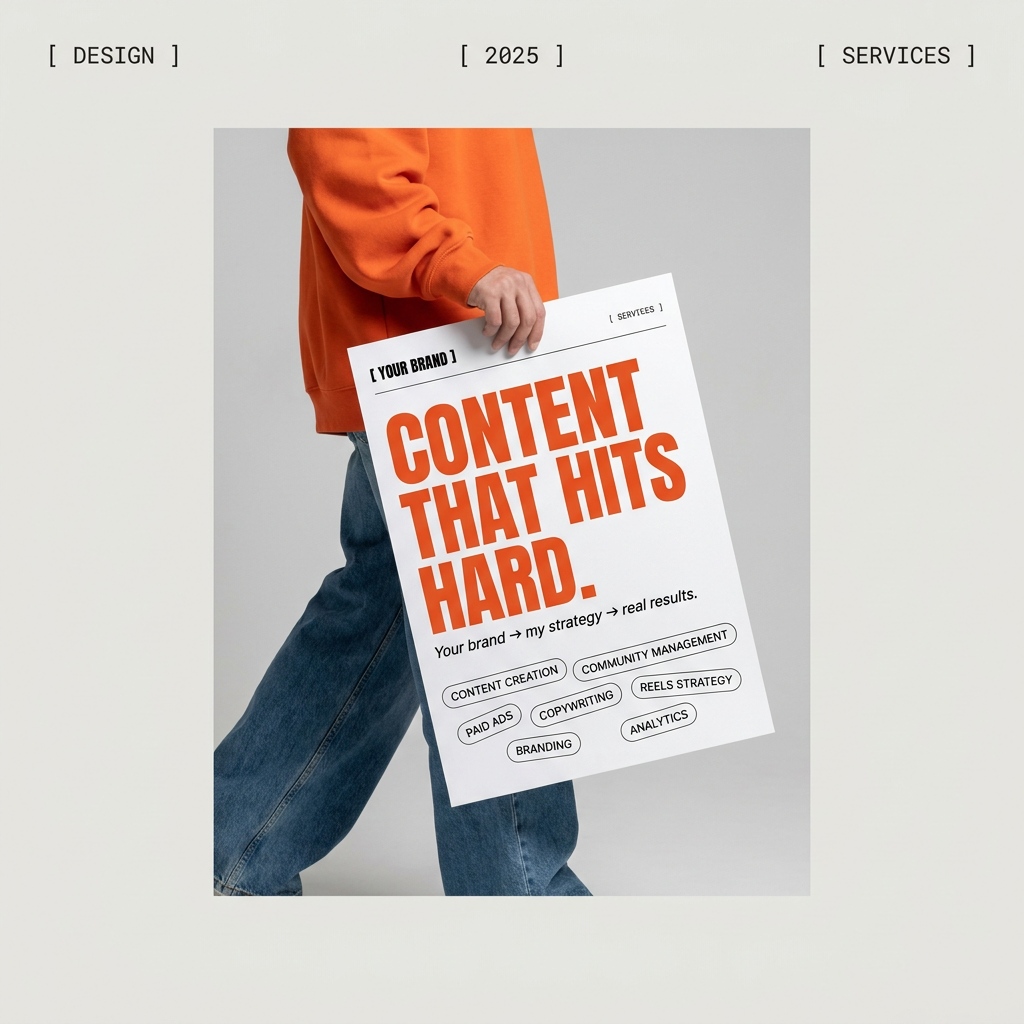
Give your social feed a clean, gallery-like aesthetic. This layout frames your images with structured mono typography and soft, neutral backgrounds for a high-end editorial look. It's perfect for minimal product launches or brand announcements.
Regenerate using your own assets.
The verdict: Choose the engine or the entire production line?
Google's Gemini Flash is a phenomenal piece of technology. It's a powerful, high-speed engine for video generation. If your job is to create unique, experimental video clips for artistic projects or as raw material for a larger VFX pipeline, it's an exciting new tool.
However, if your job is to run a brand's marketing, you don't just need an engine; you need the entire car. You need a reliable production system with steering (prompts and workflows), safety features (your Brandkit), and a clear destination (finished, multi-channel campaign assets).
The choice is not about which technology is 'better,' but which tool is built for the right job. For brands that depend on scalable, consistent, and efficient content production, a workflow-driven platform like MyUP isn't just a better choice—it's the only one that solves the entire problem.