
You’ve probably seen the video making the rounds this week: a creator stitches together four different AI tools to create a single, realistic-looking, user-generated content (UGC) style ad. The result is impressive, but the process is a nightmare. It’s a Frankenstein’s monster of a workflow, requiring multiple subscriptions, complex steps, and hours of work for one piece of creative.
That’s not a scalable system for any serious marketer or brand. You need dozens of variations for A/B testing, not a single masterpiece that took all day.
What if you could get that authentic, native-to-the-feed look from a single platform? What if you could define “authenticity” once, and then generate unlimited on-brand variations on demand? This guide breaks down the exact prompts and workflow to do just that in MyUP. The goal isn't to trick viewers, but to produce creative that feels genuine, faster.
First, what does 'UGC style' actually mean for an AI?
Before you can prompt for it, you have to define it. 'UGC style' isn't just one thing; it's a collection of specific visual cues that signal authenticity and break from polished, professional advertising. For an AI, these cues are just instructions. By treating 'UGC' as a design system with its own rules, you can teach the AI to generate it reliably.
Here are the five core components to deconstruct:
- The Camera & Lens: Real UGC is almost always shot on a smartphone. This means you should prompt for it. Terms like 'shot on a smartphone,' 'iPhone photo,' or 'selfie angle' introduce the subtle lens distortion, noise, and depth of field characteristic of mobile photography. It’s the opposite of a 'professional DSLR, 85mm lens' shot.
- The Lighting: Forget 'perfect three-point studio lighting.' UGC thrives on imperfection. Use prompts like 'natural window lighting,' 'overcast day,' 'golden hour sunlight,' or 'lit by a phone screen.' This creates the realistic, sometimes harsh or soft, lighting found in everyday environments.
- The Composition: Professional shots are balanced and deliberate. UGC is often spontaneous. Use terms like 'candid shot,' 'in-the-moment,' 'off-center framing,' and 'handheld feel.' This instructs the AI to avoid perfect symmetry and create a more dynamic, less staged composition.
- The Subject & Environment: The people in UGC ads shouldn't look like professional models. Prompt for 'real-looking people,' 'natural expressions,' and specify a realistic age range or demographic. The environment should feel lived-in, not sterile. Use 'messy kitchen counter,' 'cozy living room,' or 'busy city street' instead of 'minimalist background.' Getting the background right is crucial, as we've explored in our guide to placing products in realistic AI backgrounds.
- The Imperfections: This is the final layer of realism. Tiny flaws make an image believable. Add terms like 'slight motion blur,' 'film grain,' 'soft focus,' or 'lens flare' to your prompt. These elements break the digital perfection that often makes AI images feel fake.
The core prompt formula for realistic AI UGC
Once you understand the components, you can assemble them into a repeatable formula. Sticking to a consistent structure helps you control the output and makes it easier to swap out elements for A/B testing. This isn't about one 'magic prompt,' but a logical structure for giving the AI clear instructions.
Here is a solid base formula to start with:
[Shot Type] of a [Subject & Action] in a [Setting]. [Lighting Style], [Camera & Lens Style], [Aesthetic Details].
Let’s apply this to a skincare brand ad:
Good prompt: A woman using a face cream.
Better prompt (with more detail): A 30-year-old woman with freckles smiling as she applies face cream in her bathroom.
Best prompt (using the formula):Selfie-angle photo of a 30-year-old woman with freckles laughing as she applies a white face cream, in a slightly messy bathroom with plants in the background. Soft morning window lighting, shot on a smartphone, candid and in-the-moment, slight film grain.
See the difference? The final prompt gives the AI specific, concrete instructions for every component of the UGC aesthetic, leaving very little to chance. The user—you—is in control, validating the output against a clear creative vision.
The workflow: from one image to a full ad campaign in MyUP
A great prompt gets you one great image. A great workflow gets you a campaign. In MyUP, you can systematize the UGC aesthetic to produce dozens of on-brand variations for testing, all from a single core idea.
Step 1: Create a 'UGC Style Guide' in your Brandkit
Your MyUP Brandkit is where you store your brand’s visual identity—logos, fonts, colors. For this task, you can create a specific Brandkit that functions as a UGC style guide. Instead of a logo, you might leave it blank. Instead of brand colors, you might define a specific color grade (e.g., 'warm and slightly desaturated film look'). Most importantly, you can save your core style prompts directly into the Brandkit. Phrases like 'shot on a smartphone, candid, natural lighting, slight film grain' can be automatically applied to every generation, ensuring consistency without repetitive prompting.
Step 2: Generate your hero image with a workflow
Now, let's create the first ad for a new line of sportswear. You need an image that feels energetic, real, and inspiring. Instead of trying to write the perfect prompt from scratch, you can use a workflow template designed for this exact purpose. It combines the prompt structure with your Brandkit's style guide to get you 90% of the way there in seconds.
Workflow code: #myup-ywpr-rqz6
Professional Sportswear Ad
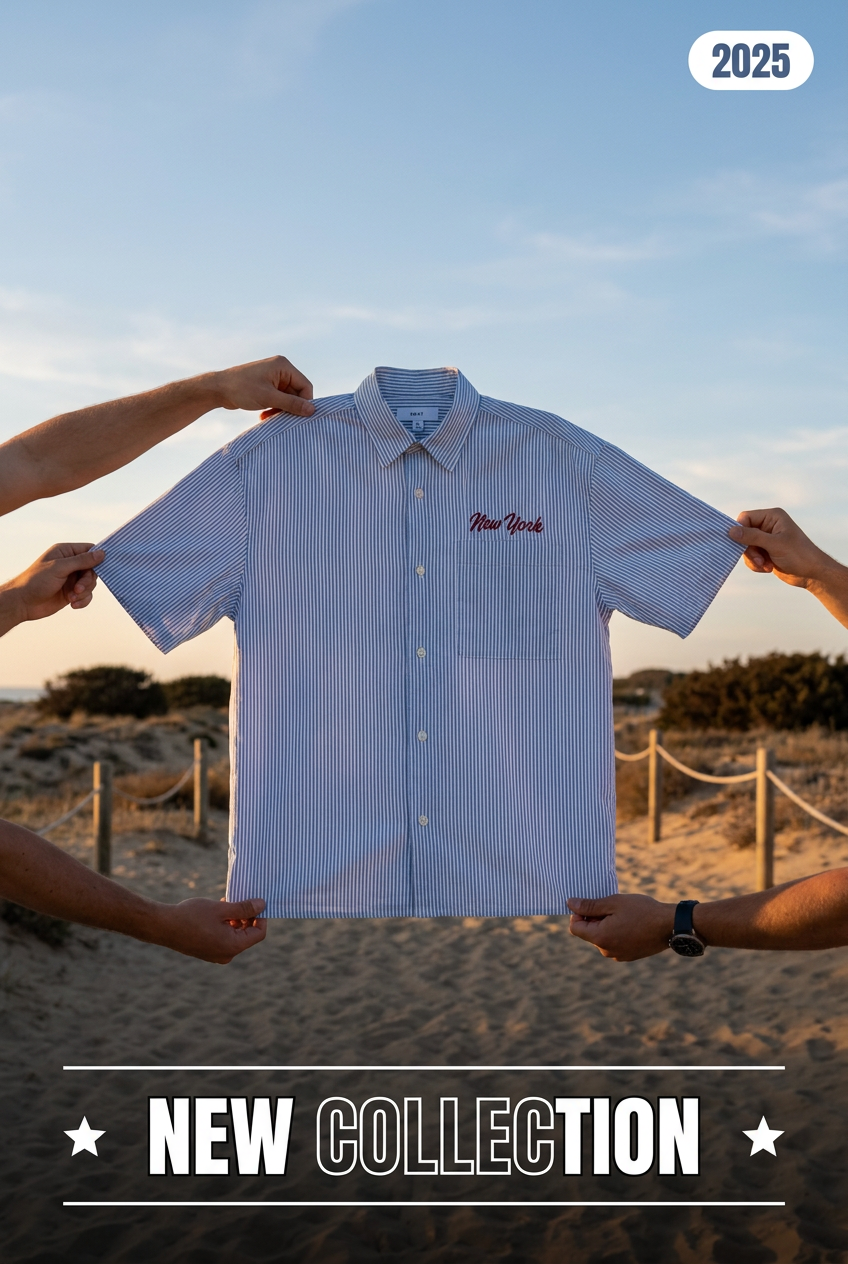
Suspends your apparel right in the center of a high-energy promo shot, held up by hands around the frame. It gives your shirts or jerseys a gritty, collaborative streetwear editorial look that feels alive and physical.
Regenerate using your own assets.
Step 3: Scale into variations for social media
Your hero image is approved. Now you need five more variations for Instagram stories, each with a slightly different angle, pose, or background to see what performs best. This is where manual prompting becomes a bottleneck. In MyUP, you can use another workflow to take your core concept and instantly generate a batch of alternatives. The system maintains the UGC aesthetic from your Brandkit while introducing the variation you need for effective testing.
This workflow is perfect for creating social-ready posts from your core idea.
Workflow code: #myup-3sro-edbt
Brand Clothes Post

Turn any outfit photo into a high-end fashion promo poster. It centers your subject in a full-body shot against a dark, dramatic studio backdrop, perfectly cropped for social feeds. It gives your apparel a moody, editorial look instantly.
Regenerate using your own assets.
This process—Brandkit for consistency, workflows for production—turns a complex creative task into a simple, repeatable manufacturing line for high-performing ad creative.
Why your AI UGC still looks fake (and the negative prompts to fix it)
Sometimes, even with a great prompt, the AI will default to an overly polished look. This is where negative prompts become your most powerful tool for refinement. A negative prompt tells the AI what to avoid, pushing the final image away from digital perfection and toward realism.
Here are common failure points and the negative prompts to correct them in MyUP:
- The image is too clean and perfect: AI models are trained on beautiful images. You need to steer them away from that. Negative Prompt: --no professional photography, studio lighting, perfect composition, clean, polished, CGI, render, airbrushed
- The person looks like a model: If your subject looks too posed or flawless, it breaks the illusion of authenticity. Negative Prompt: --no model, perfect skin, flawless, staged pose, looking at camera, symmetrical face
- The background is generic or sterile: A fake-looking environment is an instant giveaway. This is a challenge many face, similar to those trying to create realistic AI interior designs.Negative Prompt: --no studio background, white background, generic setting, minimalist, empty room
- The colors are too vibrant: Real smartphone photos often have slightly muted or shifted colors compared to professionally graded images.Negative Prompt: --no oversaturated, vibrant colors, high contrast, HDR
Think of negative prompts as the final 10% of creative direction. They are how you, the human validator, fine-tune the output to match the specific, imperfect aesthetic you’re targeting.
Authenticity is a system, not a single prompt
A single 'magic prompt' is a great starting point, but it’s not a marketing strategy. The viral, multi-tool workflows prove there's a huge appetite for AI-generated UGC, but they also prove that a prompt alone isn't enough. You need a production system.
True creative scalability comes from treating authenticity as a design style that can be defined and automated. In MyUP, your Brandkit becomes the definition of your authentic style, and Workflows become the engine that produces it at scale. This frees you from the tedious work of generating one-off images and allows you to focus on what matters: testing, learning, and finding the creative that truly connects with your audience.