If you’ve been on social media in the last 48 hours, you’ve seen it: a flood of AI-generated images with shockingly coherent text. With the releases of Midjourney V7, new Adobe Firefly features, and Ideogram 2.0 around July 2-3, 2026, the era of garbled, nonsensical AI text is officially over. The models can finally spell.
So why do your AI-generated posters still look unprofessional? Because legibility is not the same as design. Getting the words right is only the first step. Getting the font, color, layout, and branding right is the job. And no AI image prompt can do that for you. Here’s the workflow that can.
The good news: AI can finally spell. The bad news: it still can't design.
Let's be clear: the recent updates are a huge leap forward. You can now prompt Midjourney V7 for "A poster that says 'Summer Music Festival'" and get those exact words on the image. This solves a massive, long-standing frustration for anyone trying to create ads, social posts, or event flyers.
But look closer at the output. Is the text in your brand's font, like Helvetica Now or Gilroy? Is it using your brand's specific hex code for yellow? Does the layout follow a clear visual hierarchy, or is the text just slapped onto the image wherever the AI saw fit? The answer is almost always no. Raw AI image generators create pixels, not design systems. They guess at what a 'cool font' looks like, but they don't know *your* font. They can create legible text, but they can't create intentional, on-brand typography.
Why a prompt will never replace your brand guidelines
The fundamental issue is that you can't 'prompt' your way to good typography. A brand's visual identity is built on precise assets and rules: specific font files (OTF or TTF), exact color codes, and defined layout principles. An AI diffusion model has no concept of these things. It's just arranging pixels based on statistical patterns from its training data.
When you add "in a bold, modern font" to your prompt, the AI isn't loading a font file; it's trying to draw pixels that look like its abstract concept of a 'bold, modern font'. This leads to a few critical problems for any professional use case:
- Inconsistency: You'll get a different font style every time you run the prompt. You can't build a recognisable brand on a foundation of randomness.
- Inaccuracy: The AI will never perfectly replicate your specific brand font. It might get close, but it will always be an approximation, which devalues your brand identity.
- No Control: You can't adjust the kerning, leading, or positioning of the text after it's generated. The text is 'baked in' to the pixels, making fine-tuning impossible without starting over.
Stop trying to force your brand's design system into a text prompt. A poster is a designed asset, not just a picture. The only professional approach is to separate the image generation from the brand application.
The workflow for posters with perfect, on-brand text
The solution is to use a system that understands your brand *before* you start creating. Instead of trying to do everything in one step with a prompt, you need a workflow that treats the background image and the typographic layer as separate, controllable elements. In MyUP, this is simple and repeatable.
Step 1: Create your Brandkit. This is the one-time setup that solves the problem for good. In MyUP, you create a Brandkit by uploading your actual font files, defining your exact brand colors, and adding your logo. This Brandkit now acts as your single source of truth for every asset you create on the platform. You are no longer relying on an AI's guess; you are providing the specific ingredients. If you need help turning a logo into a full set of brand assets, this guide on creating a complete brand identity is the perfect place to start.
Step 2: Generate the background visual. Use MyUP's AI image generator to create just the background art for your poster. Focus the prompt entirely on the imagery, mood, and style. Don't mention any text.
Step 3: Apply a poster template. This is where it all comes together. Instead of asking the AI to guess at a layout, you use a structured MyUP template. These templates are designed with proper typographic hierarchy and are connected to your Brandkit. When you apply the template, it automatically pulls your correct fonts and colors and layers them perfectly onto your generated background. The user validates the result, and MyUP handles the production.
You can try this exact process right now to create a bold, eye-catching event poster. The template handles the layout and pulls from your Brandkit for fonts and colors, giving you a professional result in seconds.
Workflow code: #myup-xbur-hzoi
Bold Retro Yellow Event Poster
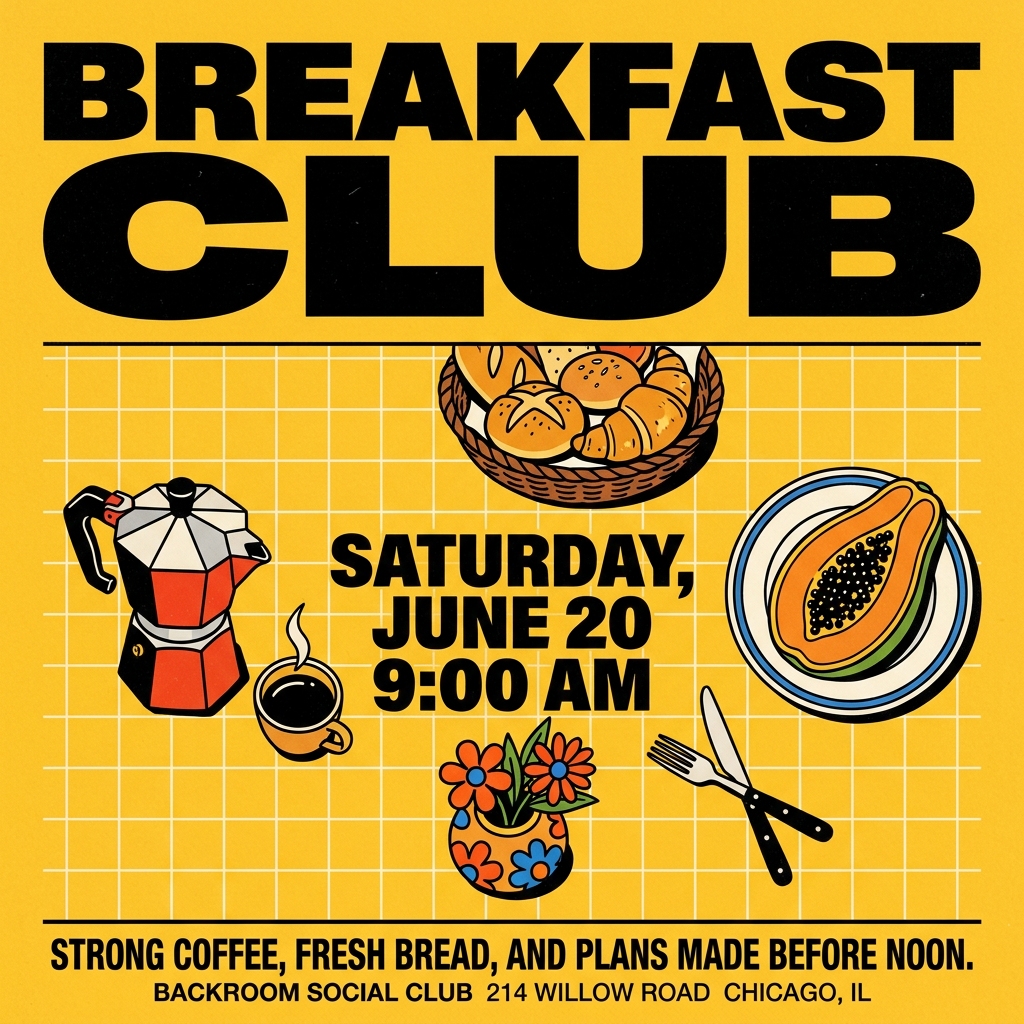
Turn your branding or event details into bold, nostalgic posters. It blends vibrant warm backdrops with a clean, retro square grid pattern to make any announcement look like a classic piece of mid-century graphic design.
Regenerate using your own assets.
From a single poster to a full campaign in minutes
The real power of this workflow isn't just making one perfect poster; it's about scalability. Once your Brandkit is saved in MyUP, you've eliminated the most time-consuming part of content creation: ensuring brand consistency.
Imagine you've just created that event poster. Now, the HR team needs a hiring poster with a similar look and feel. Instead of starting from scratch and trying to remember the right fonts and colors, you simply run a different workflow. You generate a new background image relevant to hiring and apply a hiring poster template. MyUP automatically applies the same Brandkit, ensuring the new poster is perfectly aligned with your brand identity.
This is how you move from one-off creative requests to a scalable content production system. The Brandkit provides the consistency; the templates provide the speed. Use the workflow below to create a clean, modern hiring poster that's instantly recognizable as part of your brand.
Workflow code: #myup-eiob-7tbc
Modern Hiring Poster
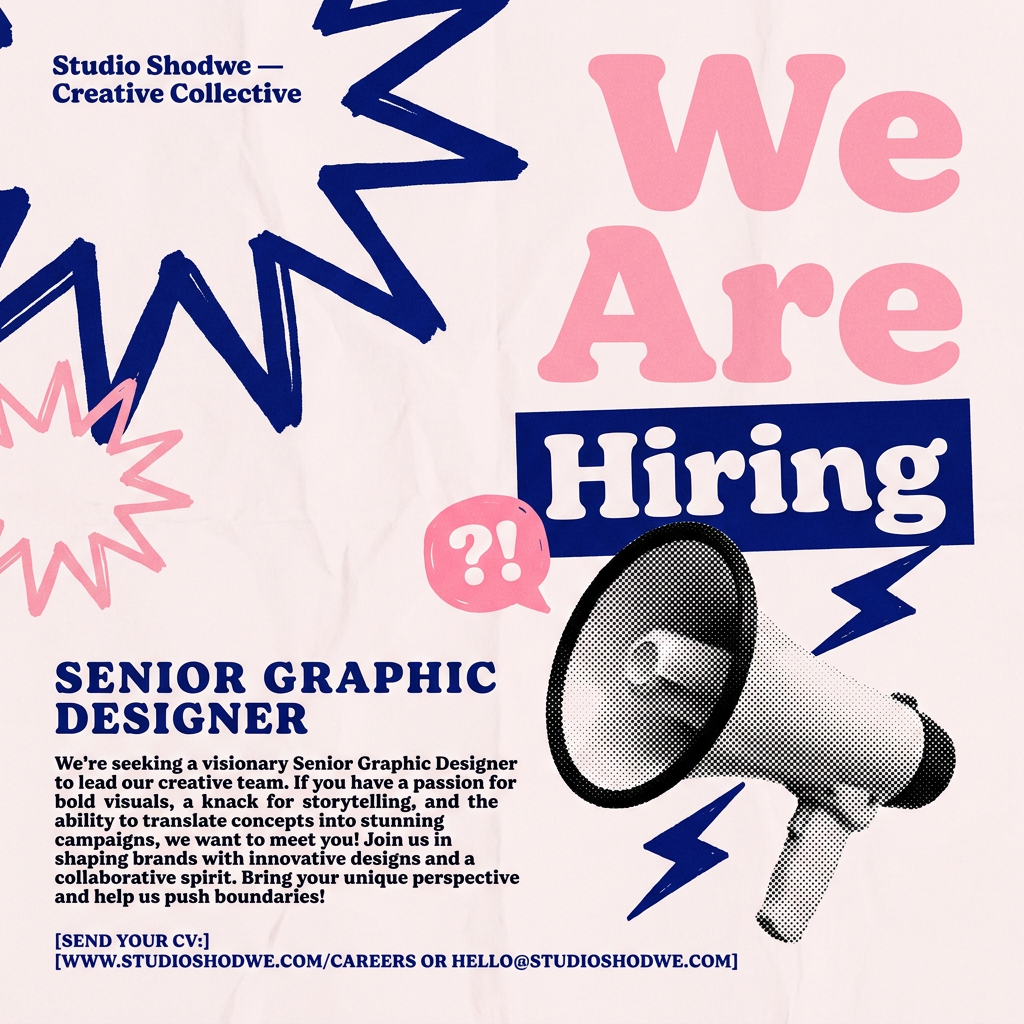
Turn your open roles into stylish social announcements. It sets your hiring details against a soft, textured paper background with clean, editorial typography. Perfect for giving your brand a polished, modern look when you're looking to hire.
Regenerate using your own assets.
When to use raw AI vs. a branded workflow
The new text capabilities in Midjourney, Adobe Firefly, and Stability AI's models are fantastic tools for brainstorming, ideation, and artistic exploration. If you need to quickly visualize a concept or create something for internal use, they are faster than ever. But the moment an asset needs to be public-facing and represent your brand, a controlled, brand-aware workflow is non-negotiable.
A raw AI generator gives you a picture. A MyUP workflow gives you a finished, on-brand asset. This distinction is crucial for anyone whose job is to build and maintain a consistent brand presence. Using a workflow ensures that every poster, social post, and ad you create reinforces your brand identity, rather than diluting it with random, AI-generated styles.
Even highly stylized designs, like a vintage-inspired event flyer, can be systematized. A MyUP workflow can generate the risograph-textured background and then apply your brand's text in a way that feels authentic to the style but remains perfectly on-brand. The same principle applies to other unique aesthetics, like a retro zine layout.
Workflow code: #myup-3xus-3l9x
Vintage Risograph Event Poster
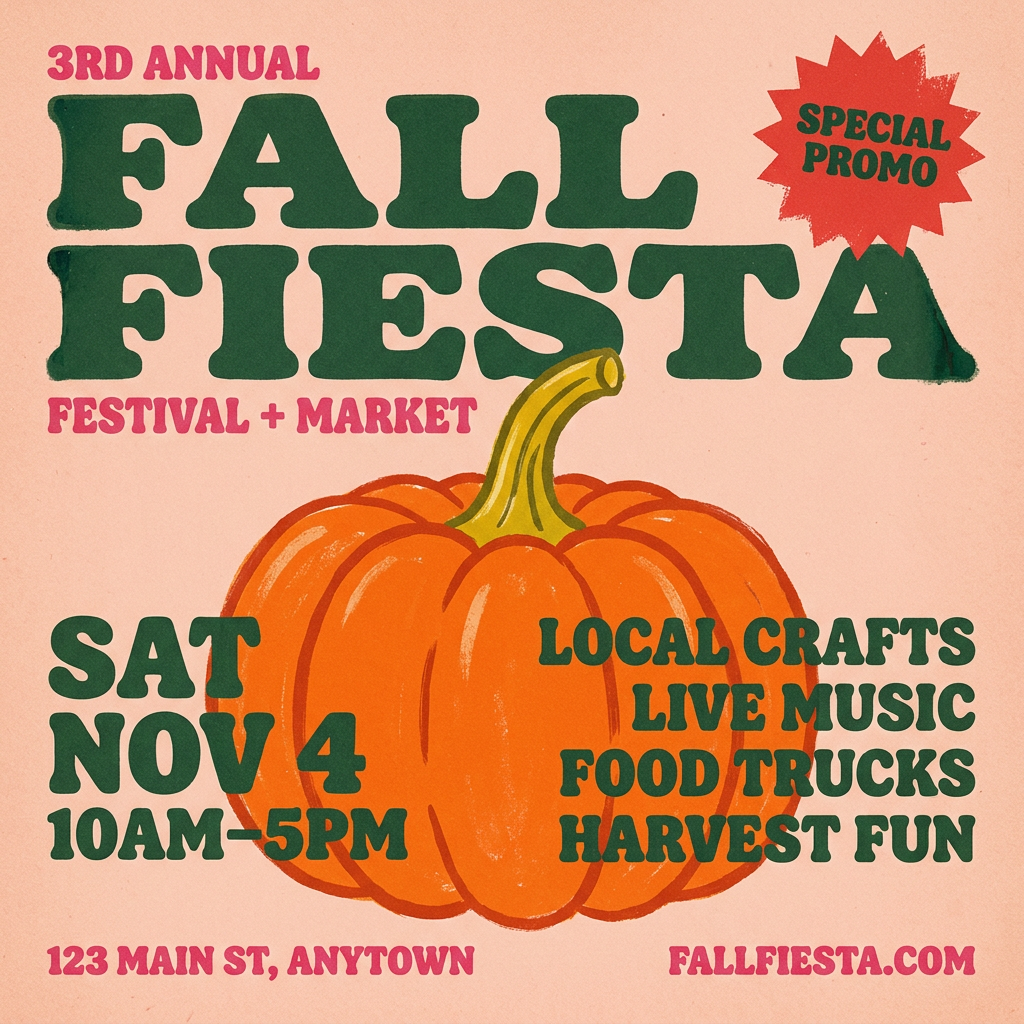
Turn any announcement into a gritty, tactile gig poster. It layers your text with an uneven letterpress ink texture over a dusty, warm pink risograph paper background. It’s perfect for giving social posts a real analog, screenprinted vibe.
Regenerate using your own assets.
Workflow code: #myup-msop-hlxf
Retro Zine Style Event Poster
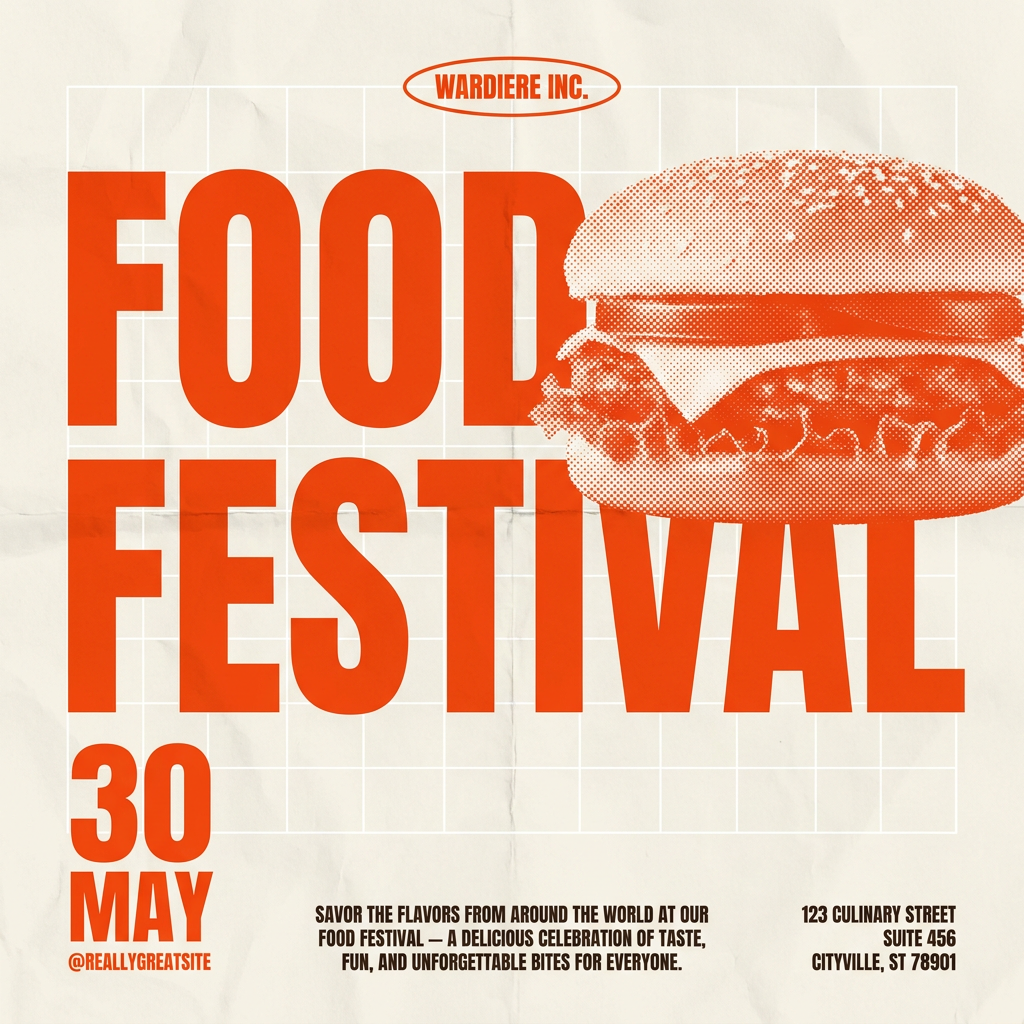
Give your social posts a gritty, analog zine aesthetic. It layers a crumpled paper texture and a subtle grid over a warm cream background to make any event graphic look like a tactile, photocopied flyer. Perfect for DIY gigs and bold promos.
Regenerate using your own assets.
Ultimately, the choice depends on the job. For artistic play, embrace the chaos of raw generation. For professional results, use a system built for brands. MyUP executes the production; you provide the creative validation.