You finally did it. After an hour of tweaking prompts, you used an AI image generator to create the perfect poster for your upcoming event. The style is unique, the typography is sharp, and the colors are spot-on. Now you just need to create five more variations for the speaker announcements, the early-bird ticket sale, and the schedule reveal. That should be easy, right?
But it isn't. Every new generation is a gamble. The style drifts, the fonts change, and the colors are just slightly off. You're left with a folder of mismatched assets that look like they're for five different events. This problem — the lack of campaign-level consistency — is the single biggest blocker to using AI for professional marketing. It’s why companies like Adobe are launching 'Style Kits' and why creators are constantly sharing workarounds. A single great poster is a novelty. A great campaign requires a system.
This guide provides that system. We'll walk through a repeatable workflow in MyUP.ai that moves you from chasing one-off wins with prompts to building a reliable production engine for your entire event campaign.
Step 1: Stop prompting, start defining with a Brandkit
The core reason AI poster campaigns fail is that creators start with the wrong tool: the prompt box. A prompt is an instruction for a single task, not a rulebook for a brand. To achieve consistency, you need to define the rules first. In MyUP, this is done with a Brandkit.
A Brandkit is a central, reusable visual identity for your event. Instead of describing your style in a prompt every single time, you define it once. MyUP can even build a draft Brandkit for you automatically just from your event's website URL. It pulls your event's logo, color palette, and fonts, creating a foundational style guide. You can then refine it to lock in the precise visual DNA of your campaign.
This is the professional approach. It turns AI from a random image generator into a production assistant that already knows your brand rules. Before you generate a single poster, your Brandkit should contain:
- The exact HEX codes for your event's primary and secondary colors.
- Your specific brand fonts for headlines and body text.
- Your event logo in a high-resolution format.
- A style description that captures the mood—e.g., 'minimalist and tech-focused,' 'bold retro with grainy textures,' or 'elegant and floral.' This acts as a baseline instruction for all future generations. For more on this, see our guide on using an AI mood board to define a brand style.
By front-loading this work, you're not just hoping for consistency; you're engineering it. The Brandkit becomes the single source of truth that every asset in your campaign will reference.
Step 2: Generate your 'hero' poster from a master template
With your Brandkit defined, you're ready to create the cornerstone of your campaign: the main 'hero' poster. This is the primary design that announces the event and establishes the core visual language. Instead of starting from a blank canvas, you'll use a MyUP workflow that's designed for this purpose.
A workflow in MyUP is more than a static template. It's a series of automated steps that combines your Brandkit with a design structure. When you run a poster workflow, MyUP automatically applies your brand fonts, colors, and logo to the layout. The AI's creative task is narrowed down to generating imagery and composition that fits within your pre-defined brand constraints.
This is where you move from being a prompter to a creative director. You provide the key information—event title, date, location—and let the workflow handle the brand application. The result is a high-quality, on-brand poster in a fraction of the time, without the style drift.
To get started, try this workflow for a bold, eye-catching design. Just enter the code in the MyUP creator.
Workflow code: #myup-xbur-hzoi
Bold Retro Yellow Event Poster
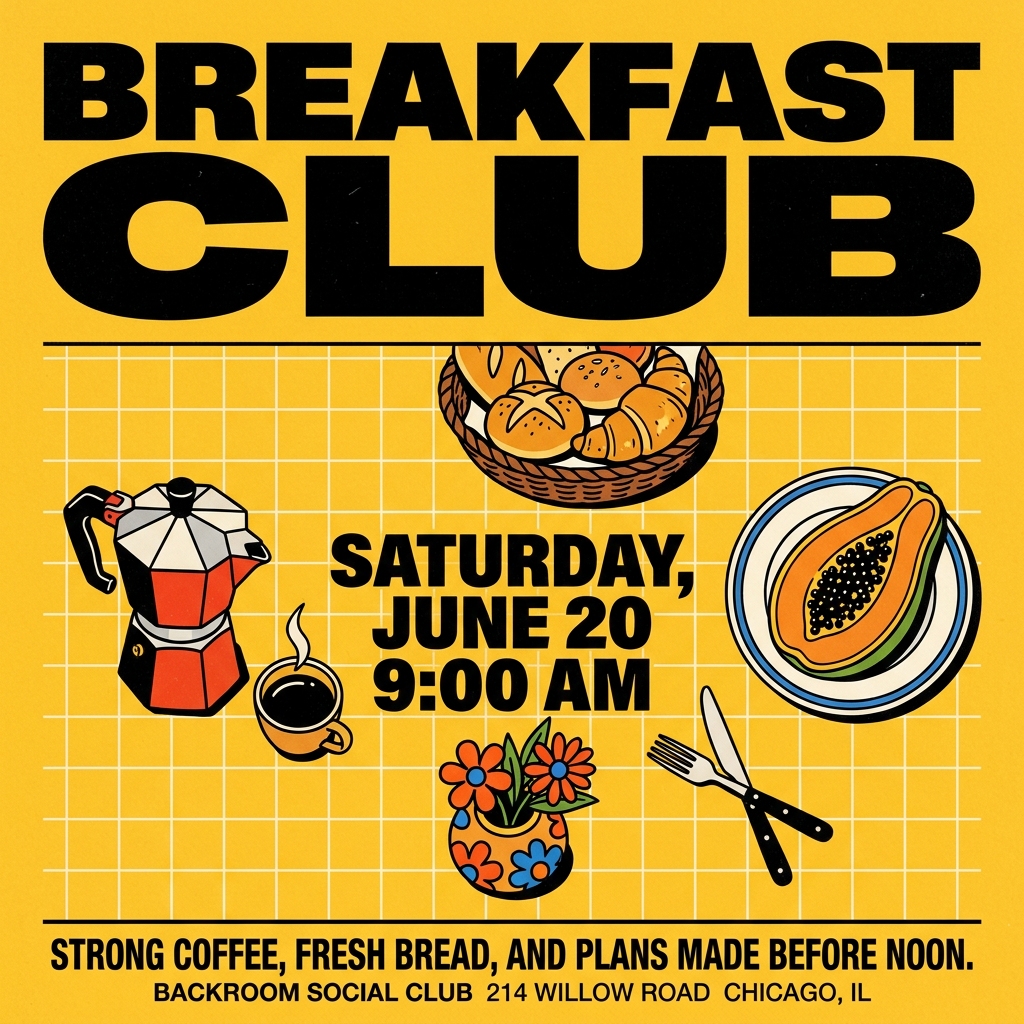
Turn your branding or event details into bold, nostalgic posters. It blends vibrant warm backdrops with a clean, retro square grid pattern to make any announcement look like a classic piece of mid-century graphic design.
Regenerate using your own assets.
The first poster you create sets the standard. Approve the version that best represents the campaign, and you now have a master asset ready for adaptation.
Step 3: Scale your campaign with on-brand variations
This is where the system pays off. Your event needs more than one poster. You need assets for social media announcing each speaker, a version for your email newsletter, and another for digital ads. In a traditional AI workflow, this would mean starting over with a new prompt for each, praying the style holds. With a Brandkit-driven workflow, it's a simple, repeatable process.
To create a variation, you simply re-run the same workflow with one or two changed inputs. For example:
- Speaker Announcement: Keep the event title and date, but change the main headline to the speaker's name and topic. You can provide a photo of the speaker for the AI to incorporate or let it generate a relevant abstract visual.
- Ticket Sale Reminder: Change the headline to 'Early Bird Tickets End Friday!' and adjust the call-to-action text.
- Schedule Update: Modify the body text to list the new session times and locations.
In each case, because the workflow is still connected to your Brandkit, the colors, fonts, and logo placement remain perfectly consistent. The AI's job is to intelligently integrate the new information into the established design system. You're no longer generating isolated images; you're producing a family of related campaign assets. This is how you achieve the brand recall and professional polish that makes an event feel credible.
For a different aesthetic, like a zine or indie-style event, this workflow provides a great alternative starting point.
Workflow code: #myup-msop-hlxf
Retro Zine Style Event Poster
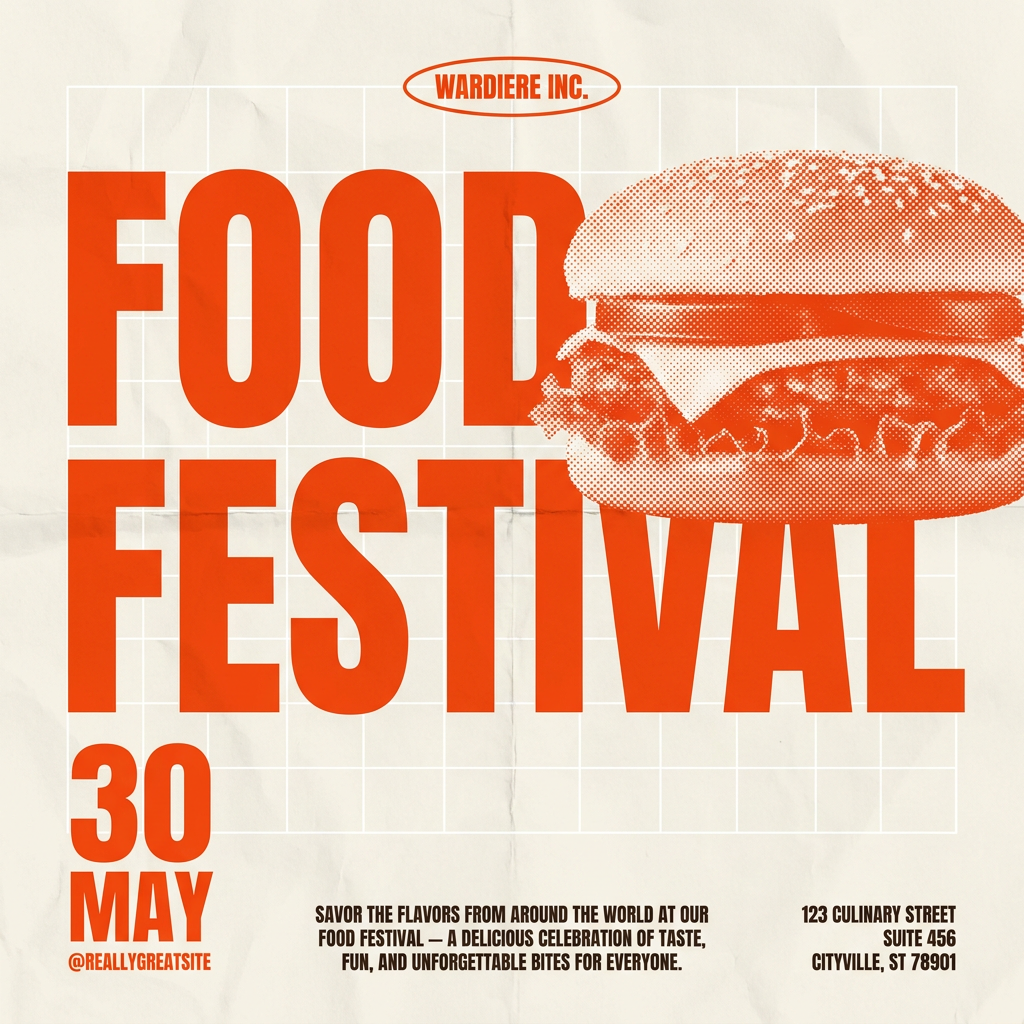
Give your social posts a gritty, analog zine aesthetic. It layers a crumpled paper texture and a subtle grid over a warm cream background to make any event graphic look like a tactile, photocopied flyer. Perfect for DIY gigs and bold promos.
Regenerate using your own assets.
The final check: Why a human eye still matters
Using a workflow system automates the most tedious parts of campaign production—maintaining brand rules, resizing assets, and creating variations. It eliminates the production bottleneck. But it doesn't eliminate you. MyUP executes the production; you validate the results.
For every poster the workflow generates, your role is to perform the final quality check. Does the text hierarchy make sense? Is the key information legible from a distance? Does the generated image truly capture the spirit of the speaker or topic? The AI gets you 90% of the way there, instantly and on-brand. Your expertise is what closes the final 10%.
This human-in-the-loop approach is crucial. It gives you full creative control without burdening you with the repetitive, manual tasks that kill momentum. You're not just an operator pressing 'generate'; you're the brand steward ensuring every single asset that goes public meets your standards.
A poster campaign system you can use for every event
A single AI-generated poster is an interesting image. A suite of consistent, on-brand posters is a professional marketing campaign. The difference between the two isn't a better prompt; it's a better workflow.
By shifting your process from one-off generation to a system-based approach, you solve the problem of AI style drift for good. The workflow is simple and repeatable for any event:
- Define the Rules: Build a MyUP Brandkit with your event's colors, fonts, and logo.
- Create the Hero Asset: Use a poster workflow to generate your main, on-brand poster.
- Produce Variations: Re-run the workflow with new text or images to scale your campaign with perfect consistency.
This is how you turn AI into a reliable partner for serious marketing. Stop fighting for consistency and start building a system that guarantees it. Create your first event Brandkit on MyUP.ai today.