You've seen the posts. An AI-generated building with wood grain flowing in three directions at once. Concrete that looks like plastic. A series of concepts for the same project that look like they were designed by five different firms. Generic AI image generators are powerful for form-finding, but they fail spectacularly at materiality and consistency — the very things that define a firm's architectural vision.
This isn't just an aesthetic annoyance; it's the primary barrier to using AI for client-facing work. The time saved generating ideas is lost trying to wrangle the outputs into something coherent. But the problem isn't the AI. It's the lack of a system. This article provides that system: a professional workflow for generating beautiful, stylized, and—most importantly—consistent architectural concepts on MyUP.ai.
AI's real job in your firm: rapid optioneering, not final renders
First, let's define the role of AI in a professional design process. The goal is not to replace V-Ray, Corona, or Lumion for photorealistic final renders. The immense value of AI is in the conceptual phase, where the cost of exploring a new idea is highest. AI's job is to dramatically lower that cost, allowing you to explore dozens of options for massing, fenestration, and mood in minutes, not days.
Think of it as a tool for rapid optioneering. Before you commit hours to modeling a single direction, you can generate an entire mood board of viable, on-brand concepts to discuss with your team and client. This is a different task than what tools like Adobe Firefly's new 'Blueprint' feature are designed for, which focuses on generating images that adhere to a technical drawing. MyUP's workflow is for the stage before the blueprint exists, where you're defining the creative vision and brand aesthetic.
Step 1: Build your firm's digital material library with a Brandkit
The core of this workflow—and the solution to AI's inconsistency—is establishing a single source of visual truth. On MyUP, this is the Brandkit. For an architectural firm, a Brandkit goes far beyond logos and fonts. It becomes your digital material library.
Instead of just uploading a color palette, you define your firm's signature aesthetic with visual references. You can build a Brandkit on MyUP that includes:
- Material Palette: Upload images of your preferred materials. Not just 'wood,' but 'light oak with a vertical grain,' 'board-formed concrete,' 'Cor-ten steel with a specific patina,' or 'blackened steel mullions.'
- Lighting Style: Include reference images for your desired lighting. Is it the 'soft, overcast morning light' of the Pacific Northwest, or the 'sharp, dramatic shadows' of a Mediterranean afternoon?
- Vegetation & Landscape: Add images of the specific types of trees, grasses, and groundcover that fit your climate and design ethos.
This Brandkit acts as a persistent style guide for the AI. It's a more robust and integrated solution than the community 'hacks' seen on platforms like Midjourney, where users try to force consistency with style references on a per-prompt basis. With a MyUP Brandkit, your firm's unique visual DNA is saved and applied automatically, every time you create. It's the difference between fine-tuning a model from scratch and having a dynamic, easy-to-update style library. You can learn more about the distinction in our guide to fine-tuning vs. using a Brandkit.
Step 2: The prompt workflow for architectural concepts
With your Brandkit established, prompting becomes a matter of describing the architecture, not the entire aesthetic. MyUP handles the style. Your job is to provide the specific architectural instructions. A strong prompt for conceptual design includes several key components:
- Architectural Style: Be specific. 'Modernist,' 'Brutalist,' 'Deconstructivist,' 'Japanese minimalist.'
- Form & Massing: Describe the shape. 'A single-story home with a flat cantilevered roof,' 'a cluster of interconnected cubic volumes,' 'a structure with a sweeping curvilinear facade.'
- Core Materials: Even with a Brandkit, specify the primary materials for this specific design. 'A facade of glass and board-formed concrete,' 'clad in light oak and blackened steel.' The Brandkit will ensure these materials are rendered in your firm's specific style.
- Environment: Set the scene. 'Nestled in a dense pine forest,' 'on a rocky coastal cliff overlooking the ocean,' 'in a sparse desert landscape.'
- Lighting & Atmosphere: Describe the mood. 'Soft morning light filtering through the trees,' 'dramatic golden hour lighting,' 'a misty, atmospheric day.'
On MyUP, you run your prompt, and the platform automatically references your Brandkit to guide the generation. The AI executes the architectural instruction, and your Brandkit validates the aesthetic. The result is a series of images that feel like they belong to the same project and the same firm.
Step 3: From raw generation to client-ready presentation
An AI-generated image is an asset, but it's not a presentation. The final step is to place your selected concepts into a professional context for a client meeting. This is the 'last mile' where many workflows fall apart, forcing you to download images and manually arrange them in another program. MyUP automates this.
Once you have a concept you're happy with, you can send it directly into a presentation template. You can add text, your firm's logo, and other annotations to explain the design intent. This turns a raw AI output into a finished, client-ready document in seconds. For a clean, single-image presentation, a minimalist poster layout works perfectly.
Workflow code: #myup-k4td-9k6z
Minimalist Poster
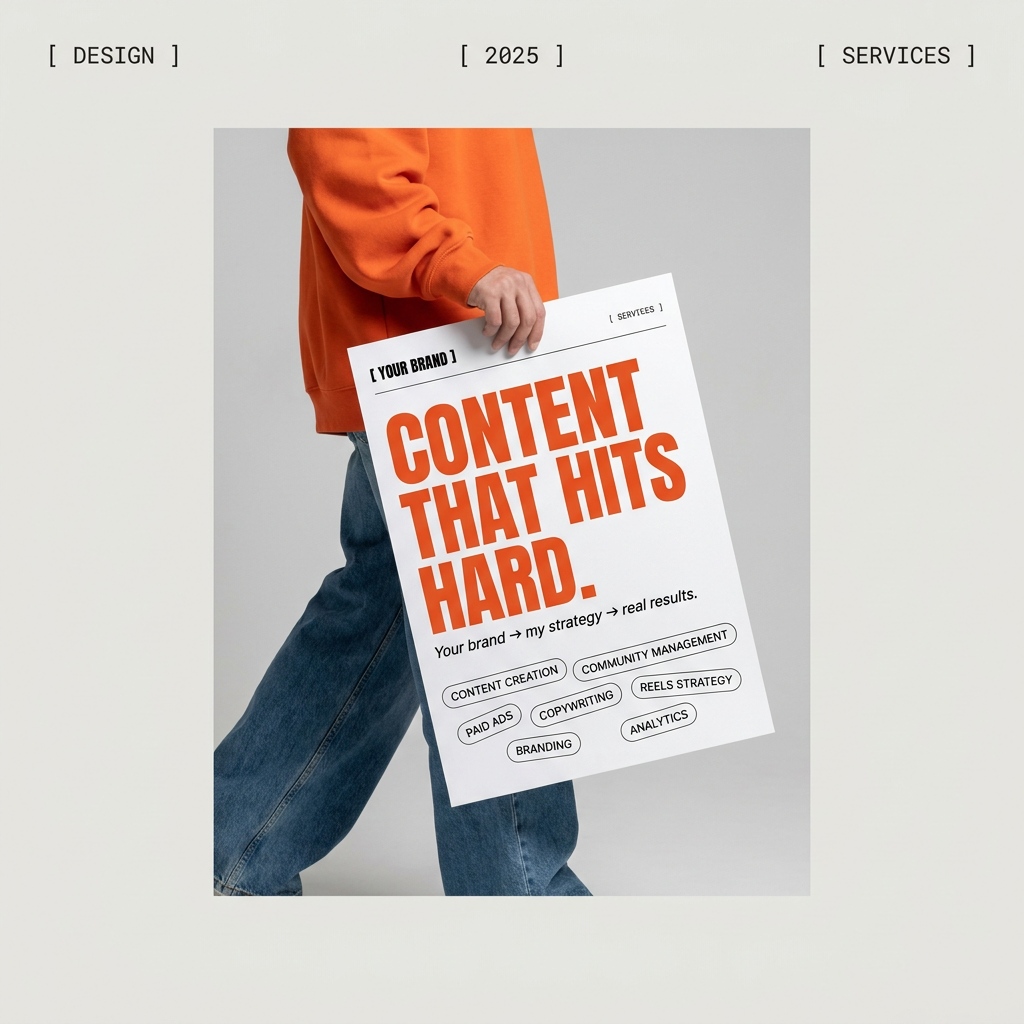
Give your social feed a clean, gallery-like aesthetic. This layout frames your images with structured mono typography and soft, neutral backgrounds for a high-end editorial look. It's perfect for minimal product launches or brand announcements.
Regenerate using your own assets.
Case study: creating a series of concepts for a forest cabin
Let's make this concrete. Imagine your firm is designing a minimalist cabin. Your Brandkit is loaded with references for light pine wood, dark grey slate, and large glass panels, along with a lighting style defined by soft, diffused forest light.
Your prompt might be: 'Architectural concept photo of a minimalist A-frame cabin in a misty pine forest. Facade of vertical light pine slats and a dark slate roof. A large, floor-to-ceiling glass wall faces the camera. Soft, overcast morning light.'
You run this prompt four times on MyUP. Because the Brandkit is active, you don't get four random interpretations of 'pine' or 'slate.' You get four distinct structural and compositional variations that all share the exact same material language and atmospheric quality. They look like a coherent set of explorations.
Now, you need to present these options side-by-side. Instead of exporting and arranging them manually, you can use a MyUP workflow to instantly place them into an editorial grid, perfect for comparison. This is how you build a complete presentation system, not just a set of images.
Workflow code: #myup-n0bi-2wzk
Bold Editorial Grid Poster
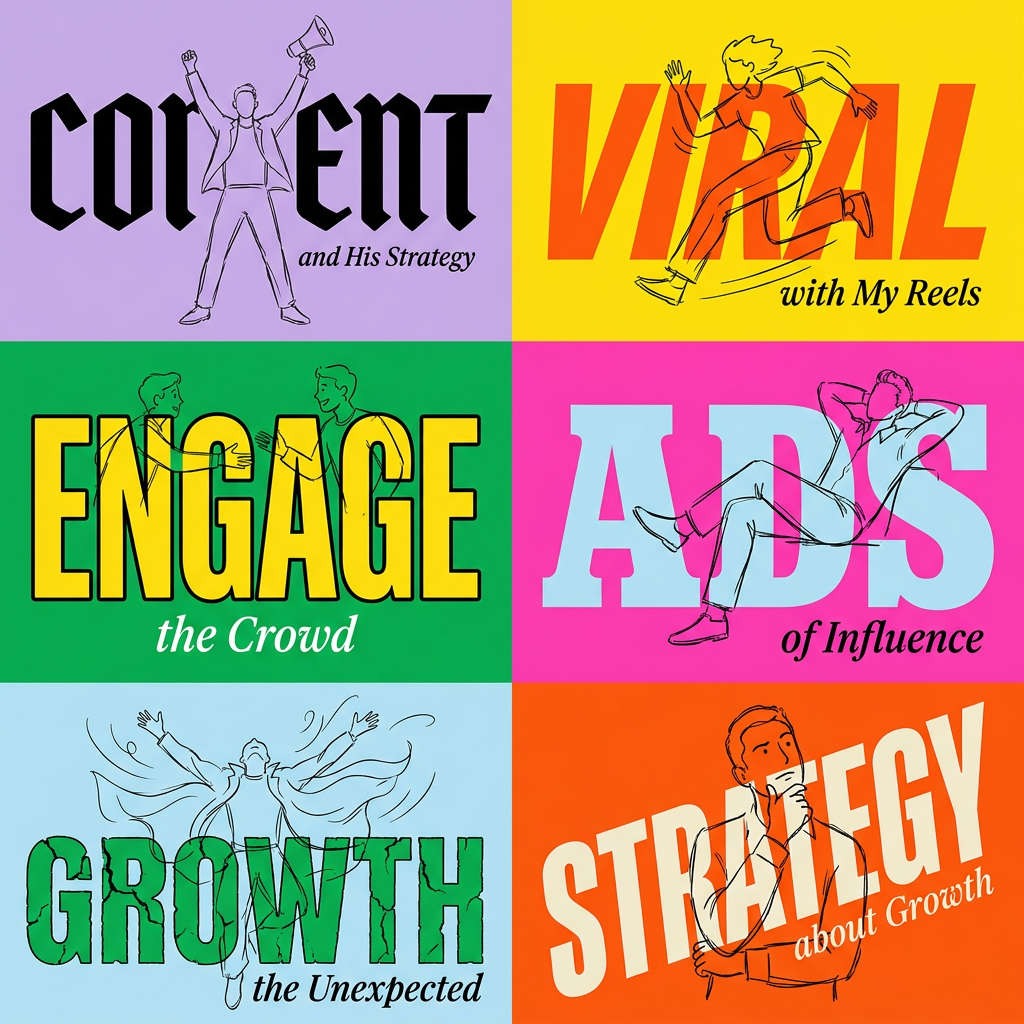
Create striking 2x3 editorial posters with six seamless, flat-color square cards in a perfect 4:5 grid. There are absolutely no gaps between the blocks, giving your content a bold, high-contrast magazine layout. It looks incredibly clean on any social feed.
Regenerate using your own assets.
The next frontier: from static concepts to sustainable design and video
This workflow is the foundation for a more systematic approach to creative exploration. Once you're comfortable generating consistent stills, you can extend the process. As search trends for 'AI for sustainable architecture' show, the demand is growing for tools that do more than just create a pretty picture. You can adapt your prompts to explore sustainable materials like 'rammed earth' or 'cross-laminated timber,' using your Brandkit to ensure the aesthetic remains high-quality.
Furthermore, the rise of AI video tools means you can now take your strongest still concept and generate a short, atmospheric fly-through video. This creates a dynamic client presentation without the time and expense of a full 3D animation pipeline. By starting with a consistent, on-brand image from MyUP, you provide the video AI with a much stronger base, leading to more coherent and professional results.
The bottleneck is visualization, not ideation
The challenge in architecture has never been a shortage of ideas. It's the time it takes to visualize them effectively enough to make a decision. Generic AI tools offer speed but create aesthetic chaos, making them novelties rather than professional instruments. A systematic workflow changes that. By combining a purpose-built Brandkit with structured prompting and automated presentation on MyUP, you can turn AI into a reliable engine for exploring dozens of on-brand concepts, getting you from a blank page to a client-approved vision faster than ever before.