Your podcast has a unique voice. Your new track has a specific vibe. But on social media, your promotional clips look like everyone else's: a static image with a generic waveform slapped on top. Tools are emerging that promise audio-reactive animation, letting you make parts of an image dance to the beat. While exciting, they don't solve the core problem: the underlying visual is still often a stock photo, and the final video lacks brand identity.
An audiogram that actually captures attention doesn't start with animation. It starts with a distinct visual identity. This tutorial walks through the complete workflow in MyUP.ai, from generating original, on-brand cover art to animating it into a professional video clip that reflects the quality of your audio.
Step 1: Generate your visual identity, not just a background
Most audiogram tools force you to start with a template or upload an existing image. This is a creative dead end. It assumes the most important visual element—the art—is already figured out. The result is that your unique audio gets packaged in a generic visual wrapper that blends into the feed.
The MyUP workflow flips this around. You start by creating a unique visual identity for your episode or song. Using MyUP's AI image generator, you can design cover art that is completely original and aligned with your brand. The key is using a MyUP Brandkit. By setting up your brand's colors, fonts, and logo once, you ensure that every visual asset the AI generates feels like it came from you, not a random prompt.
Instead of just prompting for 'a microphone,' you can ask for 'a vintage microphone in our brand's primary blue and secondary gold, minimalist illustration style, on a cream background.' The AI, guided by your Brandkit, produces art that's not just relevant but consistent. The user validates the output, and MyUP handles the production, giving you creative control without the manual design work.
To get started with a bold, eye-catching design for your next episode or release, you can use a workflow like this one directly in MyUP. Just provide the key details, and the AI will generate a poster that serves as perfect cover art.
Workflow code: #myup-xbur-hzoi
Bold Retro Yellow Event Poster
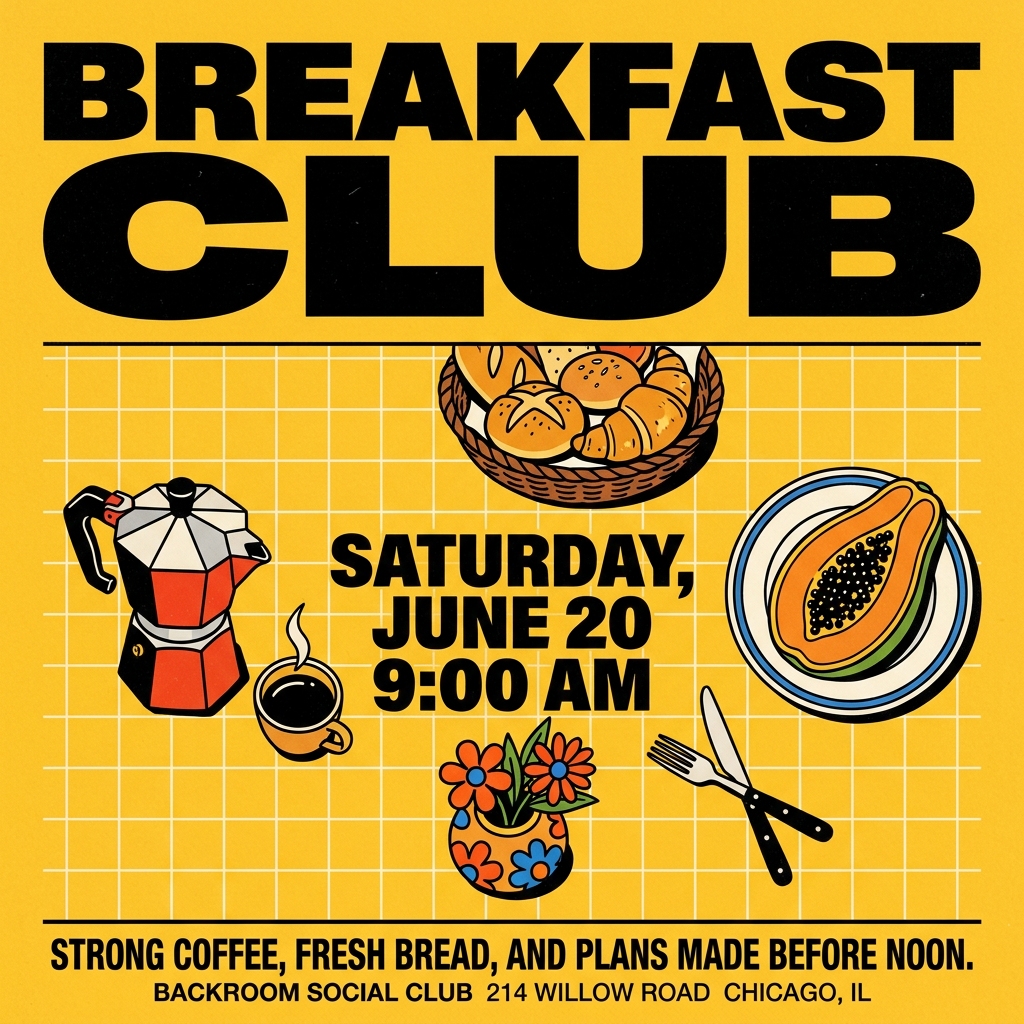
Turn your branding or event details into bold, nostalgic posters. It blends vibrant warm backdrops with a clean, retro square grid pattern to make any announcement look like a classic piece of mid-century graphic design.
Regenerate using your own assets.
Step 2: From static art to dynamic video in MyUP
Once you have your unique, AI-generated cover art, you're ready to bring it to life. This is where the audiogram creation happens, and because you're starting with a strong visual foundation, the end result will be far more compelling.
Inside the MyUP AI video tool, the process is straightforward:
- Upload Your Assets: Start a new video project and upload the cover art you just generated. Then, upload the audio clip you want to feature—whether it's a key quote from your podcast, a 30-second hook from your new song, or a segment of an interview.
- Add the Waveform: Select the audiogram element and choose a waveform style that fits your brand's aesthetic. You can customize its color to match your Brandkit, position it wherever you like on the screen, and adjust its size and sensitivity.
- Apply Subtle Motion: A static image with a moving line is better than nothing, but you can add more polish. Apply a subtle motion effect to the cover art itself. A slow zoom-in, a gentle pan, or a slight rotation can make the entire video feel more dynamic and professional without being distracting. This is about adding a layer of quality, not creating a chaotic music video.
This entire process happens on one platform. You aren't downloading an image from one tool and uploading it to another. The seamless transition from image generation to video editing saves time and keeps your creative momentum going.
Step 3: Add captions and titles that use your actual brand fonts
The final layer of a great audiogram is the text. This includes the episode title, guest name, a pull quote, or automatically generated captions for accessibility and silent viewing. This is another area where generic tools fall short, often limiting you to a handful of basic fonts that clash with your brand identity.
Because your Brandkit is active across the MyUP platform, any text you add to your video automatically uses your specified brand fonts and colors. There's no need to manually select fonts or hex codes for every text box. This ensures absolute consistency.
- Titles and Headings: Add the title of the podcast episode or song. MyUP will apply your brand's headline font.
- Captions: Use the AI to transcribe your audio and generate captions. You can then edit them for accuracy. MyUP ensures they appear in your designated body font and brand colors.
- Calls to Action: End your clip with a clear call to action, like 'Listen now on Spotify' or 'Link in bio,' complete with your logo, all pulled directly from your Brandkit.
This level of brand control is what separates a professional social asset from a generic one. To create a visual that leans heavily on strong typography, a vintage poster style can be a great starting point.
Workflow code: #myup-3xus-3l9x
Vintage Risograph Event Poster
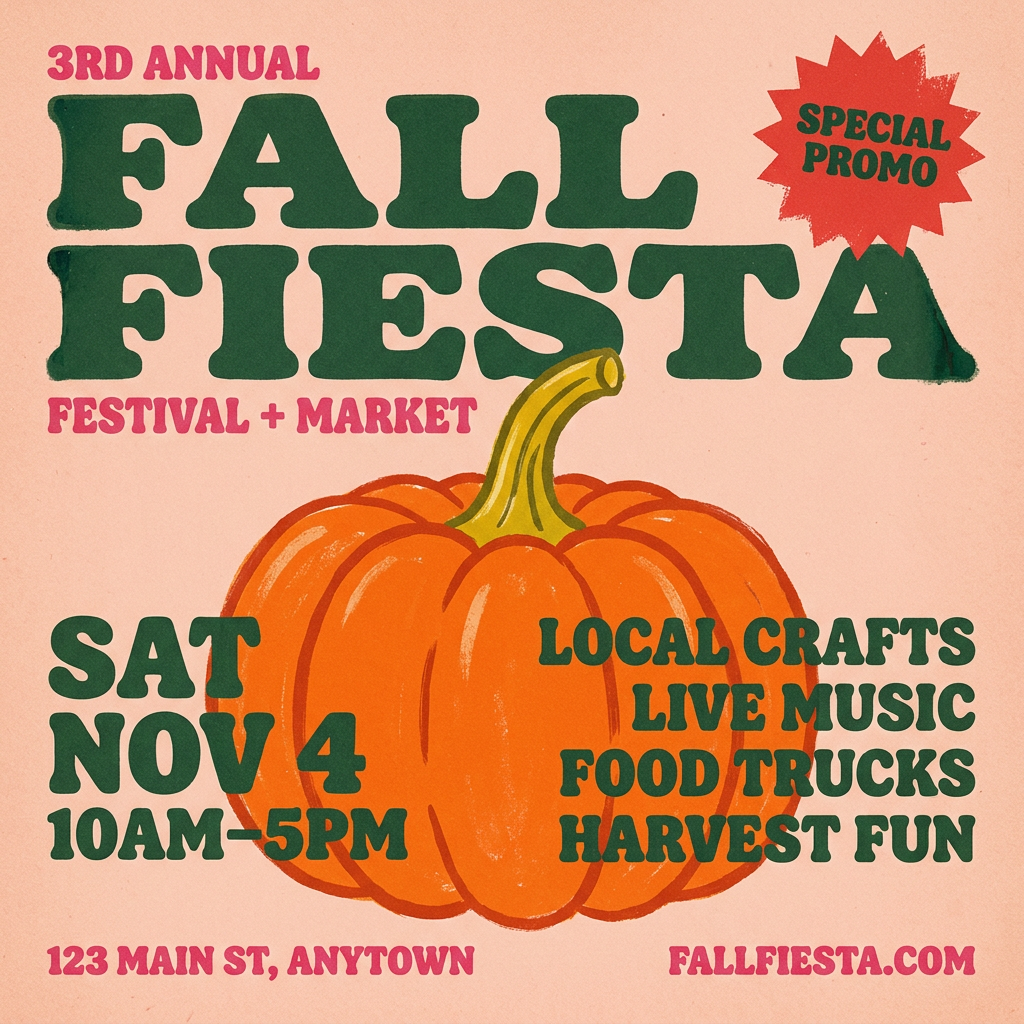
Turn any announcement into a gritty, tactile gig poster. It layers your text with an uneven letterpress ink texture over a dusty, warm pink risograph paper background. It’s perfect for giving social posts a real analog, screenprinted vibe.
Regenerate using your own assets.
The workflow that beats a single-feature tool
You could use one tool to generate an image, another to add a waveform, and a third to add text overlays. But stitching together disconnected tools is slow, inefficient, and almost always leads to brand inconsistencies. The font in your video editor doesn't match your website, or the colors in the audiogram are slightly off from your cover art.
The MyUP approach is a complete, repeatable workflow. By integrating on-brand AI image generation with a brand-aware video editor, you build a system for producing high-quality promotional content. The next time you need an audiogram, you don't start from scratch. You run the workflow, provide the new audio and text, and the AI generates a new, on-brand video clip in minutes. This is similar to the production system needed for other animated assets, like when creating brand-safe animated logos for video ads.
Your audio content is the result of careful work and a unique point of view. Your promotional assets should reflect that. By moving beyond generic templates and adopting a brand-first workflow, you create social clips that don't just share your audio—they build your brand.