
In the last few days of June 2026, Google Trends lit up with a breakout search: “AI ad generator from image.” This isn't just another keyword spike; it’s a signal that marketers are moving past basic generation and asking a much more strategic question: where should the creative process actually begin? For any given campaign, do you start with the copy or the core visual?
This choice defines your entire production process. A text-first workflow, starting in a tool like Claude or GPT, prioritizes the concept. An image-first workflow, starting with a product photo, prioritizes brand and product accuracy. Get this starting point wrong, and you’ll burn hours trying to bridge the gap between a great headline and a disconnected visual. The recent search trend proves many brands feel this pain and are looking for a visual-led solution. If your brand sells a physical product, the image-first approach is your fastest path to a finished ad. You can run this exact workflow in MyUP to see for yourself.
Workflow code: #myup-ywpr-rqz6
Professional Sportswear Ad
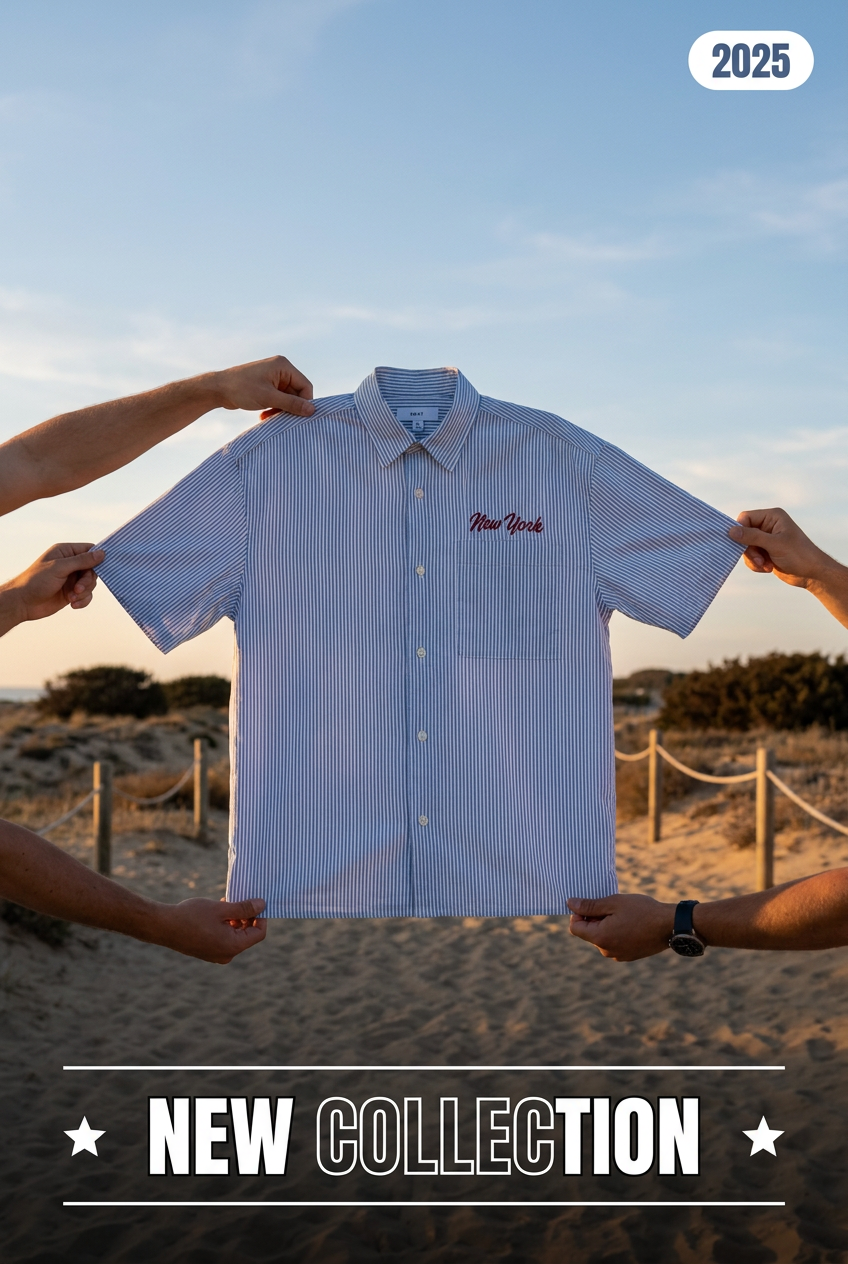
Suspends your apparel right in the center of a high-energy promo shot, held up by hands around the frame. It gives your shirts or jerseys a gritty, collaborative streetwear editorial look that feels alive and physical.
Regenerate using your own assets.
In this article, we'll build the same ad for a sportswear brand using both methods, compare the results, and give you a framework for choosing the right starting point every time.
Workflow 1: The text-first approach for concept-led campaigns
The text-first workflow is the default for many. It feels logical: figure out what you want to say, then create a picture to match. This process is typically copy-led and works well for services, software, or campaigns built around an abstract idea.
The process looks like this:
- Concepting: You start in a large language model (LLM) like GPT-4 or Claude 3. You brainstorm campaign angles, target audience pain points, and core messages. For our sportswear ad, you might explore themes like “endurance,” “urban exploration,” or “weather resistance.”
- Copywriting: From those concepts, you generate headlines, body copy, and calls to action. Let’s say you land on the headline: “Unleash Your Potential. Defy the Elements.”
- Prompt Distillation: This is the critical, and often frustrating, step. You must translate your carefully crafted copy and abstract concept into a concrete set of instructions for an image model like Midjourney. Your prompt might become: “cinematic photo of an athlete running on a futuristic rooftop in the pouring rain, dramatic lighting, high-energy, sense of determination.”
Pros: This approach offers maximum creative freedom at the ideation stage. It’s excellent for blue-sky concepting where the visual is meant to evoke a mood rather than showcase a specific product detail.
Cons: The risk of a creative disconnect is high. The final image, while technically matching the prompt, might feel generic or fail to connect with the specific product you’re selling. Getting the visual to be on-brand in terms of style, color palette, and tone is a manual process of trial and error, creating significant creative friction.
Workflow 2: The image-first approach for product-led campaigns
The image-first workflow, which is driving the current search trend, flips the script. It starts with your most important asset: the product itself. This process is visual-led and is the standard for e-commerce, fashion, CPG, or any brand where the product is the hero.
The process looks like this:
- Asset Grounding: You start with a core visual. This could be a clean product shot on a white background or a photo from a recent shoot. For our sportswear ad, we’d start with a high-resolution image of the new running shoe.
- Scene Generation: Using your product image as a foundation, you use an AI tool to build the world around it. Instead of describing the shoe in a prompt, you provide the actual shoe. The prompt becomes about the environment: “Place this shoe in a gritty, urban setting with wet pavement and neon reflections.” This is the core of the viral ‘one-shot’ product photography workflow.
- Contextual Copywriting: With a compelling and accurate visual locked in, you then generate copy that directly references what the user sees. The AI can analyze the image and produce headlines like “Grip That Never Slips” or “Engineered for the Concrete Jungle.”
Pros: This workflow guarantees product accuracy and brand consistency. It eliminates the guesswork of trying to make an AI model render your specific product correctly. It’s faster for creating variations for testing because the core asset is locked.
Cons: If you don't have a strong initial product photo, your options can feel more constrained. It requires a shift in thinking from “describe a scene” to “compose a scene around this object.”
Side-by-side: How the starting point changes the result
Let's compare the likely outcomes for our sportswear ad. The difference isn't just aesthetic; it's strategic.
The text-first ad, born from the “Defy the Elements” concept, would likely be a dramatic, wide shot of a runner. The mood is epic, but the shoe itself might be obscured by motion blur or rain effects. It sells an aspirational feeling but might fail to communicate the product’s specific features.
The image-first ad, built around the actual product photo, would be a hero shot. The shoe is the undeniable focus, with every material and design detail rendered perfectly. The background of wet pavement and neon lights supports the story instead of competing with it. The copy is direct and benefit-driven. It sells the product.
One is a brand ad, the other is a direct response ad. Neither is inherently better, but your starting point heavily influences which one you create. This is why a repeatable system for AI ad creative testing is so crucial; you can try both approaches and see what performs.
The decider: When to use each workflow
Choosing your starting point shouldn't be random. It's a strategic decision based on your campaign goals. Here’s a simple framework:
Use a text-first workflow when:
- Your “product” is a service, software, or an intangible concept (e.g., security, speed, consulting).
- The campaign goal is top-of-funnel brand awareness, focused on evoking a feeling or idea.
- You are in the earliest stages of concepting and need to explore broad themes before focusing on visuals.
- The final visual does not need to feature a specific, recognizable object.
Use an image-first workflow when:
- You are selling a physical product (e.g., apparel, electronics, beauty, food).
- The campaign goal is mid- or bottom-funnel, focused on driving consideration and conversion.
- You have an existing product photo or asset that must be the hero of the creative.
- Product accuracy and visual brand consistency are non-negotiable.
The best workflow is both: How to unify your process
The debate between text-first and image-first reveals the core weakness of using a disconnected stack of AI tools. A text generator doesn't know your brand's visual style, and an image generator doesn't know your campaign's key message. You are left to be the manual bridge between them.
A true AI production platform doesn't force a choice. It lets your strategy dictate the starting point. This is where MyUP's structure provides the solution. By building a Brandkit first—your unique visual identity including colors, fonts, logo, and style—you create a system that governs every output.
Whether you start with a text prompt or an uploaded image, the MyUP workflow ensures the result is always on-brand. You can build a workflow that starts with a text generation step for brainstorming, then pipes that into a visual generation step. Or, you can run an image-first workflow like the Professional Sportswear Ad (Workflow code: #myup-ywpr-rqz6) or the Luxury Floral Product Editorial (Workflow code: #myup-5q78-bln0) to build campaigns around your products.
Luxury Floral Product Editorial

Place any product in an ultra-minimalist, warm studio space. It wraps your item in a seamless cream and beige backdrop with a super soft bokeh that melts away, making the details pop. It’s perfect for giving goods a clean, high-end look.
Regenerate using your own assets.
The user—the brand expert—decides the strategy and validates the creative. MyUP executes the production, ensuring consistency no matter where the process begins. The friction disappears, and you can focus on the quality of the idea, not the mechanics of the tools.