
Your brand needs to feel at home in Tokyo, Berlin, and São Paulo. But your brand guidelines must be identical everywhere. This is the global marketer's dilemma, a constant trade-off between local relevance and global consistency.
The old solution involved a dozen agency briefs, a six-figure budget, and a three-month production cycle. The new, supposedly 'smarter' AI solution often devolves into a chaotic mess of off-brand visuals from generic tools. We’ve all seen the recent scramble to solve this. Adobe integrating Brand Kits into Express is a nod to the problem, but simply applying a color palette isn't brand governance. Meanwhile, creators on forums like Reddit are sharing heroic, multi-step hacks just to generate readable local text, proving how broken the process remains for serious marketing teams.
This guide lays out a different approach. Not ten different ads, but one master workflow. It’s a system you build once in MyUP.ai to generate endless, on-brand, localized creative on demand. This is how you move from one-off creation to a scalable production system.
Step 1: Set your non-negotiables with a Brandkit
Before you generate a single image, you need to establish brand governance. True consistency goes far deeper than just using the right hex codes. In MyUP, this foundation is the Brandkit. It’s where you codify your brand’s non-negotiables so the AI has clear rules to follow for every single asset it creates.
A MyUP Brandkit locks in your core visual DNA:
- Logos: Upload your official logos, which MyUP can intelligently place on generated assets.
- Colors: Define your primary and secondary color palettes to ensure every image uses your exact brand colors.
- Fonts: Specify your brand typography to guide text styles and maintain readability.
- Style Directives: This is the crucial part. You can add core style keywords (e.g., 'high-contrast studio lighting,' 'minimalist aesthetic,' 'shot on Kodak Portra 400') and negative prompts (e.g., 'no cartoons,' 'no text,' 'no blurry backgrounds') that apply to every generation.
This isn't a filter applied after the fact. The Brandkit is baked into the generation process itself. It’s the set of constraints that ensures creative freedom doesn't lead to brand chaos. It’s the consistency engine for your entire localization effort.
Step 2: Build your master ad template
With your brand rules locked in, the next step is to create a reusable master ad template. Think of this as your core campaign concept, designed with specific parts that are fixed and other parts that are designed to change for each market. In MyUP, this is a workflow.
A master workflow combines your Brandkit with a structured prompt that has both static and variable elements.
- Fixed Elements: These define the core of the ad that must not change. This includes the product itself, the overall art direction, camera angles, and any keywords that define your brand's unique style. For example: 'A professional studio shot of [Your Product] on a clean, white pedestal. Minimalist, high-end commercial photography.'
- Variable Elements: These are the placeholders you'll use to inject local context. You can define these with simple brackets, like `[model_description]` and `[location_description]`.
By separating the fixed brand identity from the flexible local elements, you create a powerful, repeatable recipe for generating ad variations. You're not just prompting for one-off images; you're designing an automation system for your creative production, much like the process used to create a week of social media visuals in minutes.
Your first localization template: The on-brand sportswear ad
To see this in action, you don't have to start from scratch. The 'Professional Sportswear Ad' template in MyUP is a perfect example of a pre-built master workflow. It's designed to showcase a product with an athletic model in a dynamic setting—a structure that's perfectly suited for localization. You can load this workflow and immediately see how the prompt is structured with both fixed style commands and open slots for your specific product and local context.
Workflow code: #myup-ywpr-rqz6
Professional Sportswear Ad
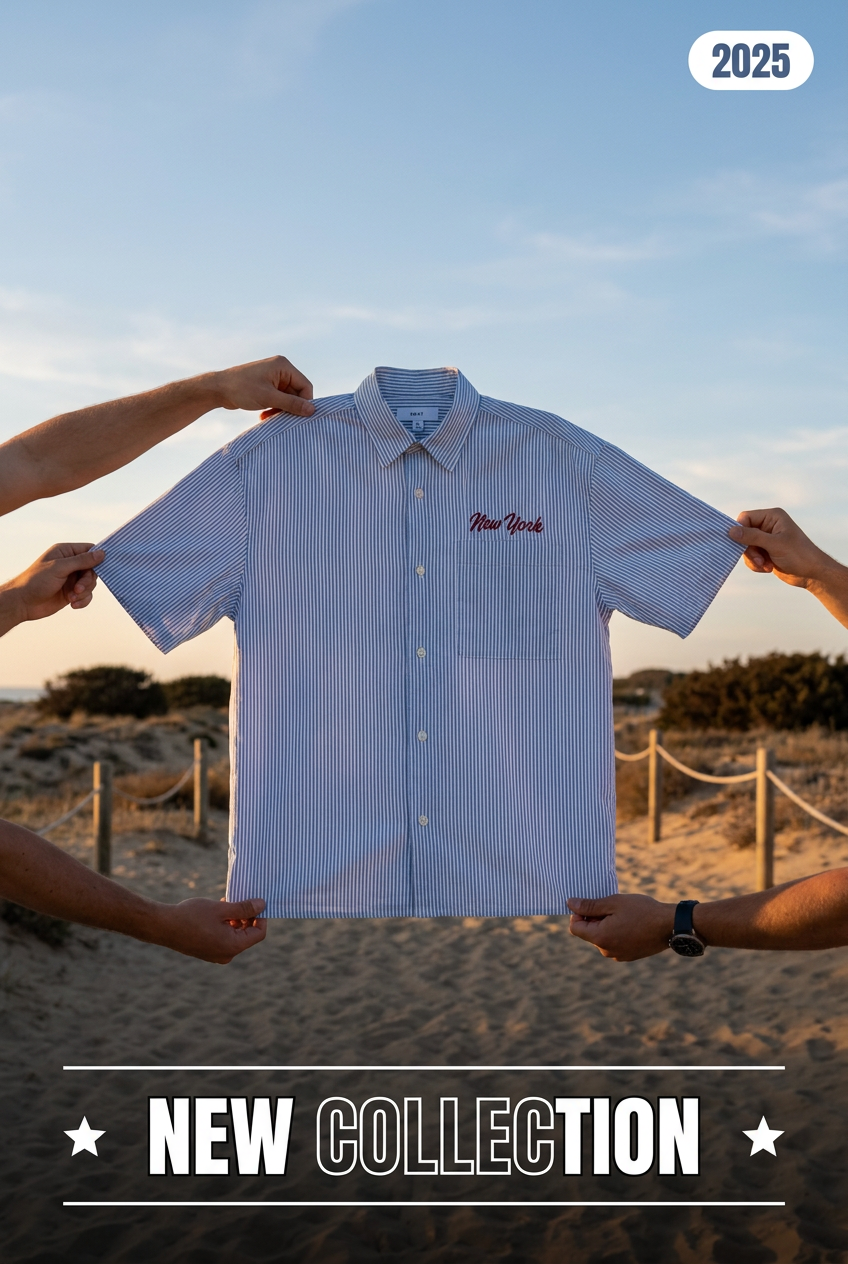
Suspends your apparel right in the center of a high-energy promo shot, held up by hands around the frame. It gives your shirts or jerseys a gritty, collaborative streetwear editorial look that feels alive and physical.
Regenerate using your own assets.
Step 3: Create your localization variables
Once your master workflow is ready, the next step is to define the variable sets for each target market. This is where you translate your market research into concrete creative inputs. You can organize this in a simple spreadsheet or document, creating a batch list you can run through your workflow.
For the sportswear ad example, your variable sets might look like this:
- Market: Japan
- `model_description`: a Japanese woman in her 20s with an athletic build
- `location_description`: running on a modern track with the Tokyo skyline in the background at dawn
- Market: Brazil
- `model_description`: a Brazilian man in his 30s with an athletic build
- `location_description`: stretching on a sunny beach in Rio de Janeiro with Sugarloaf Mountain in the distance
- Market: Germany
- `model_description`: a German woman in her late 20s with blonde hair, focused expression
- `location_description`: jogging through a lush, green forest path in the Black Forest during golden hour
This systematic approach ensures every variation is intentional. You're not just asking for random diversity; you're directing the AI to produce specific, culturally relevant visuals that align with your campaign strategy for each region.
Step 4: Generate, validate, and scale your campaign
Now, you execute. In MyUP, you can run your master workflow repeatedly, simply swapping out the variable sets for each market. In minutes, you'll have a batch of dozens of high-quality, on-brand, and fully localized ad creatives.
This is where the role of the marketer shifts. MyUP handles the repetitive, time-consuming production work. Your job becomes creative direction and validation. You review the generated options, select the strongest visuals for each market, and approve them for the campaign. You are in control, but you are not bogged down by the manual labor of creation.
This workflow isn't limited to one style. For a high-fashion or beauty brand, a different master template is needed. This 'Luxury Floral Product Editorial' workflow, for instance, provides a completely different aesthetic but operates on the same principle of fixed brand style and variable local elements.
Workflow code: #myup-5q78-bln0
Luxury Floral Product Editorial

Place any product in an ultra-minimalist, warm studio space. It wraps your item in a seamless cream and beige backdrop with a super soft bokeh that melts away, making the details pop. It’s perfect for giving goods a clean, high-end look.
Regenerate using your own assets.
What about localized text?
The biggest challenge in AI image generation remains text. Getting AI to render accurate, legible text—especially in non-Latin alphabets—is a problem no model has fully solved. The complex workarounds on Reddit confirm this is a universal pain point.
The MyUP workflow provides the most pragmatic solution: divide and conquer. Use the AI workflow to do what it does best: generate the perfect, visually localized, on-brand image. This is 90% of the work. Once you have validated your final images, the last step is to add your translated ad copy as a simple text overlay in your preferred design tool. This separates the complex visual generation from the simple text application, giving you a fast, reliable, and professional result every time.
One workflow, endless local markets
The old way of localizing creative was a choice between two bad options: a slow, expensive manual process with multiple agencies, or fast, cheap AI tools that produced a torrent of off-brand results. A workflow-based system offers a third, better path: scalable, brand-safe, and cost-effective production.
By building a master template in MyUP, you're not just creating an ad; you're building an asset generation engine for your brand. It’s a system that allows you to be globally consistent and locally relevant at the same time, without a global-sized budget. This is the difference between simply using AI and deploying an AI production system. To get started with a versatile product template, try the workflow below.
Workflow code: #myup-fy77-jljs
Minimalist Elegant Product Advertising Poster
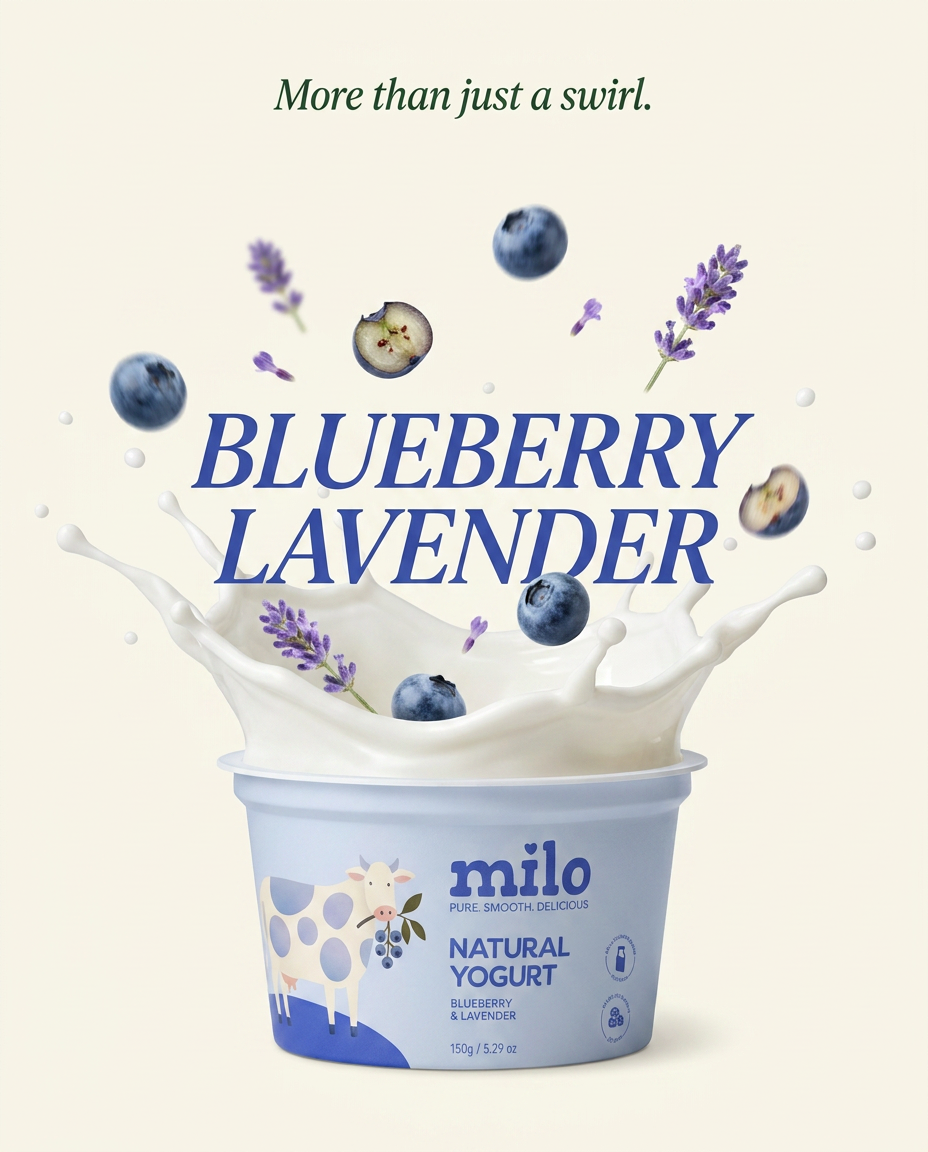
Turn any product shot into a high-end editorial ad. It places your item against a soft cream background with airy spacing and adds elegant, small serif typography at the top. Great for wellness or luxury brands wanting a calm, minimal aesthetic.
Regenerate using your own assets.