
You’re a restaurant owner, a food blogger, or a marketer. You need mouth-watering visuals for your menu, ads, or social media, and you’ve turned to AI for a fast, affordable solution. But the results are disappointing. The cheese on your pizza looks like yellow plastic, the steam from your coffee looks like a puff of smoke, and every dish has the same sterile, generic look. If this sounds familiar, you’ve run into the “sameness problem” that’s currently frustrating creators everywhere.
This guide provides a practical method to move beyond these fake-looking images. We'll show you how to produce hyper-realistic, appetizing food photography by focusing on your creative intention, not on complex technical tools.
Why your AI-generated food looks fake
You’ve tried generating photos for your new menu or social media campaign, but something is off. The cheese looks like plastic. The bread has a flat, lifeless crumb. And the steam rising from your hot soup looks more like cigarette smoke. You’re not alone. This is the “sameness problem” in AI food photography that was recently highlighted in a September 2026 TechCrunch report, and it’s a frustration echoed across Reddit forums daily.
Restaurant owners and marketers are finding that while tools like Midjourney or Stable Diffusion can produce an image of food, they often fail to create an image that’s actually appetizing. The results lack the specific details that trigger hunger: the glistening sauce, the delicate wisps of steam, the crispy, imperfect edges. Instead, you get generic, sterile visuals that don't sell.
The expert workaround: the complex, multi-tool process you're supposed to use
So, how do the experts fix this? The current answer is a complicated, multi-tool production process that’s inaccessible to most business owners. As of early September 2026, top AI artists on X and specialized blogs are sharing their techniques, and they are not simple.
The typical expert method involves:
- Intricate Prompting: Writing long, complex prompts with dozens of negative keywords to avoid common failures (e.g., `-no plastic, -no smoke, -no uniform texture`).
- Specialized Models: Hunting down and using specific LoRA models trained only on food to get better textures.
- Node-Based Editors: Building custom graphs in tools like ComfyUI, using multiple ControlNet models to define the shape of steam separately from the food itself.
- Post-Production: Taking the generated image into Photoshop or After Effects to manually paint on steam overlays, add motion blur, and correct lighting.
This technical maze is the opposite of efficient. You didn't start a restaurant or a food brand to become a part-time AI technician. You have a clear creative intention: a photo that makes people want to eat your food. You shouldn't need a degree in computer science to achieve it.
A better method: from creative intention to a finished photo
There is a more direct path from your idea to a finished, studio-quality creation. Instead of learning a dozen technical steps, you should be able to simply state your creative goal. This is the core philosophy behind MyUP, the Creative Production Platform. You don’t tell MyUP how to do something; you tell it what you want to create.
Your job is to hold the vision. MyUP’s job is to handle the entire technical production to bring that vision to life. Let’s break down how this practical method works for creating realistic food photography.
Step 1: Capturing realistic steam, not smoke
A common complaint on Reddit from just this week is that AI-generated steam looks like “a dense, smoky cloud.” That’s because most models don’t understand the physics of heat and moisture. To get it right, you need to describe the behavior of the steam, not just the word “steam.”
Instead of a generic prompt, describe your intention with sensory details:
- “A close-up shot of a dark ceramic mug of black coffee, with delicate, wispy tendrils of steam rising and catching the morning light.”
- “An overhead shot of a hearty bowl of ramen, with gentle, billowing steam that slightly blurs the noodles behind it.”
In MyUP, you can state this intention directly. The platform understands these nuances and produces the atmospheric effect as part of the finished image, no Photoshop required. For an even faster result, you can use a creative template built by a top creator who has already perfected this effect.
For instance, if you want to capture an authentic, up-close moment of someone enjoying a hot dish, a template can deliver that entire scene instantly. Template: #myup-xjsb-hirr
Bold Portrait Food Advertising Photo
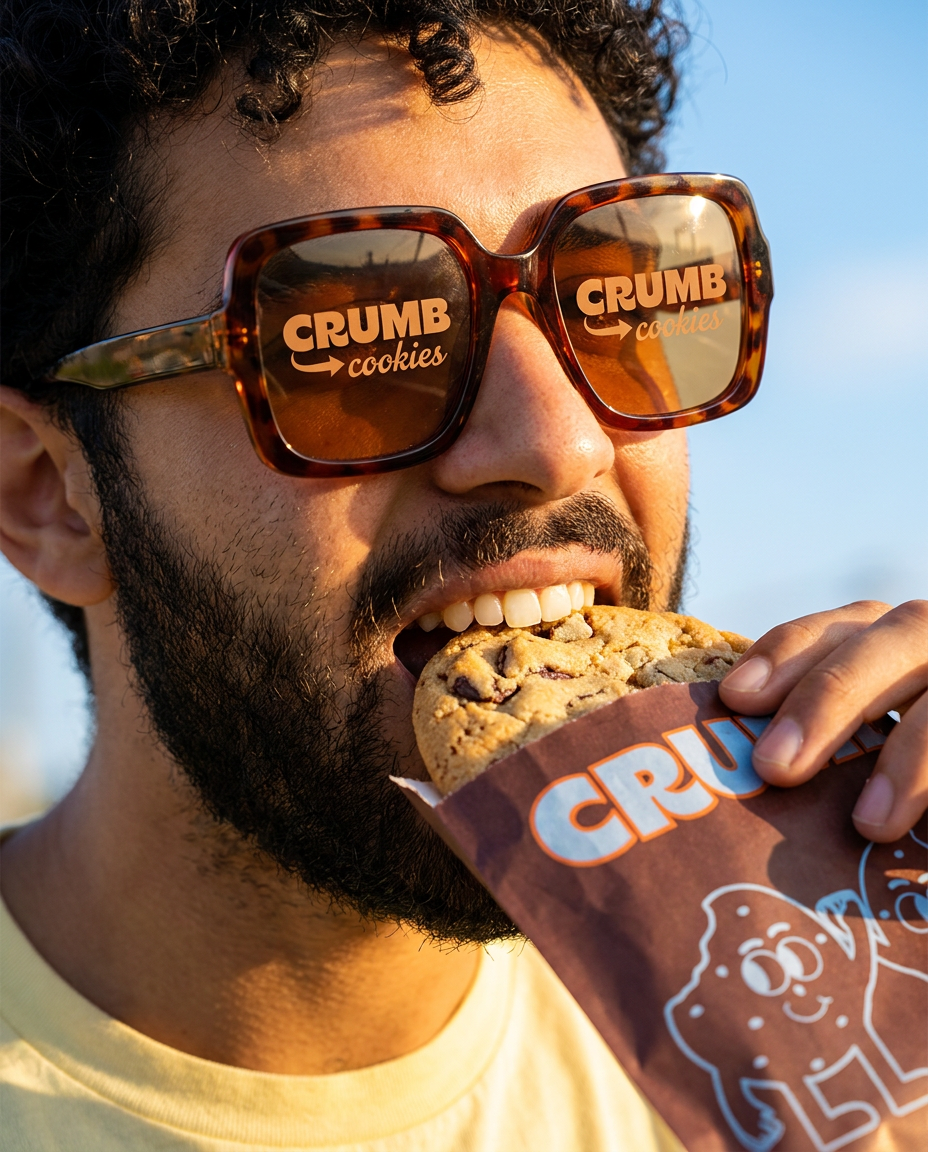
Get those high-impact, tight action shots of people actually enjoying your food brand. It drops your product right into a messy, realistic close-up bite shot that feels like a premium lifestyle campaign instead of a boring studio packshot.
Regenerate using your own assets.
Step 2: Defining mouth-watering textures that sell
The other major failure is texture. AI images often have a smooth, digitally perfect surface that makes food look like a 3D model. To create appetite appeal, you need to define the imperfections and surface qualities that make food look real and delicious. This is especially critical if you've found, like others, that your AI-generated menu designs look unappetizing.
Focus on descriptive words that convey touch and taste:
- For shine: “chicken wings with a glistening, sticky glaze,” not just “sauce.”
- For baked goods: “a slice of sourdough with a crispy, deep brown crust and a fluffy, open crumb structure,” not just “bread.”
- For fried foods: “French fries with visible salt crystals and a golden, bubbly texture.”
By describing the final texture you want, you guide the production to a much more realistic result. MyUP’s platform is designed to translate these sensory descriptions into the final visual. To see this in action, you can use a template designed specifically for creating food ads with incredible depth and texture. Template: #myup-fts6-4ihp
Vertical Gourmet French Fry Ad
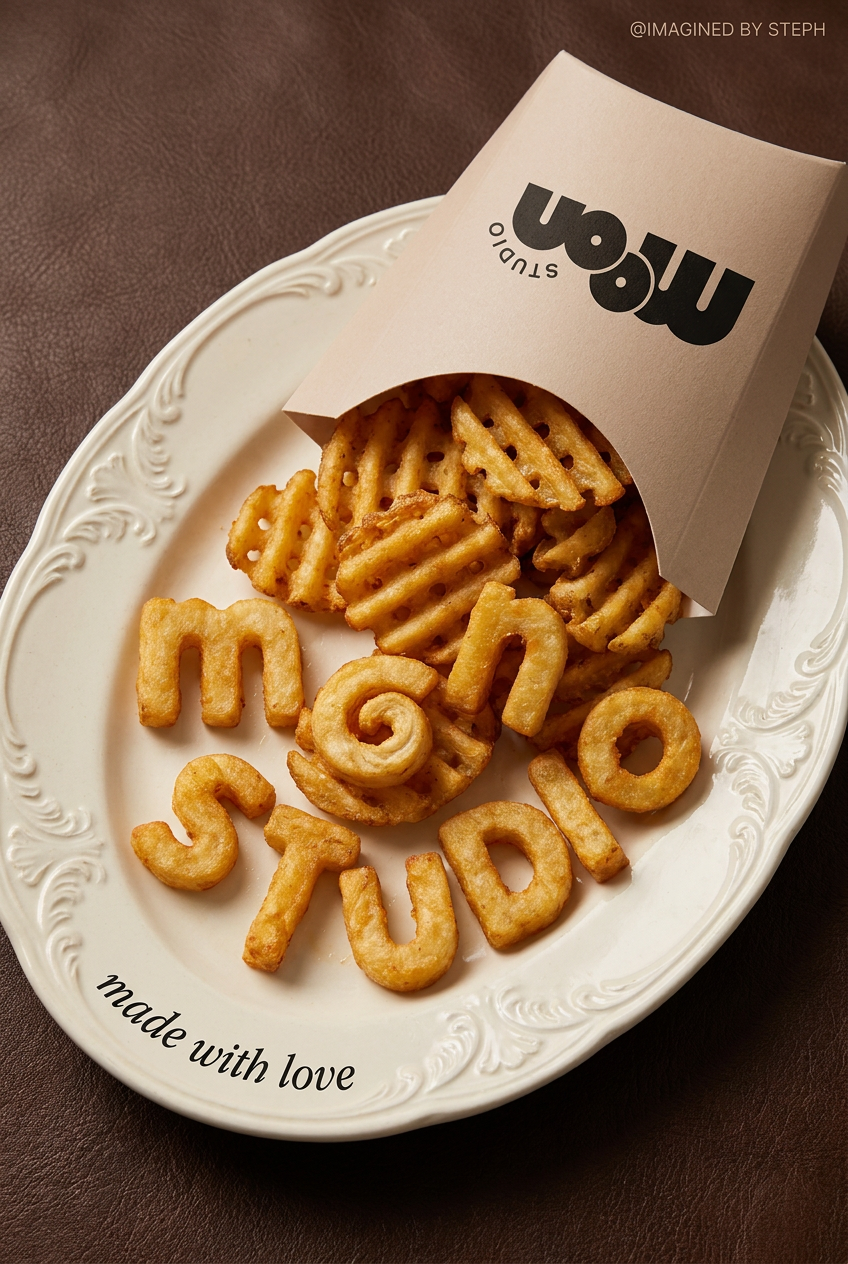
Transform your products into high-fashion editorial ads. This setup uses a dynamic diagonal layout and a slightly tilted overhead angle to give food and packaging incredible depth and texture. It's perfect for giving any brand a chic, premium look.
Regenerate using your own assets.
Step 3: Composing the shot for appetite appeal
A great food photo is more than just the dish itself; it’s about the story. The composition—lighting, props, background, and branding—is what turns a picture of food into a marketing asset. Instead of generating an isolated dish and trying to piece together an ad later, you can produce the entire finished creation in one go.
Describe the full scene in MyUP:
- “A rustic wooden table with a bowl of pasta, a glass of red wine, and a checkered napkin, shot in warm, soft afternoon light.”
- “A minimalist composition of a gourmet burger on a slate plate against a clean, dark background.”
Furthermore, maintaining a consistent look across all your marketing is crucial. This is where a Brandkit comes in. By setting up your brand's colors, fonts, and logo once in MyUP, every creation can automatically inherit your visual identity, ensuring every photo feels like it belongs to you. This is a core part of a reliable production method for consistent marketing visuals.
You can even use templates that transform a single product shot into a complete, on-brand poster, instantly applying a specific style. For a classic look, try this. Template: #myup-1hgd-9oz5. For an even more automated approach that pulls colors from your packaging, use this. Template: #myup-tbky-nciq
Retro Style Food Advertising Poster
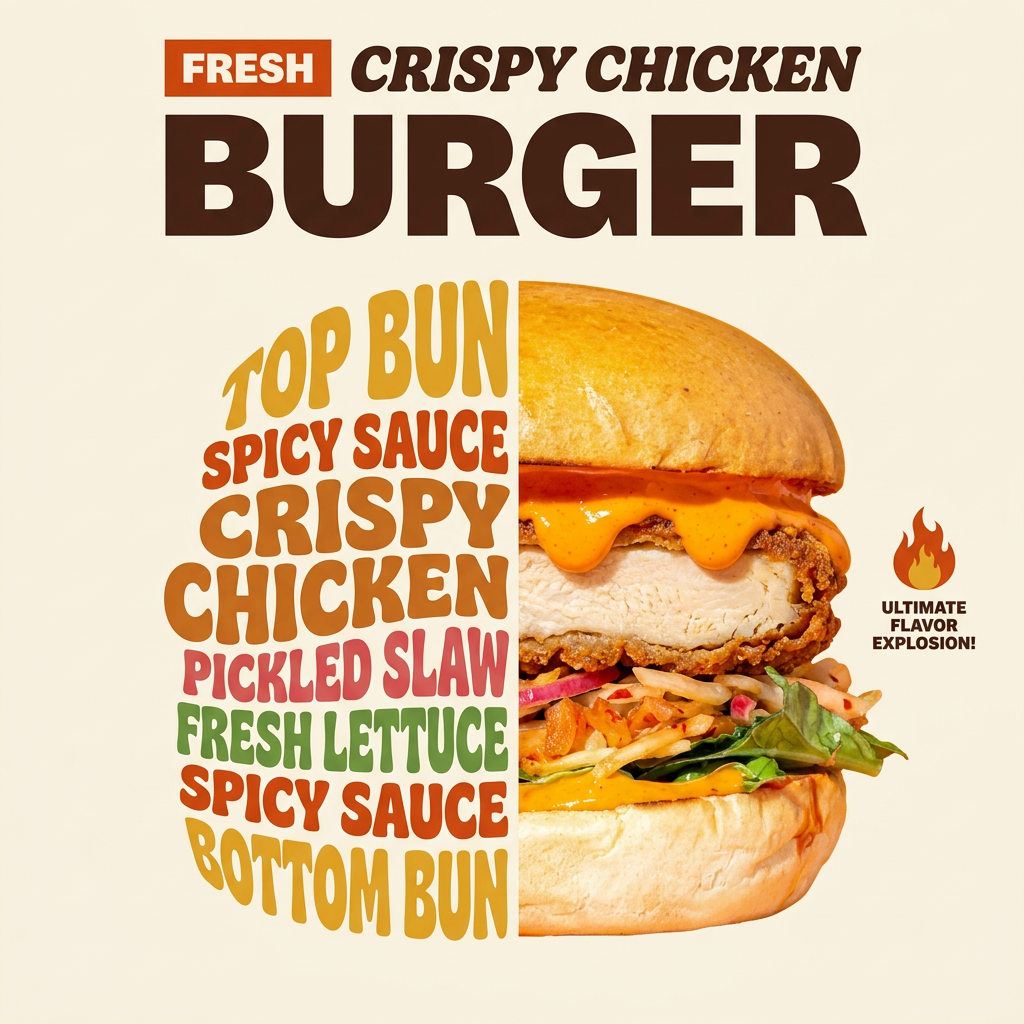
Turn any food product shot into a bold, nostalgic retro advertisement. It drops your item onto a warm cream background and automatically frames it with a color-matched header badge for that classic mid-century print ad look.
Regenerate using your own assets.
Food Brand Poster
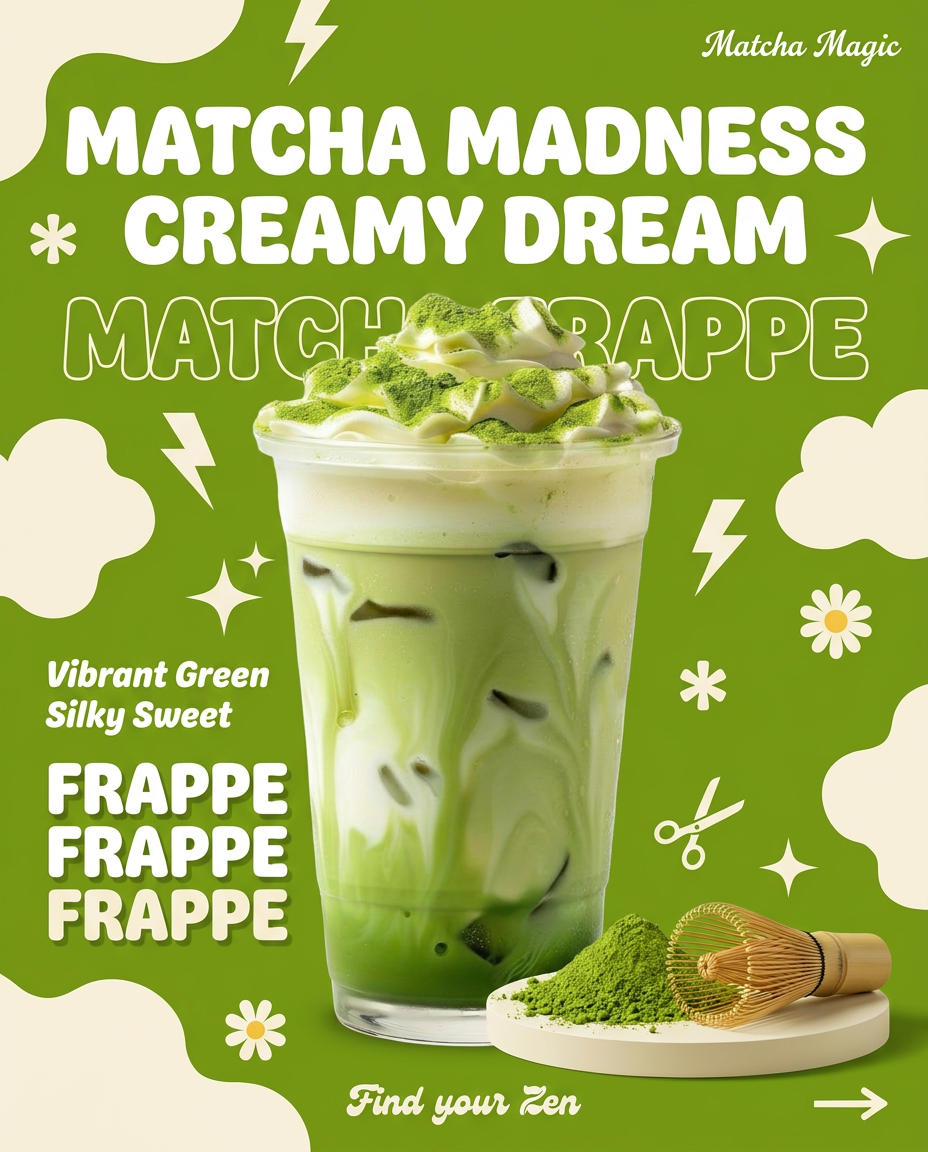
Instantly turn any food or drink product packaging into a bold, vibrant retro poster. The system automatically reads your bottle or box to grab its exact colors and ingredients, then crafts a perfectly coordinated vintage background around it.
Regenerate using your own assets.
From a bland prompt to a finished menu photo
The difference is clear. A generic prompt like “photo of soup” in a standard tool gives you a technically correct but soulless image. It’s forgettable and unappetizing.
Describing your full creative intention in MyUP— “A steaming bowl of tomato soup with basil, shot from a 45-degree angle, with rustic bread on the side, on a dark wooden table”—delivers a finished, studio-quality photograph that’s ready to be published on your menu or in an ad campaign. You didn't need to learn about LoRAs or open Photoshop. You just needed to describe the result you wanted.
This is the future of creative production. It’s not about becoming an expert in complex tools; it’s about having a platform that understands your vision and handles the rest. Ready to create food photos that actually make people hungry? Try MyUP.ai and turn your intention into a finished creation.