
You've generated dozens of AI thumbnails for your latest video or ad campaign, but the clicks just aren't coming. The images look clean and professional, but they feel flat, lacking the secret ingredient that makes someone stop scrolling and engage. This is a common frustration: AI tools are great at generating pixels, but they often fail to produce truly high-converting creative assets.
The difference between a thumbnail that gets ignored and one that gets clicked lies in a few key factors: emotional resonance, visual clarity, and brand consistency. Mastering these elements used to require complex tools and years of design experience. Now, there's a more direct path. This guide provides a practical method for engineering AI thumbnails that are not just visually appealing, but are built from the ground up to be irresistibly clickable.
The click-through challenge: why generic AI thumbnails fall flat
You’ve seen the promise: generate stunning visuals for your ads and content in seconds. Yet, the reality is often a stream of generic, soulless images that look vaguely like everything else. These AI-generated thumbnails, while technically proficient, frequently fail at their one crucial job: getting the click. They lack the emotional spark, storytelling, and brand identity that stops a user from scrolling.
This isn't just an aesthetic problem; it's a performance issue. A low click-through rate (CTR) means wasted ad spend, undiscovered content, and missed revenue. The challenge isn't just to create an image, but to produce a finished visual asset engineered for conversion. It's time to move beyond simple generation and start optimizing for the clickable factor.
Decoding the clickable factor: what truly grabs attention
A high-performing thumbnail isn't just a pretty picture. It's a carefully constructed piece of communication designed to do three things instantly: evoke curiosity, create an emotional connection, and present a clear value proposition. Viewers decide in a fraction of a second whether to engage, and that decision is based on a few core psychological triggers.
- Emotional Resonance: Does the image make the viewer feel something? Surprise, intrigue, delight, or even urgency can be powerful drivers.
- Visual Clarity: Is it immediately obvious what the content or product is about? A confusing or cluttered image gets skipped.
- Curiosity Gap: Does the thumbnail hint at a story or a solution without giving everything away? Posing a visual question is a classic way to earn a click.
Traditional creative production requires years of training to master these principles. With a platform like MyUP, you don't need to be a designer. You simply state your creative intention. Instead of describing pixels, you describe the outcome: “I want a thumbnail for my new skincare product that feels luxurious and creates a sense of curiosity.” MyUP translates that intention into a finished visual that is engineered to perform.
Injecting human touch and storytelling into AI visuals
One of the most common complaints about AI visuals is their lack of a “human touch.” The expressions can feel vacant and the scenes staged. To create a thumbnail that connects, you need to inject personality and subtle narrative cues. This means directing the AI to produce specific emotional states and dynamic compositions that tell a micro-story.
For example, instead of a generic prompt for a “person looking at the camera,” you can specify an intention for “a woman with an expression of genuine surprise and delight” or “a tense, high-angle shot that creates a feeling of suspense.” This level of control is what separates a generic stock photo from a compelling, clickable image. On MyUP, you can use templates designed by top creators that are pre-configured for specific narrative effects.
For instance, to create a raw, editorial look that feels grounded and authentic, you can use a production method that forces a specific pose and perspective. This instantly adds a layer of storytelling that a standard portrait lacks. Template: #myup-lkxt-mwbw
Hyperrealistic High Angle Fashion Editorial
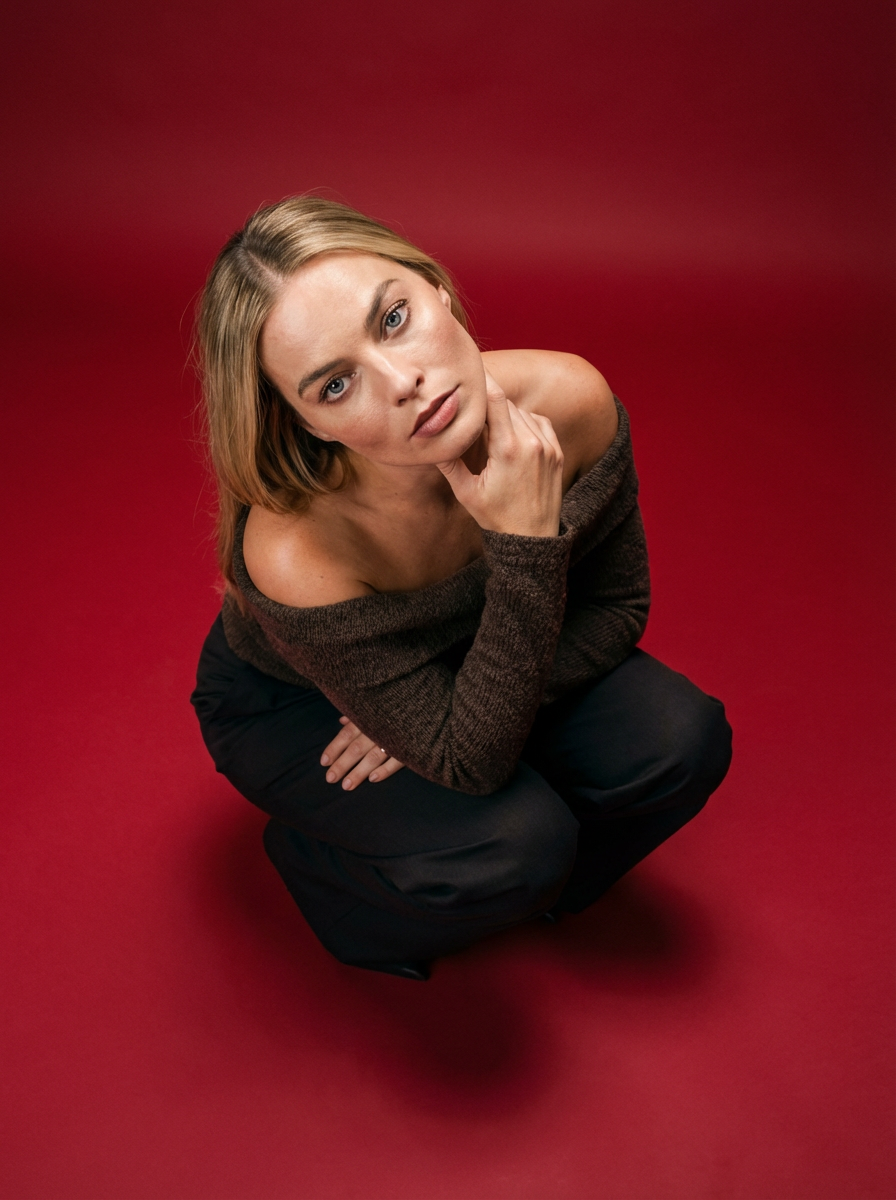
Frame your subject in a grounded, high-angle editorial style. This setup forces a compact, kneeling pose that brings out a raw and hyperrealistic fashion aesthetic, perfect for making any garment or accessory look sharp and intentional.
Regenerate using your own assets.
Mastering text, composition, and visual hierarchy for clarity
A great image can be ruined by bad text. Illegible fonts, poor placement, and text that fights with the background are common issues in basic AI generations. A high-converting thumbnail requires a clear visual hierarchy where text and imagery work together to guide the viewer’s eye to the most important message.
Effective thumbnail production involves more than just pasting text on an image. It requires an understanding of composition, color contrast, and typography. The goal is to make the value proposition readable in an instant, even on a small mobile screen. MyUP handles this entire production process, ensuring that any text you include is perfectly integrated into the visual, maintaining readability and aesthetic cohesion. This avoids the amateurish look of tacked-on text and delivers a professional, finished design. For more on this, see our guide on designing product posters with consistent text.
Ensuring brand consistency across all AI-generated thumbnails
As you scale your content or ad campaigns, maintaining a consistent brand identity is non-negotiable. Using random AI-generated thumbnails creates a chaotic and unprofessional look that dilutes brand recognition. Your audience should be able to recognize your content at a glance, and that requires a unified visual language.
This is where MyUP’s Brandkit feature becomes essential. You build your visual identity—colors, fonts, logo, and overall style—just once by providing a URL or uploading assets. From that point on, every creation you produce on MyUP automatically inherits your brand’s DNA. You can tell MyUP, “I want a series of ad thumbnails for our summer sale,” and the platform will deliver a set of on-brand visuals without you having to manually specify colors or fonts each time. This ensures every thumbnail not only aims for a high CTR but also reinforces your brand identity.
A premium, cinematic brand aesthetic can be instantly applied to any product. Template: #myup-mvtk-dmtt
Luxury Perfume Brand Commercial Video
Capture a cinematic glow that makes any subject look like a brand icon. This process blends a sharp, low-angle still with a fluid motion sequence to turn your product into the star of a golden hour commercial.
Regenerate using your own assets.
Iterative optimization: A/B testing for guaranteed performance
A/B testing is the gold standard for optimizing marketing creatives, and thumbnails are no exception. What you think is the best visual might not be what your audience responds to. The key to guaranteed performance is to test multiple variations and let the data decide.
In the past, creating multiple high-quality variations was time-consuming and expensive. Now, you can generate several on-brand options in minutes. With MyUP, you can describe your intention and ask for different emotional angles, color schemes, or compositions. For example, you could test a thumbnail showing a person enjoying your product against a more minimalist, product-focused shot.
This iterative process of generating, testing, and learning is what drives consistently high click-through rates. By leveraging AI to create these variations at scale, you can move from creative guesswork to data-driven optimization. For a high-impact, lifestyle-focused variation, you can use a template that captures a realistic, close-up moment. Template: #myup-xjsb-hirr
Bold Portrait Food Advertising Photo

Get those high-impact, tight action shots of people actually enjoying your food brand. It drops your product right into a messy, realistic close-up bite shot that feels like a premium lifestyle campaign instead of a boring studio packshot.
Regenerate using your own assets.
From generic visuals to guaranteed clicks
The era of generic, low-effort AI thumbnails is over. To stand out and drive results, you need to engineer your visuals with intention. By focusing on emotional resonance, brand consistency, and data-driven optimization, you can transform your thumbnails from passive images into active conversion drivers.
MyUP is the Creative Production Platform built for this purpose. It empowers you to describe your goal—a high-converting thumbnail—and handles the entire production from A to Z, delivering a finished, on-brand creation ready to publish. Stop generating images; start producing results. Make Your Unimaginable Possible by trying MyUP today.