On June 29, 2026, Google announced that Gemini's personalized AI image generation is now free for all US users. It’s a compelling offer that promises images tailored just for you. But for anyone creating content for a business, a client, or a personal brand, this type of 'personalization' isn't just unhelpful—it's a liability. The reason is simple: you don't need an AI that knows your personal search history. You need an AI that knows your brand's style guide. This is the critical difference between an AI that creates for you and an AI that creates for your brand, and it’s where most creators waste hours trying to force a consumer tool to do a professional job.
User memory vs. brand memory: Why your AI gets it wrong
The new wave of 'personalized' AI, from Google's Gemini to Midjourney's 'Personal Style' feature, operates on a principle we'll call user memory. It implicitly learns from everything you do—your prompts, your upscales, your re-rolls—to guess what you might like next. It’s optimized for serendipity and personal exploration. For an artist developing a signature style, this can be a powerful creative partner.
But for a brand, this is chaos. A brand doesn't need serendipity; it needs discipline. It relies on a brand memory—an explicit, defined set of rules including specific hex codes, approved fonts, logo usage guidelines, and a consistent photographic style. When you use a user-memory AI for brand content, you're fighting its core programming. You're asking an AI trained on your personal whims to suddenly adhere to a strict corporate identity. The result is an endless cycle of nearly-right images that are always slightly off-brand.
The hidden costs of 'close enough' visuals
What’s the real cost of an image that’s just 'close enough'? It's not just about the wrong shade of blue. It's about brand dilution. Every off-brand visual you post chips away at the trust and recognition you've built. Inconsistent imagery makes a brand look unprofessional and disorganized, undermining the perceived quality of its products or services.
Then there's the production cost. The time you spend trying to coax Gemini into using your brand's font, or re-rolling an image 30 times to get the right mood, is time you're not spending on strategy or growth. This manual effort to correct a tool that is fundamentally wrong for the job is a major workflow bottleneck. You end up settling for 'good enough' because 'perfectly on-brand' feels impossible.
Instead of wrestling with the AI, you need a workflow that starts with your brand identity already baked in. This template, for example, is designed to generate a product-focused social media post that respects brand guidelines from the very first click. The user validates the output; MyUP handles the production.
Workflow code: #myup-kbgo-tlle
Product Brand Post

Drop in your product to generate a cohesive nine-post Instagram grid. It blends warm lifestyle photography and flat-lay packaging with bold hand-drawn doodles, collages, and urban billboard mockups. Everything automatically styles itself to your brand's colors.
Regenerate using your own assets.
How to build a 'brand memory' for your AI in MyUP
The solution is to stop using tools with a fuzzy 'user memory' and start using a platform with an explicit, controllable brand memory. In MyUP, this is called the Brandkit. It’s a persistent, saved visual identity that the AI uses as its source of truth for every single thing it creates for you.
Building it is straightforward:
- Create your Brandkit: You can create a Brandkit in MyUP by simply providing your website URL. MyUP automatically extracts your logo, color palette, and fonts. You can then refine these assets and add specific style prompts that define your brand's photographic or illustrative mood.
- Set it as the default: Once saved, your Brandkit becomes the foundation for all creation. The AI no longer guesses; it follows the rules you've set.
- Generate with confidence: Now, when you generate an image, the AI is constrained by your brand memory. It will use your colors, incorporate your logo correctly, and adhere to your visual style. You've moved from hoping for a lucky result to directing a predictable outcome.
This level of control is essential for high-stakes assets like product ads, where brand recognition is paramount. The workflow below generates a clean, studio-quality ad that automatically pulls from your active Brandkit.
Workflow code: #myup-u4lt-o0ho
Studio Product Ad
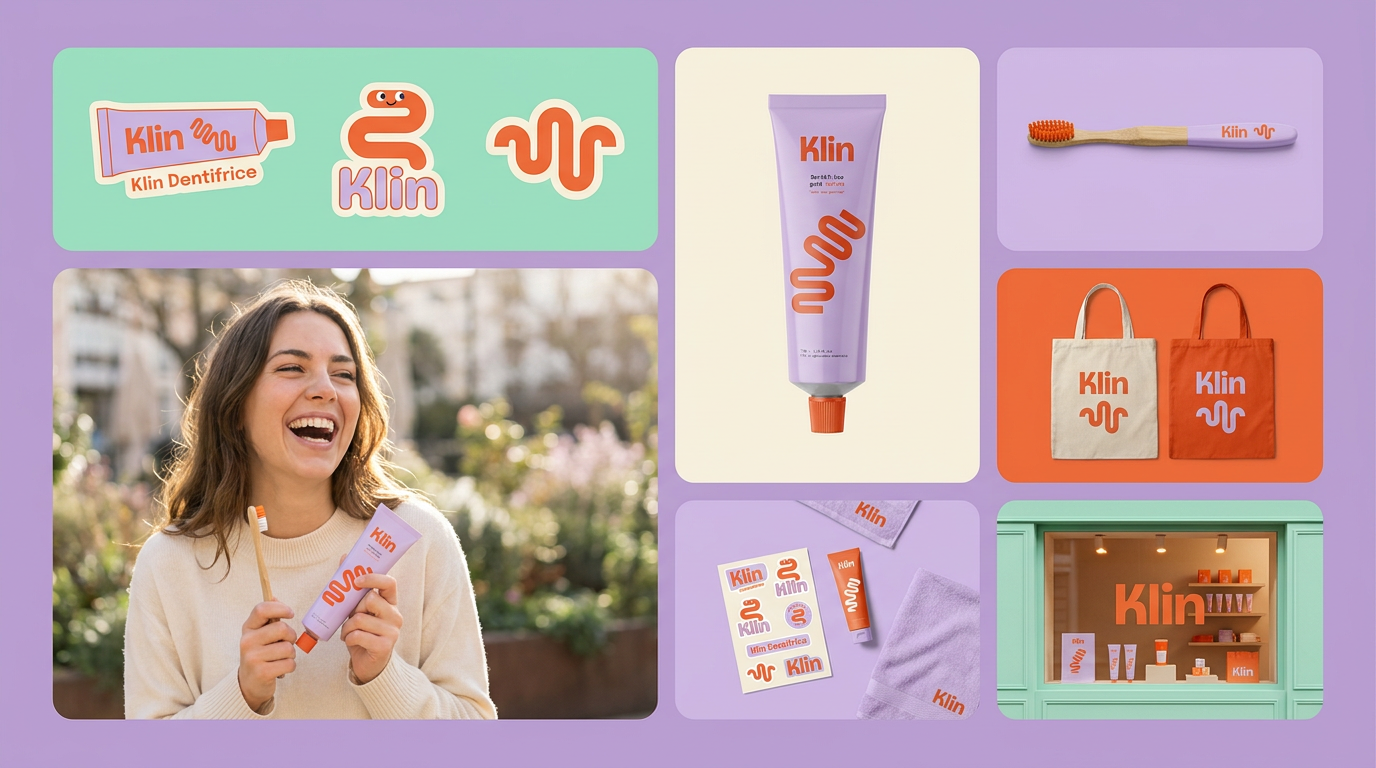
Drop in a single product photo to instantly build a cohesive visual identity. It automatically samples your item's dominant colors to generate a beautifully matched mosaic moodboard, giving your brand an instant, polished aesthetic.
Regenerate using your own assets.
From a single image to an automated campaign
True brand consistency isn't about getting one image right. It's about getting all of your images right, effortlessly. This is where a system like MyUP moves beyond simple image generation and becomes a content production platform. Because your Brandkit is a central asset, it can be applied across dozens of different workflows automatically.
Imagine you need to launch a new clothing line. You can run a workflow to create studio shots, another for lifestyle social media posts, and a third for website banners. In a generic tool, you'd have to painstakingly describe your brand style in every single prompt. In MyUP, the Brandkit is applied to all of them by default. You describe the content (e.g., 'a woman wearing our new hoodie on a city street'), and MyUP handles the brand alignment. You get variety in your content without sacrificing consistency in your brand.
This workflow for creating branded apparel posts is a perfect example. It focuses on the product and context, while MyUP ensures the style, colors, and mood are always on-brand.
Workflow code: #myup-3sro-edbt
Brand Clothes Post

Turn any outfit photo into a high-end fashion promo poster. It centers your subject in a full-body shot against a dark, dramatic studio backdrop, perfectly cropped for social feeds. It gives your apparel a moody, editorial look instantly.
Regenerate using your own assets.
Choose the right tool for the job
Personalized AIs like Gemini are powerful tools for discovery and artistic exploration. They excel at helping you find a style you didn't know you had. But brands don't need to discover their style; they need to execute it, consistently and at scale. For professional creators, marketers, and founders, the choice is clear.
Stop training AI on you. Start training it on your brand. By building an explicit brand memory in a platform designed for professional workflows, you can finally move from frustrating, random outputs to predictable, on-brand content production. Build your Brandkit in MyUP and see the difference.