
For content creators, marketers, and designers, the promise of AI-generated visuals often falls short when outputs are generic, inconsistent, or simply don't align with brand identity. You spend more time tweaking than creating. This frustration is common, even with advanced models. However, a significant trend has emerged as of June 25, 2026: AI communities are actively using Claude 3.5 Sonnet not for direct image generation, but for its superior ability to craft highly detailed and nuanced textual prompts that dramatically improve results from visual AI models. This reframes how we think about Claude's role in design. MyUP.ai integrates this advanced prompt engineering with its Brandkit and visual generation tools, offering a powerful, workflow-driven solution to deliver precise, on-brand design results every time.
The challenge of generic AI visuals and how Claude 3.5 Sonnet changes the game for design prompts
The initial excitement around AI image generation often gives way to the tedious reality of inconsistent outputs. You might get a stunning image once, but replicating its style, mood, or specific elements across a campaign feels like rolling the dice. This lack of control wastes valuable creative time and dilutes brand consistency. While many AI models excel at generating visuals, their interpretation of abstract prompts can be unpredictable. Historically, Claude 3.5 Sonnet has been recognized for its text and data processing prowess, not its visual design capabilities. However, recent trends show a powerful indirect application: using Claude to engineer prompts for *other* visual AI models. This new approach harnesses Claude's strength in understanding and structuring complex information, transforming vague creative briefs into highly specific, actionable instructions for visual AI, thereby offering a fresh solution to the generic visual problem.Why Claude 3.5 Sonnet excels at crafting precise visual prompts
Claude 3.5 Sonnet stands out for its exceptional contextual understanding, reasoning abilities, and capacity to generate highly structured, detailed text. When it comes to prompt engineering for design, these attributes are invaluable. Instead of just listing keywords, Claude can interpret nuanced requests about composition, lighting, style, mood, and even specific brand elements. It can take a high-level concept and expand it into a multi-faceted prompt, breaking down complex visual ideas into granular instructions. This means you can ask Claude to 'create a minimalist product shot for a luxury skincare brand, featuring soft, diffused lighting and a clean, marble background, emphasizing texture and glow,' and it will translate that into a comprehensive prompt that guides a visual AI model far more effectively than a simple keyword list ever could. It’s about precision in communication, ensuring the visual AI understands your intent with unprecedented clarity.The MyUP.ai advantage: Bridging Claude's prompt power with on-brand visual consistency
While Claude 3.5 Sonnet provides the precision in prompt generation, MyUP.ai is the platform that ensures those precise prompts translate into visually consistent, on-brand assets. MyUP.ai's core strength lies in its Brandkit functionality, which allows you to define and save your brand's visual identity—colors, fonts, logo, and overall style—once. Every AI-generated visual, regardless of the complexity of the prompt, automatically adheres to these guidelines. This means you're not just getting a precise image; you're getting a precise *on-brand* image. MyUP executes, but you validate. You maintain creative control, approving and adjusting outputs while MyUP handles the heavy lifting of production and brand adherence. This integration moves beyond generic AI outputs, delivering truly on-brand results at scale.Step-by-step workflow: Crafting on-brand visuals with Claude-refined prompts in MyUP.ai
Let's walk through the practical steps to harness Claude 3.5 Sonnet's prompt engineering capabilities within MyUP.ai to create high-quality, on-brand visuals. This workflow is designed to give you maximum creative control while leveraging AI for speed and consistency, transforming your creative vision into tangible assets.Step 1: Define your visual goal and brand parameters
Before interacting with any AI, clarify your objective. What kind of visual are you trying to create? What message should it convey? Who is the target audience? Critically, identify the key brand elements from your MyUP.ai Brandkit that must be incorporated. This includes specific color palettes, typography styles, logo placement, and overall aesthetic. For example, if you need a social media graphic for a new product launch, consider the product's unique selling points, the desired mood (e.g., exciting, calming, luxurious), and how your brand's visual language should be expressed.Step 2: Use Claude 3.5 Sonnet to generate a detailed visual prompt
Now, turn to Claude 3.5 Sonnet. Provide it with your defined visual goal and brand parameters. Instead of a short phrase, give Claude a comprehensive creative brief. Ask it to act as a 'visual prompt engineer' or 'creative director.' For instance, you might prompt Claude: 'I need a prompt for an AI image generator to create a vibrant social media product post. The product is a new organic juice, 'Sunrise Glow.' Focus on freshness, natural ingredients, and an energetic feel. Include elements like fresh fruit (oranges, mangoes), a glass of juice, and a bright, sunny background. The overall style should be modern, clean, and inviting, with a slightly golden hour glow. Suggest specific camera angles and lighting.' Claude will then generate a highly detailed prompt, often broken down into sections like 'Subject,' 'Setting,' 'Style,' 'Lighting,' and 'Composition,' making it incredibly specific for the visual AI.Workflow code: #myup-gxue-opd0
Product Post
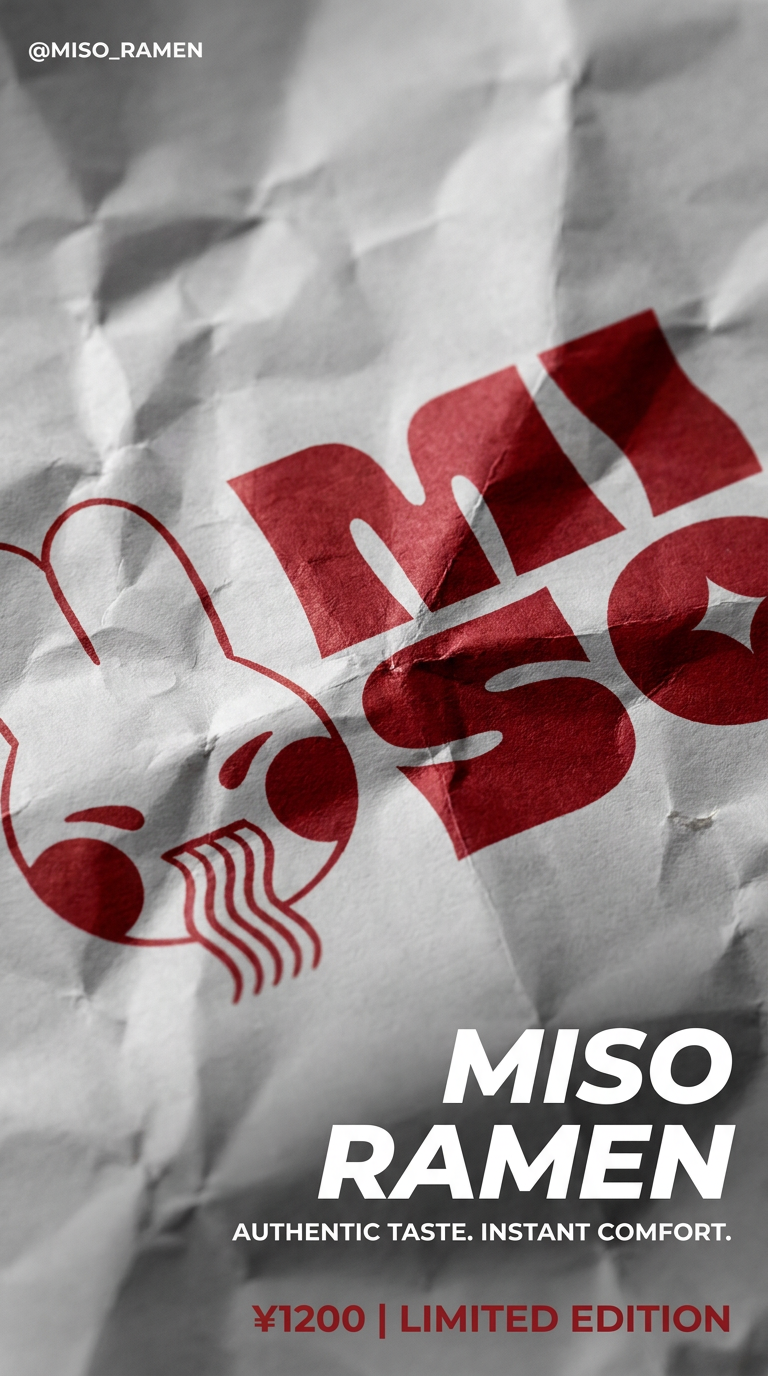
Turn a single product shot into a cohesive six-part Instagram story campaign. It mixes tactile crumpled paper textures with bold, stacked typography and custom mascot spots in your brand's signature colors.
Use for Free
Regenerate using your own assets.
Step 3: Integrate the Claude-generated prompt into MyUP.ai's image generator
Once Claude has refined your prompt, copy the detailed output. Navigate to MyUP.ai's image generation interface. Paste the comprehensive prompt directly into the input field. MyUP.ai's intuitive interface is built to handle complex, multi-faceted prompts, translating Claude's detailed instructions into visual elements. This is where your precise textual vision begins to take shape visually. For instance, if you're creating a product announcement, you can use a dedicated workflow. Workflow code: #myup-gxue-opd0Step 4: Apply your Brandkit for instant consistency and style transfer
With the Claude-generated prompt now in MyUP.ai, the magic of the Brandkit takes over. Before generating, ensure your desired Brandkit is selected. MyUP.ai will automatically apply your brand's pre-defined colors, typography, logo, and overall aesthetic to the AI-generated image. This step is crucial for maintaining visual consistency across all your creative assets, ensuring that even a highly specific visual idea—like a 'Bold Retro Yellow Event Poster'—instantly aligns with your established brand guidelines. You don't need to manually adjust colors or fonts; MyUP.ai bakes your brand into every pixel. Workflow code: #myup-xbur-hzoiStep 5: Refine and iterate with human control in MyUP.ai
The first AI-generated image is a starting point, not necessarily the final product. MyUP.ai emphasizes human control. Review the output generated from your Claude-refined prompt and Brandkit application. Do the colors truly pop? Is the composition perfect? If minor adjustments are needed, MyUP.ai's iterative design capabilities allow you to fine-tune elements without losing the core consistency. You can adjust parameters, generate variations, or even provide additional textual feedback directly within MyUP.ai. This human-in-the-loop approach ensures the final visual perfectly matches your creative intent and brand standards. For complex ad creatives requiring precise iteration, this workflow proves invaluable. Workflow code: #myup-ywpr-rqz6Scaling your visuals: From single designs to consistent campaigns with MyUP.ai
The power of the Claude-MyUP workflow truly shines when scaling content production. Once you've established a successful prompt and Brandkit combination for one visual, you can easily adapt it for an entire campaign. Need multiple product shots with slight variations? Or a series of social media posts for different platforms, all adhering to the same visual theme? The refined Claude prompt combined with MyUP.ai's Brandkit and workflow automation makes this effortless. This approach ensures every asset, from a single Instagram story to a comprehensive marketing campaign, maintains a unified, on-brand aesthetic. This consistency is critical for brand recognition and impact, saving countless hours of manual design work. For example, to generate a series of product brand posts, you can use the workflow code: #myup-kbgo-tlle. If you're looking to generate visually cohesive AI infographics, you might find this article useful: Claude 3.5 Sonnet is for data, not design. Here's the on-brand infographic workflow.Unlock precise, on-brand AI design with MyUP.ai and Claude 3.5 Sonnet
The era of generic, off-brand AI visuals is over. By strategically combining Claude 3.5 Sonnet's unparalleled prompt engineering capabilities with MyUP.ai's robust Brandkit and visual generation tools, you gain an unprecedented level of creative control and consistency. This workflow empowers you to articulate your precise visual vision, ensure every output aligns with your brand identity, and scale your content production with efficiency and confidence. MyUP.ai doesn't just generate images; it helps you orchestrate an entire visual brand strategy, giving you the final say on quality and style. Ready to transform your AI design process? Try the MyUP.ai workflow today and experience the power of precise, on-brand content creation. You may also be interested in how to Generate AI video thumbnails that convert: The MyUP workflow for on-brand visuals.Tags: