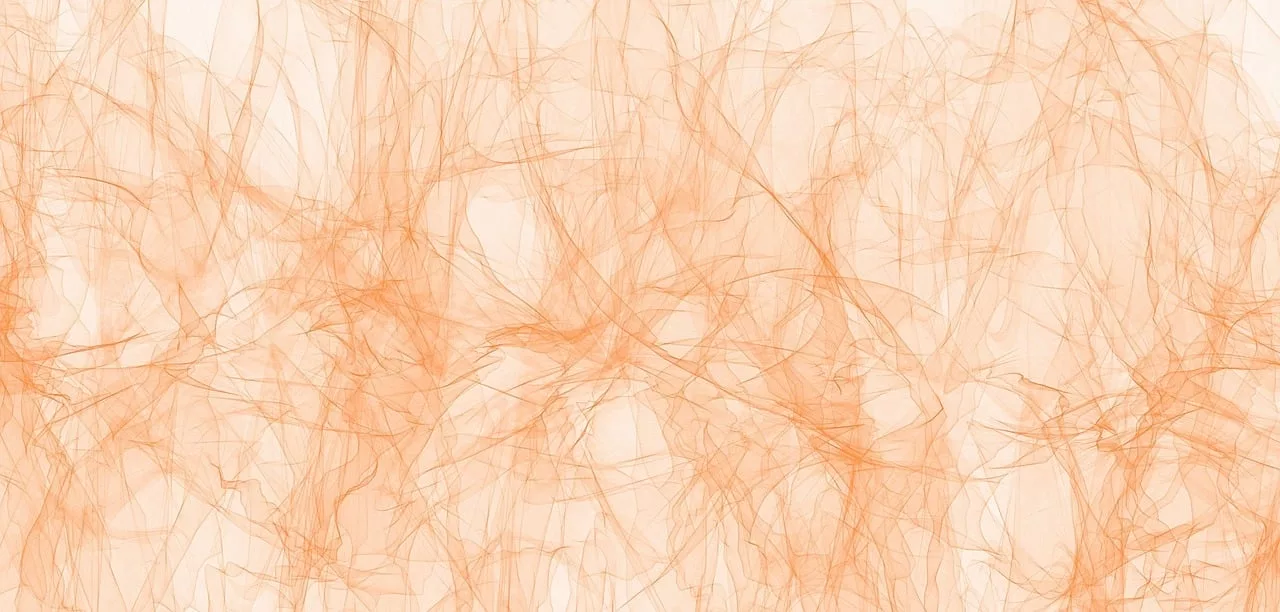
If you’ve tried to create a seamless pattern with an AI generator recently, you’ve probably felt the frustration. You ask for a repeating tile, and you get a beautiful image with a glaring, unusable seam down the middle. As of June 2026, even powerful tools like Midjourney V7 are struggling with the --tile parameter, leaving creators with broken assets.
The common fix? A tedious, multi-step hack: export the image, take it into Photoshop, apply the offset filter to reveal the seams, and then use Generative Fill to paint over the gaps. It’s a viral workaround because it’s a universal problem. But this manual labor misses the bigger issue: even a technically perfect pattern is useless if it doesn't look like your brand.
The real challenge: creating patterns that are actually on-brand
A seamless tile is a technical requirement, but it’s not the goal. The goal is to create a unique, ownable brand asset. A pattern that uses your brand’s specific color palette, incorporates its stylistic motifs, and feels like a natural extension of your visual identity.
This is where most AI tools fall short. You can prompt for “ocean blue,” but you can’t easily get your brand’s specific Pantone 2925 C. You might get a minimalist pattern, but it won’t match the precise line weight of your other brand illustrations. Even Adobe Firefly’s recent update, which allows you to input specific HEX codes, treats brand identity as a manual, color-by-color input rather than a holistic system.
A pattern shouldn't be a generic texture you settle for. It should be part of your brand’s DNA. To do that, the AI needs to know your brand's visual language before it generates the first pixel. This is solved with a Brandkit — a central hub for your colors, fonts, logos, and stylistic rules. Once the AI has this context, creating a pattern becomes a single, reliable step. And once you have that pattern, you can put it to work instantly.
Workflow code: #myup-swqt-4zo3
Product Stickers
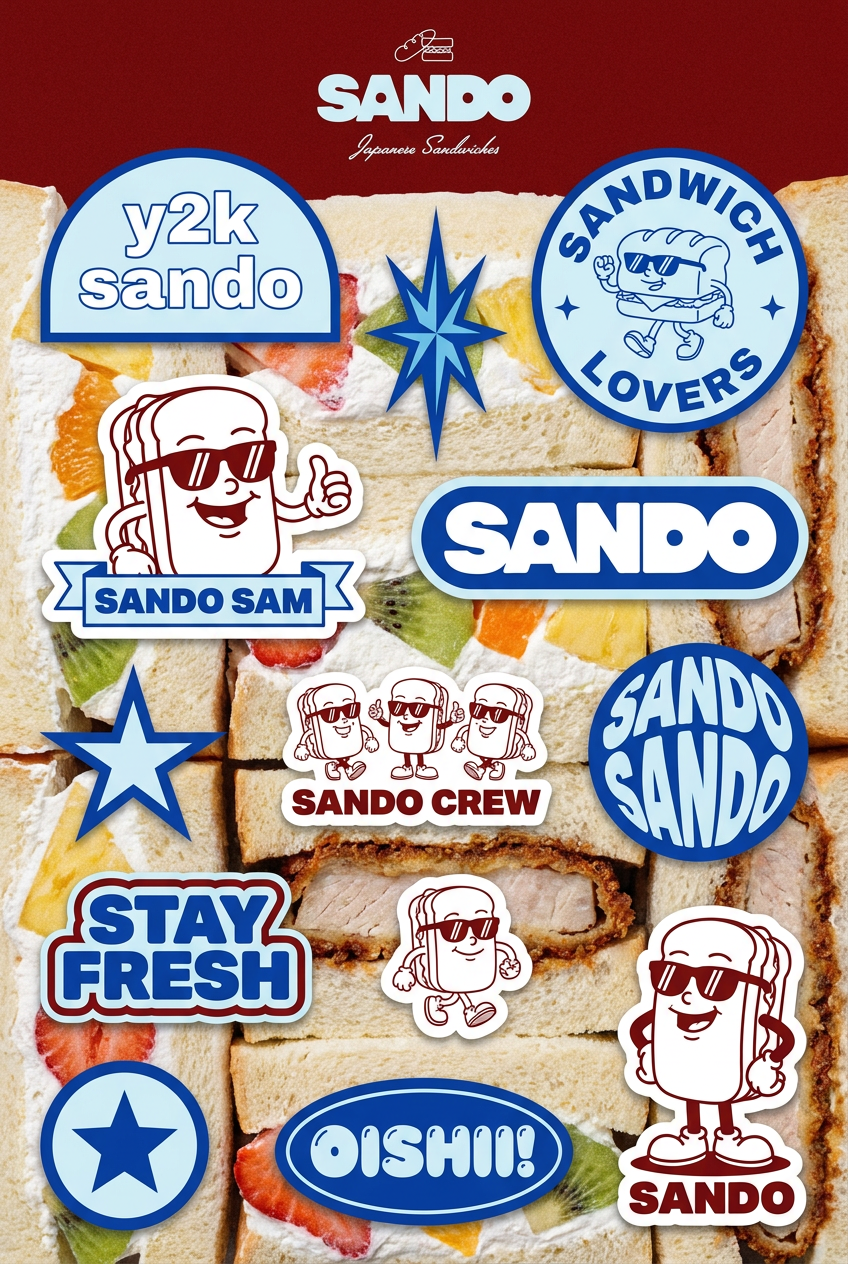
Turn your logo into a nostalgic, vibrant Y2K-style vertical ad. It automatically pulls your brand colors to create matching sweet treats like custom donuts or cupcakes in the background, giving you a super playful retro-pop aesthetic.
Regenerate using your own assets.
A step-by-step workflow for seamless, on-brand patterns
Instead of wrestling with broken tiles and manual color correction, this workflow builds your brand identity directly into the generation process. The result is a production-ready, perfectly seamless pattern that is yours and yours alone.
Step 1: Build your Brandkit once
This is the foundation. Before you write a single prompt, you give MyUP your brand's core assets. This is a one-time setup that takes minutes. Just provide a website URL, and MyUP automatically extracts:
- Colors: Your exact primary, secondary, and accent color palettes.
- Fonts: Your brand's specific typefaces for headings and body text.
- Logo: Your primary logo mark for reference.
- Style Guide: Descriptions of your visual style (e.g., “minimalist line art,” “bold and graphic,” “soft and organic”).
This isn't just a folder of assets; it's a live set of instructions that every AI creation will automatically follow. You can learn more about how this creates consistency in The Brandkit method for consistent AI illustrations.
Step 2: Write a prompt that leverages the Brandkit
With your Brandkit active, your prompt becomes simpler and more powerful. You don’t need to describe your colors or style; you just need to describe the subject of the pattern. The AI already knows the rest.
Your prompt can be as direct as:
“A seamless repeating pattern of stylized coffee beans and steam wisps, in a minimalist line-art style. Use the Brandkit colors.”
MyUP automatically interprets “Brandkit colors” and applies your unique palette. It references your style guide to inform the “minimalist line-art style.” The result is an asset that is both technically correct and strategically aligned.
Step 3: Generate and validate
MyUP generates the pattern tile. Because the model is trained for this specific task within a brand-aware environment, it produces a truly seamless image without the repetition artifacts or visible edges common in other tools. Your role isn't to fix the output; it's to validate it. You approve the creative direction, and MyUP handles the technical execution. If the first version isn't quite right, you can adjust the prompt and regenerate, knowing the core brand elements will remain consistent.
Putting it to work: from pattern to branded asset
A pattern tile isn't the final product. Its value comes from its application. This is where an integrated workflow saves hours of manual design work. Having generated your unique pattern, you can immediately use it as a background, texture, or design element in another creation—without leaving the platform.
For example, let's turn that new coffee bean pattern into a set of branded product stickers. Instead of exporting the pattern, importing it into Canva or Illustrator, and building a new design, you can run a workflow directly in MyUP. Using the Product Stickers workflow, you can simply tell the AI:
“Create a circular sticker for our ‘Morning Brew’ coffee blend. Use the seamless coffee bean pattern as the background and place our brand logo in the center.”
The workflow executes the steps, applying the pattern you just created and pulling your logo from the Brandkit. You get a finished, on-brand marketing asset in seconds. This is the difference between an AI tool that makes images and a platform that produces brand content.
Workflow code: #myup-swqt-4zo3
The Brandkit workflow vs. the manual fix: a 5-minute comparison
Let's contrast the two approaches for creating a single, on-brand seamless pattern.
The Manual Fix (Midjourney + Photoshop)
- Step 1: Write a complex prompt in Midjourney, hoping the --tile parameter works. (5 mins)
- Step 2: Generate multiple variations to get one that’s close. (5-10 mins)
- Step 3: Download the image and open it in Photoshop. (1 min)
- Step 4: Use the offset filter to find the seams. (1 min)
- Step 5: Manually select and use Generative Fill to patch the seams. Repeat if necessary. (5-15 mins)
- Step 6: Manually color-correct the image to match your brand's HEX codes. (5-10 mins)
- Total Time: 22-42 minutes per pattern, with inconsistent results.
The MyUP Brandkit Workflow
- Step 1: (One-time setup) Create your Brandkit from a URL. (5 mins)
- Step 2: Write a simple prompt referencing your Brandkit. (1 min)
- Step 3: Generate and approve the seamless, on-brand pattern. (2 mins)
- Total Time: 3 minutes per pattern, with consistent, repeatable results.
The manual hack is a workaround for a broken process. It's a sign that you need a better tool, not a better trick. For professional creators, moving beyond general-purpose image generators to a brand-centric workflow is a matter of efficiency and quality.
Stop fixing patterns. Start building your brand's visual world.
A unique pattern is a powerful way to build brand recognition. It can be the background of your website, the tissue paper in your packaging, or the texture on your social media posts. It’s a versatile asset that reinforces your identity at every touchpoint.
But to be effective, it must be yours. Fighting with AI tools to fix seams and approximate your brand colors is a waste of creative energy. By using a workflow built on a Brandkit, you shift your effort from manual repair to creative direction. You spend your time deciding what to create, not how to fix what the AI got wrong. The result is a stronger brand, built faster.