You’ve spent hours perfecting a poster, a product package, or a print ad. The colors are dialed in, the typography is sharp, and the layout is balanced. Then comes the final step: adding a QR code. You drop in the standard black-and-white box of pixels, and the entire design instantly feels cheaper. It’s a functional necessity that doubles as a visual dead end.
This isn’t just a design problem; it’s a wasted branding opportunity. That generic square says nothing about you. But what if it could? What if it could be a piece of art that reinforces your visual identity?
The technology to do this is now mainstream. With AI image models gaining sophisticated compositional control—a concept that hit the spotlight with features like Adobe Firefly's 'Structure Reference' in July 2026—we can now force an AI-generated image to conform to an underlying pattern. In this case, the pattern is your QR code's data. The result is a scannable code that is also a beautiful, on-brand illustration. This guide will show you the end-to-end workflow to create them in MyUP.ai, turning a technical requirement into a creative statement.
The 3-step workflow for an on-brand AI QR code in MyUP
Creating an artistic QR code isn't about finding a single-purpose generator that spits out a random design. It's about a controlled workflow that blends your brand's style with the QR code's function. In MyUP, this process is built around your Brandkit, ensuring the final output is not just creative, but also consistent with your identity.
Step 1: Generate your base QR code
First, you need the functional foundation. Use any standard QR code generator to create a simple, black-and-white code for the URL you want to link to. The key here is to set the error correction level to 'High' (H). This adds more redundant data to the code, making it more resilient and more likely to scan successfully even after it's been blended with your artwork.
Step 2: Use MyUP's AI generator with your Brandkit
This is where the transformation happens. Instead of just prompting for an image, you'll use your base QR code as a structural guide.
- Upload the QR Code as a Control Image: In the MyUP image generator, upload the QR code you just created. You'll designate this image as a 'structure reference' or 'control' input. This tells the AI model (like Stable Diffusion) to use the QR code's pattern as the underlying composition for the new image.
- Write a Brandkit-Infused Prompt: Now, write a descriptive prompt for the visual you want to create. For example, “A detailed paper-craft illustration of a coral reef” or “A lush, overgrown greenhouse with sunbeams.” Because you're in MyUP, your Brandkit is already active. The AI will automatically pull from your brand’s color palette and stylistic DNA to interpret the prompt, ensuring the generated art feels like it belongs to you.
Step 3: Adjust control strength and validate
The final step is about finding the perfect balance. You'll have a slider or setting for 'control strength' (sometimes called 'conditioning scale'). This determines how strictly the AI adheres to the QR code's structure versus how much creative freedom it takes with your prompt. A higher strength makes it more scannable but less artistic; a lower strength does the opposite. The user's role is to adjust this setting and generate a few options. MyUP handles the production, and you validate the result. Once you have a version that is both visually appealing and scannable, it's ready to use.
From code to campaign: Putting your new design to work
A beautiful QR code is only useful if it's part of a finished asset. A standalone AI QR code tool leaves you with an image file and the question of what to do next. MyUP integrates this workflow directly into its content creation platform, so you can immediately put your new on-brand code to work.
Once you've generated your artistic QR code, you can save it to your assets and use it in any MyUP template. This closes the loop, moving you from a functional element to a complete, ready-to-publish marketing campaign in one environment. This is how you scale production without sacrificing brand integrity, a core principle behind our one-prompt social media workflows.
For example, if you're promoting a summer festival, you can drop your newly designed QR code into a vibrant poster. The code itself becomes a seamless part of the design, not an awkward addition. You can launch this entire process with a ready-made workflow.
Workflow code: #myup-xbur-hzoi
Bold Retro Yellow Event Poster
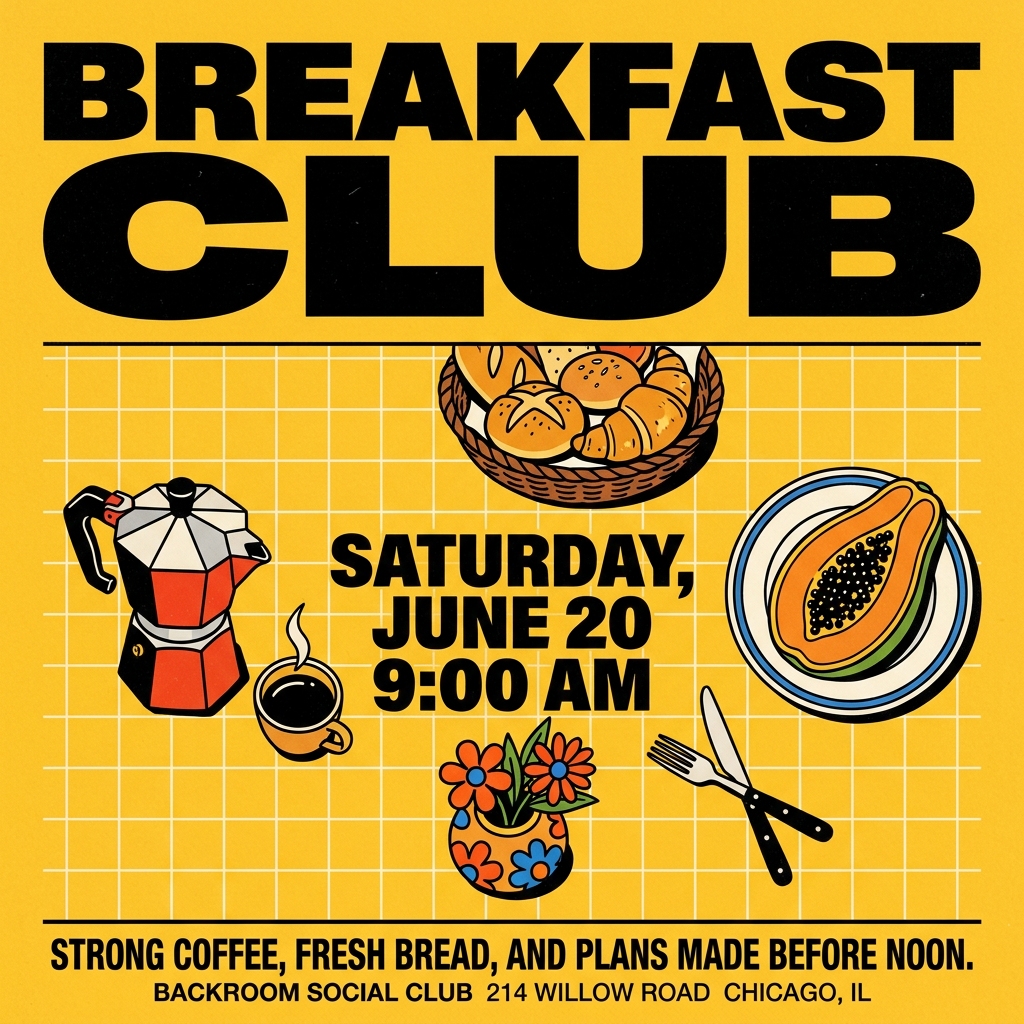
Turn your branding or event details into bold, nostalgic posters. It blends vibrant warm backdrops with a clean, retro square grid pattern to make any announcement look like a classic piece of mid-century graphic design.
Regenerate using your own assets.
Or, if you're launching a new cosmetic product, the artistic QR code can be integrated into a clean, minimalist ad that links to the product page. The visual harmony reinforces the premium feel of the brand.
Workflow code: #myup-sygb-rhnt
Minimalist Vertical Product Advertising Poster
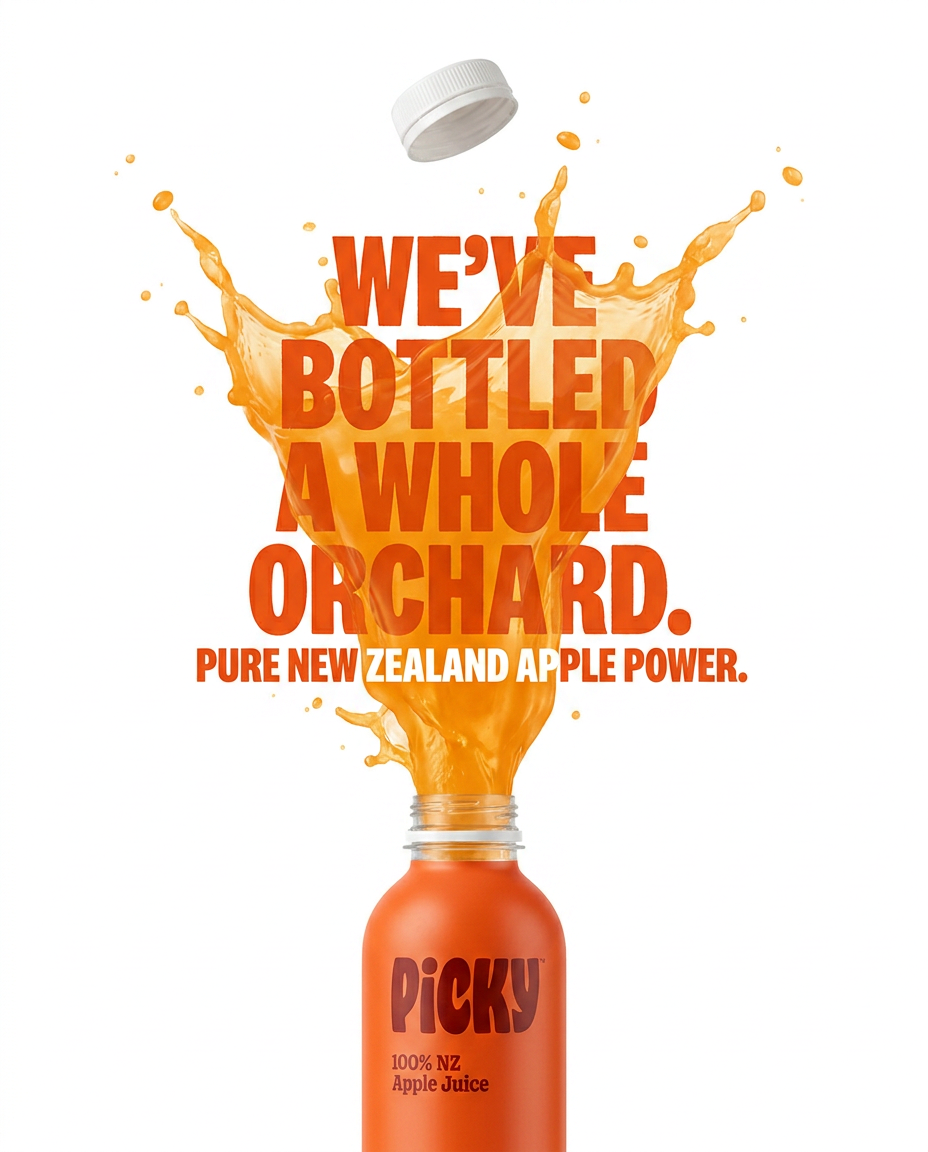
Drop the clutter and put your product in the spotlight. This setup places your item against a pure, seamless white background with a striking vertical flow that draws the eye straight up. It's perfect for creating clean, high-end studio posters.
Regenerate using your own assets.
How to create artistic QR codes that actually scan
The number one concern with artistic QR codes is scannability. A code that doesn't scan is just a pretty picture. While the MyUP workflow is designed for reliability, here are the technical principles to keep in mind to ensure your code works every time.
- Preserve the Finder Patterns: A QR code has three large squares in the corners (the 'finder patterns') and sometimes a smaller 'alignment pattern' square. These are critical for the scanner to orient itself. Your prompt and control strength should keep these areas relatively distinct and high-contrast. Avoid prompts that create uniform, low-contrast noise across the entire image.
- Maintain High Contrast: Scanners work by distinguishing between light and dark modules. Even if your brand colors are subtle pastels, the final image must have enough contrast between its darkest and lightest parts. MyUP's Brandkit helps by ensuring the AI works from a pre-approved palette, but it's your job to validate that the final generation has clear light and dark regions.
- Mind the Quiet Zone: Every QR code needs a blank margin around it, known as the 'quiet zone'. When placing your artistic QR code in a design, make sure there's a clear border around it, free of other distracting visual elements.
- Test, Test, and Test Again: Before you send anything to the printer, test the QR code rigorously. Use different phones (iOS and Android), different camera apps, and test from various distances and angles. This final validation step is crucial; the human creator always has the final say on what goes to market.
Your brand deserves more than a generic square
Every brand touchpoint is an opportunity to communicate your identity. For too long, the QR code has been an exception—a black hole of branding in otherwise thoughtful designs. With a proper AI workflow, that compromise is no longer necessary.
By using MyUP, you're not just accessing an AI QR code generator. You're using an integrated brand content platform. The Brandkit ensures your artistic code is yours, and the templates ensure it gets used effectively. Stop treating QR codes as a technical footnote and start treating them as the creative assets they can be.