
LinkedIn carousels are one of the most powerful formats for engagement, but producing them is a notorious time sink. If your current process involves writing text in one tool, generating images in another, and painstakingly assembling it all slide-by-slide in a third, you know the pain. It's a fragmented, inefficient workflow that kills momentum.
This article shows you a better way. We're not just talking about a tool that helps you design one slide faster. We're introducing a production system: a single workflow in MyUP.ai that takes a block of text and automatically builds an entire, multi-slide, on-brand carousel for you.
Why your current LinkedIn carousel process is broken
Let's be honest about the typical 'AI-powered' carousel workflow. It usually looks something like this:
- Step 1: ChatGPT. You paste a blog post snippet or some notes and ask it to break the content down into 5-7 punchy points for a carousel.
- Step 2: Midjourney or DALL-E 3. You take those points and try to generate a consistent set of background images or illustrations. You spend half an hour wrestling with prompts to get a similar style for each slide.
- Step 3: Canva or Figma. You upload the images, paste in the text, and then manually apply your brand. You drag your logo onto each slide, painstakingly change the fonts to match your brand guide, and use the color picker to get your hex codes right. Every. Single. Slide.
This isn't an automated workflow; it's a series of disconnected tasks. The biggest bottleneck is the final assembly and branding. It's manual, repetitive, and exactly where brand consistency breaks down. A slightly different font size on slide four, a logo that's a few pixels off on slide six — these small errors undermine the professional polish you're aiming for.
The fix: stop designing slides, start building a system
The solution is to stop thinking like a designer and start thinking like a producer. A carousel isn't a collection of individual designs; it's a single, cohesive asset produced from a set of rules. The MyUP.ai approach is built on this principle. Instead of building slide-by-slide, you define the system once and let AI handle the production.
The core of this system is a workflow that connects your content directly to your brand's visual identity. You provide the raw material—a piece of text—and the workflow automatically structures it, designs it, and applies your branding across every slide. It turns a frustrating, multi-hour design task into a 5-minute production job.
The 3-step workflow to turn text into a finished carousel
In MyUP.ai, the entire process is streamlined into a single, repeatable workflow. Here’s how it works at a high level:
- Provide the source text. This can be a few paragraphs from a blog post, a customer testimonial, a list of key takeaways from a report, or even just a rough idea.
- Run the carousel workflow. You select a template that defines the visual style. The AI then parses your text into logical chunks and generates a unique slide for each one, all within your chosen template.
- Review and export. The workflow delivers a complete, multi-slide carousel. Your job is simply to review the final output and make any high-level adjustments before exporting the finished asset.
This shifts your effort from manual assembly to creative direction. You're no longer dragging pixels; you're validating the output of an automated system.
Step 1: choose a template for your core message
Your first step in MyUP.ai is to choose a visual foundation. A template isn't just a background image; it's a set of design rules for typography, layout, and composition. This ensures your carousel has a strong, professional aesthetic from the start. For a clean, modern, and text-forward look that performs well on LinkedIn, a grid-based design is an excellent choice.
You can start with a template like the Bold Editorial Grid Poster, which is perfect for breaking down thought leadership content into digestible slides.
Workflow code: #myup-n0bi-2wzk
Bold Editorial Grid Poster
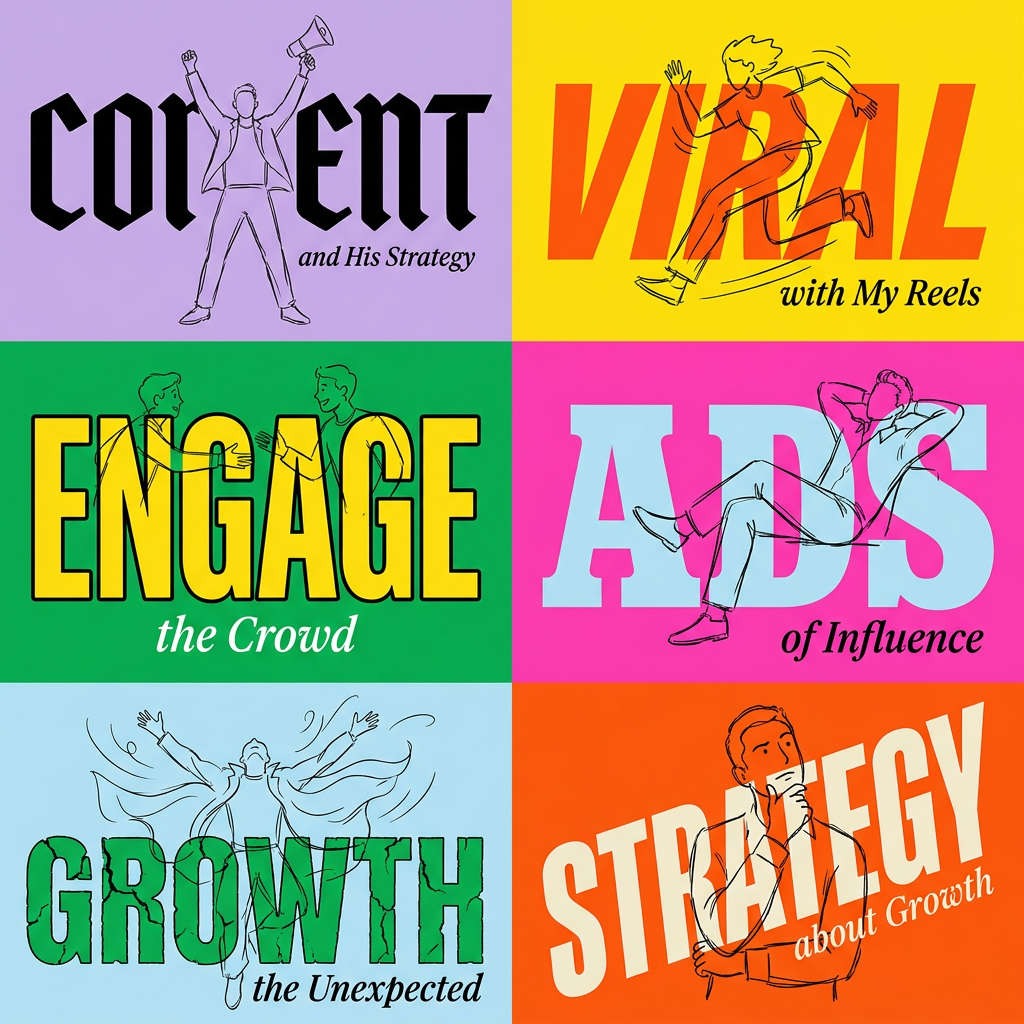
Create striking 2x3 editorial posters with six seamless, flat-color square cards in a perfect 4:5 grid. There are absolutely no gaps between the blocks, giving your content a bold, high-contrast magazine layout. It looks incredibly clean on any social feed.
Regenerate using your own assets.
By starting with a professionally designed template, you skip the entire 'blank page' problem and move straight to production.
Step 2: let the Brandkit handle consistency
This is where the real magic happens. After you've set up your MyUP Brandkit once—by uploading your logo, defining your brand colors, and setting your fonts—the workflow applies it automatically to every slide it generates. There is no manual branding required.
When the AI generates your 7-slide carousel:
- Your logo is placed in the correct position on all 7 slides.
- The headlines on all 7 slides use your brand's primary font.
- The color palette on all 7 slides is derived from your brand colors.
This solves the single biggest problem with the fragmented, manual process. You get perfect brand consistency by default, not by discipline. It's the difference between an asset that looks professionally produced and one that looks cobbled together.
Step 3: scale one idea into a week of content
The power of a workflow is its repeatability. Once you have your text-to-carousel system in place, you can generate a huge amount of content with minimal extra effort. You can take one long-form blog post and break it into three or four different carousel ideas. Run each idea through the same workflow to create three distinct, on-brand carousels in under 30 minutes.
Want to change up the visual style? Simply swap the template in the workflow. You can go from a bold editorial style to something more minimalist or even retro without having to rebuild anything. Your Brandkit will still be applied, ensuring consistency even as the aesthetic changes.
Try running the same text through these different templates to see the effect:
- For a clean, product-focused look: Minimalist Vertical Product Advertising Poster. Workflow code: #myup-sygb-rhnt
- For a high-energy, event-focused post: Retro Zine Style Event Poster. Workflow code: #myup-msop-hlxf
This is how you turn one core idea into a full week's worth of high-engagement LinkedIn content. For more ideas on scaling your content, see how you can apply this to create a week of social visuals from a single prompt.
Your role is to approve, not to assemble
The professional workflow for creating brand content with AI isn't about removing human creativity; it's about focusing it where it has the most impact. MyUP executes the repetitive, time-consuming production tasks. Your role is to provide the initial creative spark, guide the strategy, and validate the final output.
You are the creative director. You approve the messaging, you select the visual style, and you give the final sign-off. The AI is your production team, handling the assembly and ensuring every detail aligns with the brand standards you've set. This frees you up to think about the next campaign, not the placement of a logo on slide five.