
As of June 26, 2026, the world of AI image generation is buzzing with new capabilities. Breakthroughs like Midjourney V7.1's 'Scene Composer,' Stable Diffusion 3.5's 'Layered Scene Generation,' and Adobe Firefly's 'Scene Graph' are setting a new standard for granular control. Creators are no longer content with abstract outputs; they demand precision. The long-standing frustration of AI models scattering objects randomly or failing to understand spatial relationships is finally being addressed. But how do you, as a creative professional, harness these advancements to produce exact, on-brand visuals? MyUP is designed to bring this advanced, precise control directly into your creative workflow, ensuring every element in your complex scenes is exactly where it needs to be, and always on brand.
The new era of AI scene control: why precision matters now
The recent announcements from leading AI labs mark a significant shift. Where once we celebrated AI's ability to generate *anything*, we now expect it to generate *exactly what we want*. This isn't just about aesthetics; it's about production reality. For marketers, designers, and content creators, the ability to control object placement, scale, and interaction within a scene is crucial for product mockups, advertising campaigns, and consistent visual storytelling. Without this precision, AI-generated content remains a novelty rather than a reliable tool for commercial production. MyUP understands this need for exactness, providing the interface and workflows to leverage these new capabilities effectively.From abstract ideas to concrete visuals: the challenge of multi-object scenes
Historically, getting AI to place multiple specific objects in a scene, define their relationships, and ensure logical interactions has been a significant hurdle. Prompts like 'a red apple on a wooden table next to a blue vase' often resulted in apples floating, tables warped, or vases appearing in the background. This lack of spatial understanding and compositional control meant endless re-rolls, manual editing, and ultimately, wasted time. The problem wasn't just about generating an image, but about generating an image that matched a specific vision – a vision where every element served a purpose and contributed to a cohesive narrative. Generic AI tools, while powerful, often fall short when your creative brief demands this level of detail.MyUP's framework for precise AI scene generation
MyUP is built on the philosophy that AI should be a precise creative tool, not a random art generator. Our platform empowers you with a comprehensive framework for achieving granular scene control. This framework combines advanced prompt engineering techniques, iterative refinement capabilities, and the crucial integration of your Brandkit. With MyUP, you don't just type a prompt; you orchestrate a scene. You define the elements, their positions, their interactions, and then MyUP executes the generation. The 'human control, MyUP executes' dynamic ensures that you maintain creative authority while AI handles the heavy lifting of production, allowing for rapid adjustments and consistent, high-quality output.Step-by-step: orchestrating objects in your AI scene with MyUP
Building complex scenes with AI requires a structured approach. On MyUP, this means breaking down your vision into manageable components, prompting for each with precision, and then refining the overall composition. Instead of a single, verbose prompt, you'll learn to layer your instructions, guiding the AI through the creation process step-by-step. This method not only improves accuracy but also allows for greater flexibility and control over the final output, ensuring that your generated scenes align perfectly with your creative brief and brand identity. Let's walk through the process.Defining the environment and primary objects
The foundation of any compelling scene is its environment. Start by establishing the setting, lighting, and mood. Think about the overall atmosphere you want to convey. Once the environment is set, introduce your primary objects. Specify their exact placement within the scene (e.g., 'a sleek black smartphone, front and center on a minimalist white desk'), their scale, and initial attributes. Be descriptive about materials, colors, and textures. MyUP's prompt interface allows for this level of detail, translating your specific instructions into visual elements. For a quick start on defining a primary object within a vibrant setting, try this workflow: Workflow code: #myup-zpby-tzieAdding secondary objects and specifying interactions
Once your primary objects are in place, you can begin to integrate secondary elements. The key here is to define their positions relative to the primary objects and clearly describe their interactions. Instead of 'a book and a cup,' specify 'a vintage leather-bound book lying open on the left side of the desk, with a steaming ceramic coffee cup placed on a coaster directly to the right of the book.' The more unambiguous your language, the better the AI will understand the spatial relationships and intended narrative. This iterative process allows you to build out the scene element by element, ensuring each addition contributes meaningfully to the overall composition. To practice placing a product in a controlled studio environment, which can then be augmented with secondary objects, use this workflow: Workflow code: #myup-u4lt-o0hoRefining details and ensuring brand consistency with Brandkit
After establishing your scene's core elements, it's time for refinement. This involves fine-tuning aesthetics, adjusting textures, and ensuring the overall style is cohesive. You might iterate on prompts like 'make the lighting softer, with warm golden hour tones' or 'add a subtle wood grain texture to the desk surface.' Crucially, MyUP's Brandkit feature plays a vital role here. Once you've established your brand's visual identity—colors, fonts, logo, and style—in your Brandkit, MyUP automatically applies these guidelines to every generated element within your complex scene. This means your product packaging, any on-screen text, or even the subtle color palette of the environment will consistently align with your brand. This ensures that even the most intricate multi-object scenes are always on-brand, saving you countless hours of manual adjustments. For creating a photo product ad that adheres to your brand's visual identity, this workflow is ideal: Workflow code: #myup-seli-mtp0Advanced techniques for complex compositions
To push your scene control further, consider these advanced techniques. Use negative prompts to exclude unwanted elements or styles (e.g., 'no harsh shadows,' 'not cartoonish'). Leverage image-to-image prompting within MyUP to refine specific areas or apply a consistent style from a reference image without starting over. Employ specific compositional terms like 'rule of thirds,' 'leading lines,' or 'deep depth of field' to guide the AI's artistic choices. MyUP's iterative generation cycle allows you to generate, review, and adjust, putting you firmly in control. You validate the output, and MyUP handles the production, making complex scene creation a collaborative, precise process. For a professional product poster that requires advanced compositional control, try this workflow: Workflow code: #myup-ysc9-ekcsWorkflow code: #myup-gxue-opd0
Product Post
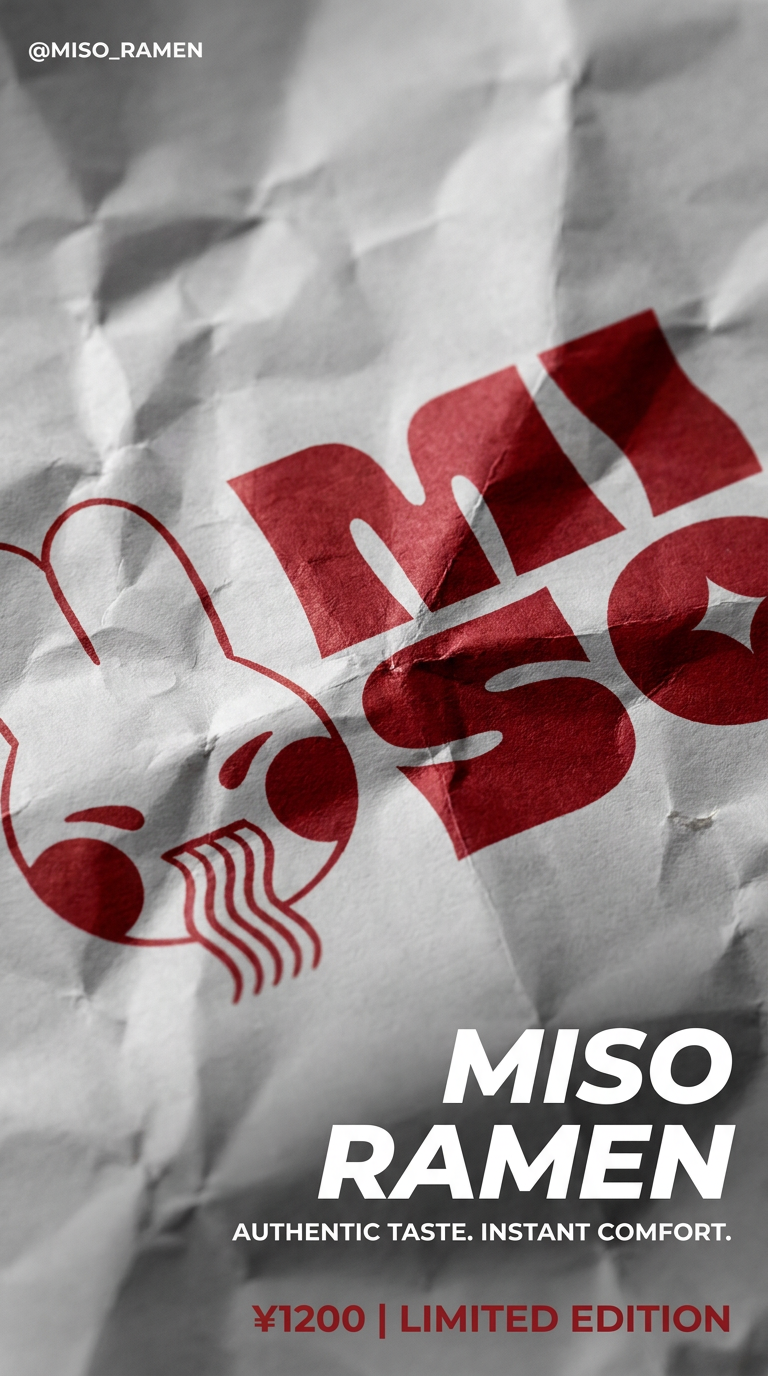
Turn a single product shot into a cohesive six-part Instagram story campaign. It mixes tactile crumpled paper textures with bold, stacked typography and custom mascot spots in your brand's signature colors.
Use for Free
Regenerate using your own assets.
Beyond static images: consistent objects in AI video
The principles of scene control extend beyond static images into the rapidly evolving world of AI video. Recent advancements like RunwayML's 'Spatial Coherence' update and Kling AI's 'Multi-Actor Interaction' feature, both announced around June 25-26, 2026, demonstrate the growing demand for objects that maintain consistent identity, position, and interaction across frames. This is vital for creating believable narratives and complex sequences. MyUP's focus on defining object relationships and ensuring brand consistency is directly applicable here. As AI video capabilities advance, MyUP's approach ensures that your brand elements and scene compositions remain stable and cohesive, even in dynamic content. For more on managing intricate visual details across scenes, see our article on The AI workflow for complex scenes: consistent detail and composition.Why MyUP is your platform for controlled AI scene generation
MyUP stands apart by offering a comprehensive solution for AI scene control that prioritizes your creative vision and brand integrity. While other tools may offer granular scene control, MyUP integrates this with an unparalleled focus on repeatable, on-brand production workflows. Our platform empowers you with precise prompt engineering, robust iterative refinement, and the indispensable Brandkit integration. This combination ensures that every generated scene, no matter how complex, aligns perfectly with your brand's visual identity. You define the scene, validate the output, and MyUP handles the production, transforming AI from a random art generator into a predictable, powerful tool for your commercial content needs.Start building your perfectly composed AI scenes today
The era of precise AI scene generation is here, and MyUP is your gateway to mastering it. Stop wrestling with unpredictable AI outputs and start creating complex, visually consistent, and perfectly branded scenes with confidence. Whether you're designing product mockups, crafting social media campaigns, or building intricate visual stories, MyUP provides the control you need to bring your exact vision to life. Create an account and experience the power of truly controlled AI content creation.Tags: