
This week, in late June 2026, the world of AI image generation took a massive leap forward. Adobe rolled out 'Structure Reference' in Firefly, and Midjourney started testing a `--layout` parameter. Finally, we have some control over composition. It's a game-changer for anyone who has tried to get an AI to place a subject on the left to make room for text on the right.
But it solves only half the problem. An image with good composition is not a finished event poster. You still need to export it, import it into another tool, and manually add your headline, date, location, and branding. That's the tedious part—the part where 'AI-generated' becomes 'manually finished in Canva'. What if you could skip that entire step?
The problem: a layout isn't a design
The gap between a well-composed image and a ready-to-use marketing asset is where most of the time is lost. You have a beautiful background, but you don't have a poster. To bridge that gap, you need a workflow that understands design structure, not just image composition. It combines the creative spark of AI with the rules of your brand.
Try it now. This workflow asks for your event details and builds a complete poster, integrating an AI-generated background into a professional, on-brand template. It's the direct answer to the manual work you're trying to avoid.
Workflow code: #myup-xbur-hzoi
Bold Retro Yellow Event Poster
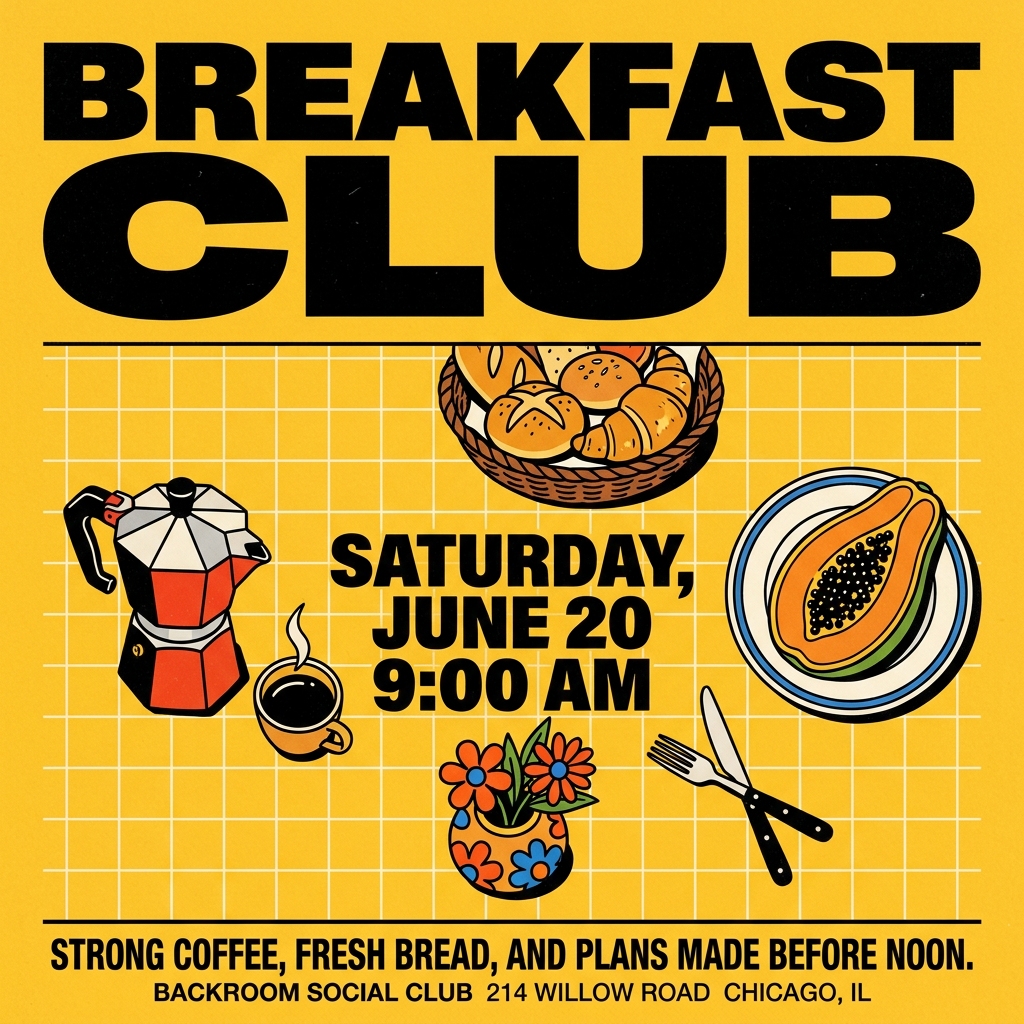
Turn your branding or event details into bold, nostalgic posters. It blends vibrant warm backdrops with a clean, retro square grid pattern to make any announcement look like a classic piece of mid-century graphic design.
Regenerate using your own assets.
Why AI still breaks when it comes to text and branding
Even with perfect composition, pure image generators fail at the two things a poster absolutely requires: clean typography and brand consistency. Anyone who has prompted for text knows the result: garbled, nonsensical letters that look like a strange alien alphabet. The viral threads on X from this week, with designers sharing absurdly complex workarounds to get clean text onto AI images, prove this is a universal frustration.
Then there's branding. A raw AI image has no concept of your specific Pantone color, your brand's typeface, or where your logo should be placed. Adding these elements manually to every single image is repetitive, time-consuming, and a recipe for inconsistency. This is where a saved Brandkit becomes essential, automatically applying your visual identity to every output.
The workflow that works: how to generate a finished poster in 3 steps
Instead of wrestling with a prompt to create a finished design, a workflow separates the creative from the structural, then combines them for you. It's a more reliable and efficient way to produce assets.
Here’s how it works in MyUP:
- Choose a structure. You start by selecting a design workflow, like a poster template. This defines the layout, the text fields, and the overall aesthetic. The structure is locked in, ensuring the output is always professional.
- Provide the details. The workflow prompts you for the necessary information—event title, date, location, call to action. You're just filling in the blanks, not fighting a prompt.
- Generate and validate. The workflow uses AI to generate a unique background image that fits the template's style, then automatically merges it with your text and applies your Brandkit (logo, colors, fonts). You get a finished poster, ready for review. Your job is to validate the result, not build it from scratch.
From a single poster to a full campaign
The real power of a workflow isn't just making one poster; it's scalability. Once your event details are in, you can generate endless variations. Need a different vibe for a different audience? You don't have to start over. Just run the same information through a new workflow.
For example, you could go from a bold, bright look to something more underground and edgy by using the Retro Zine Style Event Poster workflow. All your details are carried over, but the entire design is instantly reimagined.
Workflow code: #myup-msop-hlxf
Retro Zine Style Event Poster
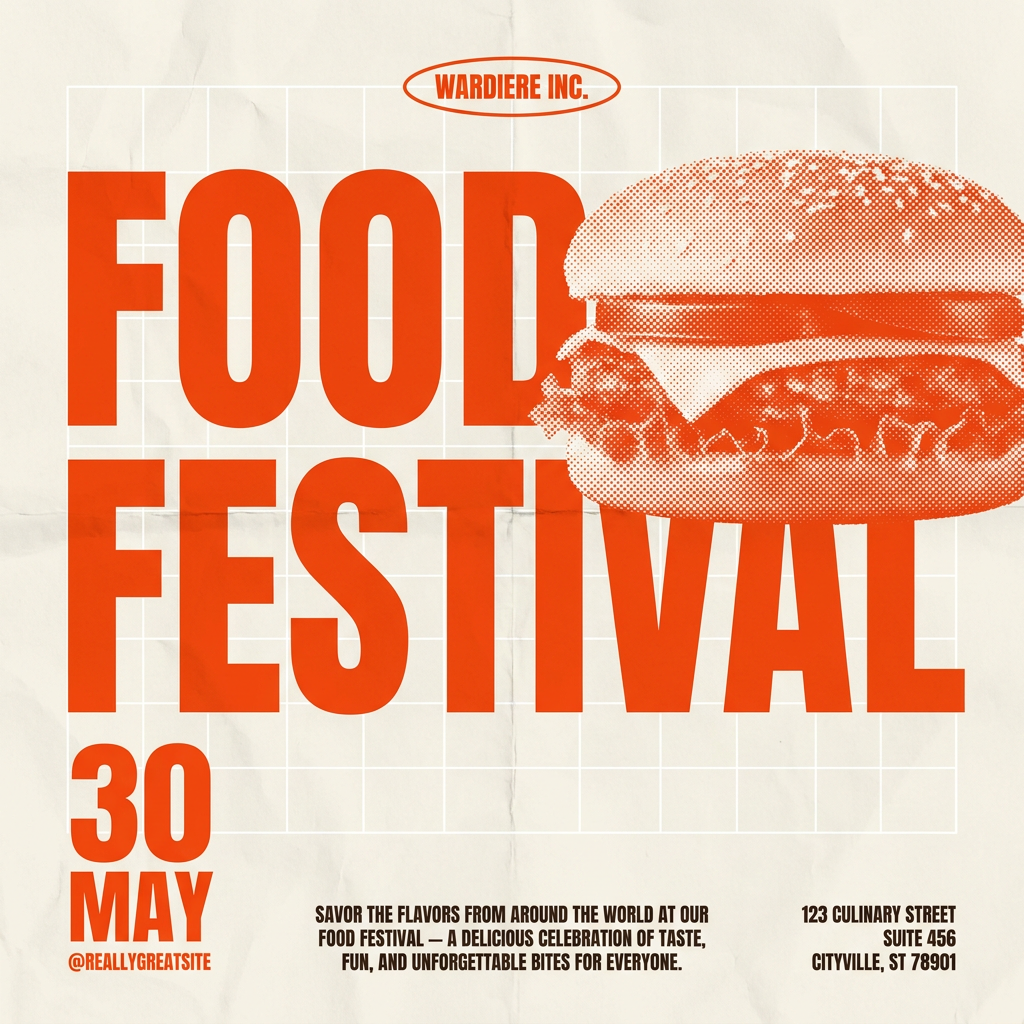
Give your social posts a gritty, analog zine aesthetic. It layers a crumpled paper texture and a subtle grid over a warm cream background to make any event graphic look like a tactile, photocopied flyer. Perfect for DIY gigs and bold promos.
Regenerate using your own assets.
This is how you create a cohesive set of assets for a campaign—a square version for Instagram, a vertical one for Stories, a banner for your website—all visually consistent and generated in minutes. This approach goes far beyond what Midjourney can offer for consistent brand visuals.
So, should you use an AI image generator or a design workflow?
This isn't about one tool being better than the other; it's about using the right tool for the job.
- For creating standalone art, exploring visual concepts, or generating a single beautiful background image, an AI image generator like Midjourney or Adobe Firefly is a phenomenal tool.
- For creating a finished, branded, ready-to-use marketing asset like a poster, an ad, or a social media graphic, you need a design workflow.
The new layout controls are a fantastic addition to image generators. But they still only deliver a raw ingredient. A workflow is the whole recipe, designed to take you from an idea to a finished asset you can actually use, without the frustrating manual steps in between.