The recent arrival of models like Google's Gemini Omni Flash 1.1 has sparked a lot of excitement. The promise? Faster, more creative AI generations than ever before. But for marketers, brand owners, and e-commerce professionals, that excitement quickly turns into frustration. You feed it a prompt, the image appears almost instantly, and then you see it: the brand colors are off, the logo is distorted, or the overall style just doesn't align with your established identity. It's a common lament across Reddit threads and the 'AI vs. Brand' trend on X (formerly Twitter) – the speed is there, but the brand integrity is missing.
This isn't a minor inconvenience; it's a critical flaw. Generating visuals that don't adhere to your brand guidelines is counterproductive, leading to diluted brand recognition and a lack of professionalism. The question isn't just how to generate an image, but how to generate an on-brand image, consistently, at scale, with these rapid new tools.
The Gemini Flash paradox: Faster creations, but a broken brand
The recent arrival of models like Google's Gemini Omni Flash 1.1 has sparked a lot of excitement. The promise? Faster, more creative AI generations than ever before. But for marketers, brand owners, and e-commerce professionals, that excitement quickly turns into frustration. You feed it a prompt, the image appears almost instantly, and then you see it: the brand colors are off, the logo is distorted, or the overall style just doesn't align with your established identity. It's a common lament across Reddit threads and the 'AI vs. Brand' trend on X (formerly Twitter) – the speed is there, but the brand integrity is missing.
This isn't a minor inconvenience; it's a critical flaw. Generating visuals that don't adhere to your brand guidelines is counterproductive, leading to diluted brand recognition and a lack of professionalism. The question isn't just how to generate an image, but how to generate an on-brand image, consistently, at scale, with these rapid new tools.
The core issue isn't a lack of intelligence in these advanced AI models; it's a fundamental difference in how they perceive and process information. Standalone AI models are trained on vast datasets of images, learning patterns, styles, and aesthetics. However, they don't inherently understand the concept of a 'brand identity' in the way a human designer does. A brand isn't just a collection of colors or fonts; it's a cohesive visual language built on specific hex codes, typography rules, logo usage, and a defined aesthetic.
When you ask a standalone AI to generate an image, it might "hallucinate" colors that are close but not exact to your brand's palette. Fonts might be similar but lack the precise kerning or weight. Logos can appear warped, blurry, or simply absent. This 'style drift' is a persistent problem because these models operate on statistical probabilities, not strict brand guidelines. They prioritize creative interpretation over precise adherence to external rules, making their raw output unsuitable for professional use. This is why many on-brand AI visuals still look generic.
In response to these consistency issues, you've likely seen a surge of complex tutorials and 'prompt hacking' guides circulating online. These often involve intricate multi-step processes, chaining together several different tools, or writing incredibly long, detailed prompts to try and force the AI to behave. While these methods might yield a single, acceptable result after hours of tweaking, they are far from a scalable solution for businesses.
Imagine needing to produce dozens of product photos, social media ads, or promotional videos daily. Relying on a technical, multi-tool method for each creation is simply unsustainable. Marketers and business owners need speed and reliability, not another technical hobby. The goal is to produce finished, professional creations efficiently, not to become an expert in prompt engineering or graphic design software. This approach often leads to more frustration and wasted time than actual creative output.
The real answer to achieving consistent, on-brand AI visuals isn't a better prompt or a different standalone model; it's a shift to a creative production platform designed for brand control. MyUP is built precisely for this challenge. Instead of wrestling with individual AI models, you describe your creative intention, and MyUP handles the entire production process from A to Z, ensuring your brand identity is maintained every step of the way.
The cornerstone of this approach is the MyUP Brandkit. Once you build your Brandkit – a process as simple as providing your website URL – MyUP automatically extracts and locks in your brand's essential visual elements: exact color palettes, approved fonts, logo variations, and overall style guidelines. This Brandkit then acts as a central control layer for all subsequent creations. Whether you're generating images, videos, or animations, the platform automatically applies these rules, ensuring visual consistency without manual intervention or complex technical adjustments. It's about maintaining your vision while MyUP handles the technical production.
Let's walk through a practical example. Imagine you need a high-converting ad for a new skincare product. Instead of struggling with a standalone AI to get the right aesthetic, you start in MyUP. First, you'd create your Brandkit, which takes minutes. Once your brand's visual identity is established, you can leverage ready-to-use creative templates.
For a product ad, you might select a template designed for e-commerce visuals. You simply input your product details and your creative intention (e.g., "a minimalist ad for my skincare bottle, emphasizing natural ingredients"). MyUP then generates the visual, automatically applying your Brandkit's colors, fonts, and logo placement, ensuring the final output is polished and perfectly on-brand. You maintain validation, and MyUP delivers the studio-quality result.
Consider the "Minimalist Elegant Product Advertising Poster" template. This template is designed to highlight your product with sophistication, and with your Brandkit applied, it ensures every element aligns with your brand. Template: #myup-fy77-jljs
Minimalist Elegant Product Advertising Poster
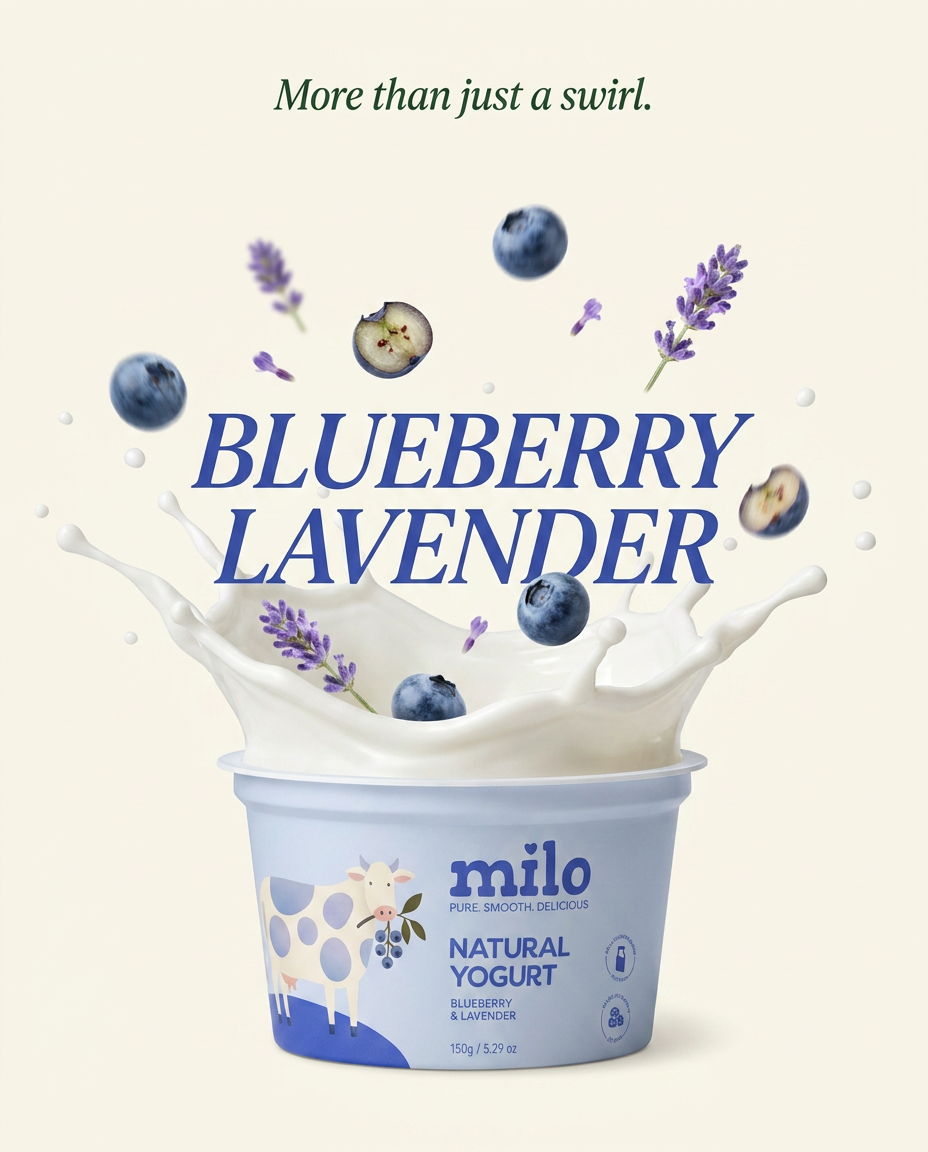
Turn any product shot into a high-end editorial ad. It places your item against a soft cream background with airy spacing and adds elegant, small serif typography at the top. Great for wellness or luxury brands wanting a calm, minimal aesthetic.
Regenerate using your own assets.
Brand consistency isn't just about single visuals; it's about scaling your creative output across an entire campaign. With MyUP's Brandkit, once your brand identity is set, generating variations for different marketing channels or campaign phases becomes effortless. You don't need to re-enter brand details for each new asset.
For instance, after creating your product ad, you might need a promotional graphic for an upcoming event. You can use the same Brandkit and simply state your new intention: "a bold retro poster for a beauty product launch event." MyUP will generate a new visual that is stylistically distinct but still perfectly aligned with your brand's color scheme and typography, thanks to the Brandkit.
A template like "Bold Retro Yellow Event Poster" can transform your event details into an eye-catching graphic, all while adhering to your established brand guidelines. Template: #myup-xbur-hzoi
Bold Retro Yellow Event Poster
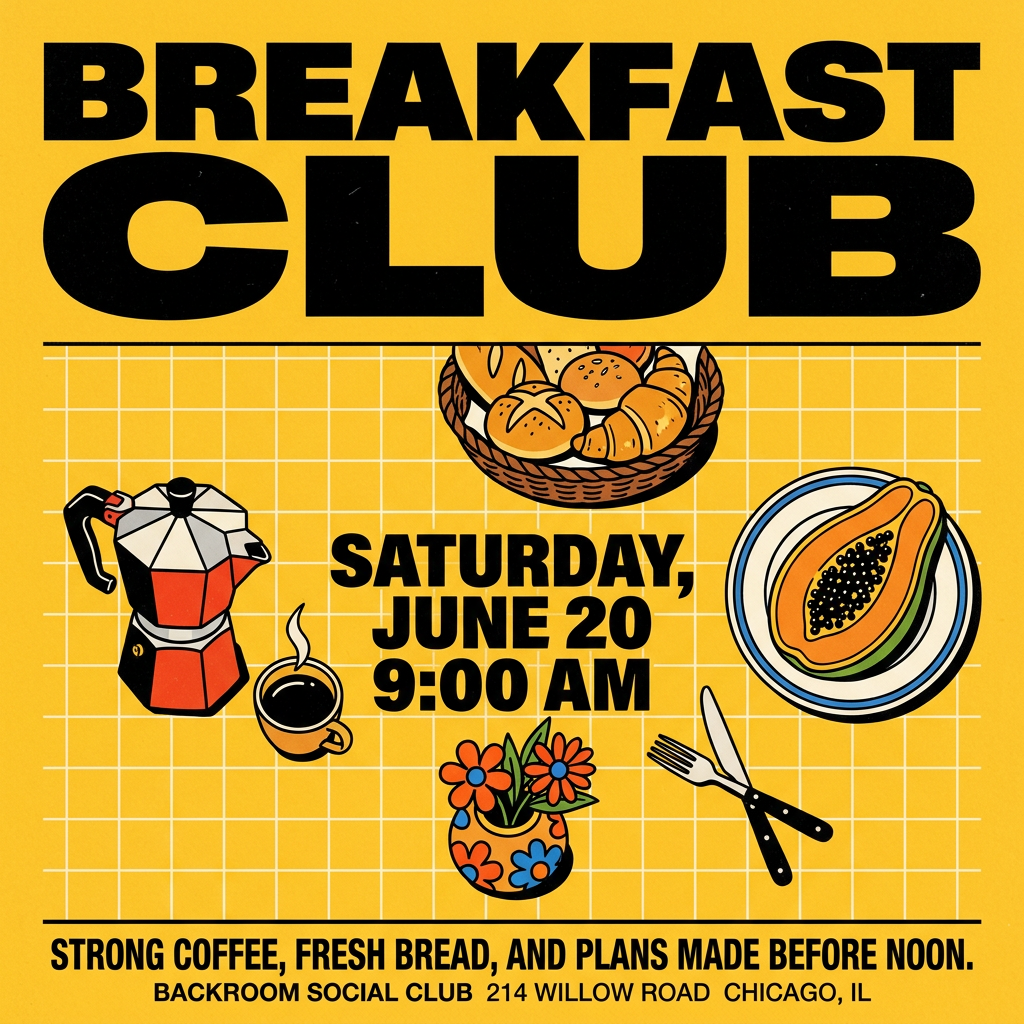
Turn your branding or event details into bold, nostalgic posters. It blends vibrant warm backdrops with a clean, retro square grid pattern to make any announcement look like a classic piece of mid-century graphic design.
Regenerate using your own assets.
The challenge of brand consistency extends beyond static images. Many brands rely on consistent characters or mascots for their storytelling, and video content is increasingly vital. New multimodal AI models, while powerful, often struggle with maintaining a character's exact appearance across multiple scenes or ensuring logos don't flicker and colors don't shift within a video. This 'mascot inconsistency' and 'flickering logo' problem is a major bottleneck for narrative content and video ads.
MyUP's platform approach addresses these advanced consistency problems. By integrating the Brandkit at a deeper level, it ensures that not only static elements but also dynamic components like characters and video overlays remain consistent. For character consistency, MyUP offers specialized tools that lock in a character's likeness across various generations and contexts, crucial for sustained brand storytelling. For video, the platform applies brand elements with precision, preventing the common glitches seen in raw AI video output.
For example, to ensure a consistent persona across different visual contexts, you might use a tool like the "Consistent Character Face Swap Tool." Template: #myup-i83a-ze2t. This allows you to maintain the exact likeness of a person or mascot, irrespective of the scene or pose.
Consistent Character Face Swap Tool
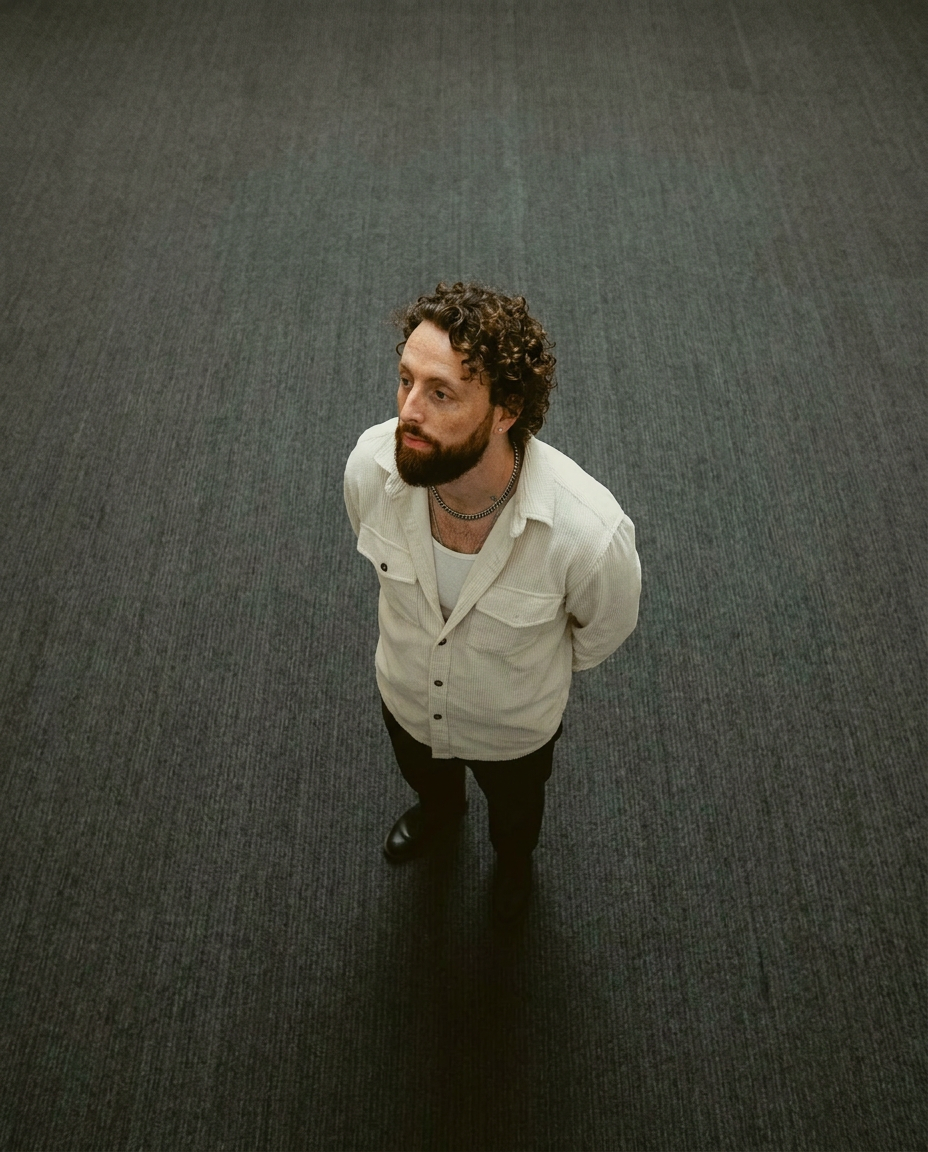
Lock in a subject's exact likeness and physical traits across any new scene. It maps every facial feature and body detail perfectly, keeping the person consistent no matter where you place them. Just drop in your photo and let the system handle the rest.
Regenerate using your own assets.
The goal of creative production isn't to spend endless hours tweaking AI outputs or mastering complex software. It's to turn your creative intentions into finished, professional results that are ready to publish. New AI models like Gemini Omni Flash 1.1 offer incredible speed, but that speed is only valuable if the output is usable and on-brand.
MyUP provides the essential control layer that standalone AI models lack. By centralizing your brand identity in a Brandkit and offering ready-to-use creative templates, MyUP takes the technical burden out of AI creation. You focus on what you want to create, and the platform ensures it's delivered with impeccable brand consistency. Stop fighting your tools and start making your unimaginable possible.
Make your brand identity possible with MyUP
The rapid pace of AI development means constant innovation, but also new challenges for brands. While models like Gemini Omni Flash 1.1 push the boundaries of speed and creativity, they also expose the critical need for robust brand governance in AI-generated content. MyUP is designed to bridge this gap, offering a platform where creative freedom meets unwavering brand consistency.
By integrating your Brandkit directly into the creative production process, MyUP ensures that every image, video, or animation you generate is not just fast and creative, but also perfectly aligned with your brand's unique visual identity. It's time to move beyond generic AI outputs and embrace a solution that delivers finished, studio-quality creations, every single time. Create an account and experience true on-brand creative production.
