On June 25, 2026, a new company called Un-0 emerged with a claim that stopped the AI creative community in its tracks: an image generation model that is 1000x more efficient than current diffusion models like Stable Diffusion. The demos show near-instant, high-resolution image generation on consumer hardware. The technical achievement is undeniable.
But if you’re the one who needs to create three on-brand social posts by lunch, the immediate question isn’t about model architecture. It’s: “So what? What does this actually change for me?”
A faster generator is exciting, but speed alone doesn't solve the core challenges of brand content production. Let's look at what this efficiency really means for your day-to-day work and where the true bottleneck lies.
Beyond speed: what 'efficiency' actually means for your workflow
When you hear '1000x more efficient,' it’s easy to think of it like a faster internet connection—your images just load quicker. But the implications are deeper and more practical for a creative professional. True efficiency in AI image generation isn't just about the time from prompt to first pixel; it's about the speed of your entire creative loop.
This is what AI model efficiency actually delivers:
- Higher Iteration Velocity: The ability to test more ideas, faster. When each generation takes seconds instead of minutes, you can explore dozens of visual directions without penalty. You can afford to hit creative dead-ends because the cost of each experiment—in both time and resources—is drastically lower. This transforms the process from a slow, deliberate one to a real-time creative conversation.
- Lower Creative Cost: Every prompt you run on a cloud-based service has a compute cost. A 1000x more efficient model means the cost per image could plummet, making it feasible to generate vast quantities of variations for A/B testing ad creative or populating an e-commerce site with diverse product scenes.
- New Creative Possibilities: Real-time generation opens the door to interactive editing. Imagine adjusting a slider to change the lighting in a scene and seeing the result instantly, or painting a rough shape and having it resolve into a photorealistic object in real time. This is the promise of models like Un-0—they move AI from a turn-based tool to a live instrument.
These are significant improvements. But they only address one part of a much larger production puzzle.
The real bottleneck isn't the model, it's your process
Let's be realistic about the workflow. An infinitely fast image generator is still slow if it's trapped in a fragmented process. For most brand teams and creators, the workflow looks something like this:
- Generate an image in a tool like Midjourney or Stable Diffusion.
- Wait. Tweak the prompt. Wait again.
- Find one you like and download the high-resolution file.
- Upload it into Canva, Figma, or Photoshop.
- Add your brand's headline using the correct font.
- Manually apply your brand's color palette.
- Add your logo.
- Export the final asset.
- Repeat for every single variation and format.
The AI model's generation time might be 30 seconds, but the total time to get a single, on-brand, ready-to-publish asset is 15 minutes. The model isn't the bottleneck. The manual, multi-tool chaos is the bottleneck. This production friction is where all the time, consistency, and creative energy is lost.
How a workflow platform turns raw model power into on-brand assets
This is why the conversation needs to shift from the 'model of the week' to the stability of your creation system. A platform like MyUP is designed to solve the process bottleneck, not just provide access to a powerful generator. It treats the underlying AI model—whether it's Stable Diffusion 3 or something as fast as Un-0—as an engine to be plugged into a repeatable, brand-aware machine.
Here’s how it works. First, you set up your Brandkit on MyUP just once by providing a URL. MyUP automatically extracts your logo, fonts, and color palette. This becomes the foundation for every asset you create.
Then, instead of a blank prompt, you use a workflow. This workflow doesn't just generate an image; it executes a complete production sequence. It generates the visual, applies your brand fonts and colors, adds your logo, and formats the output as a finished piece of creative. The user’s job is to provide the core idea and validate the result. MyUP handles the production.
For example, instead of the nine-step manual process above, you could use a single workflow to create a professional product poster. MyUP will ask for your product, generate a stunning visual, and apply your complete brand identity in one go.
Workflow code: #myup-ysc9-ekcs
Professional Product Poster
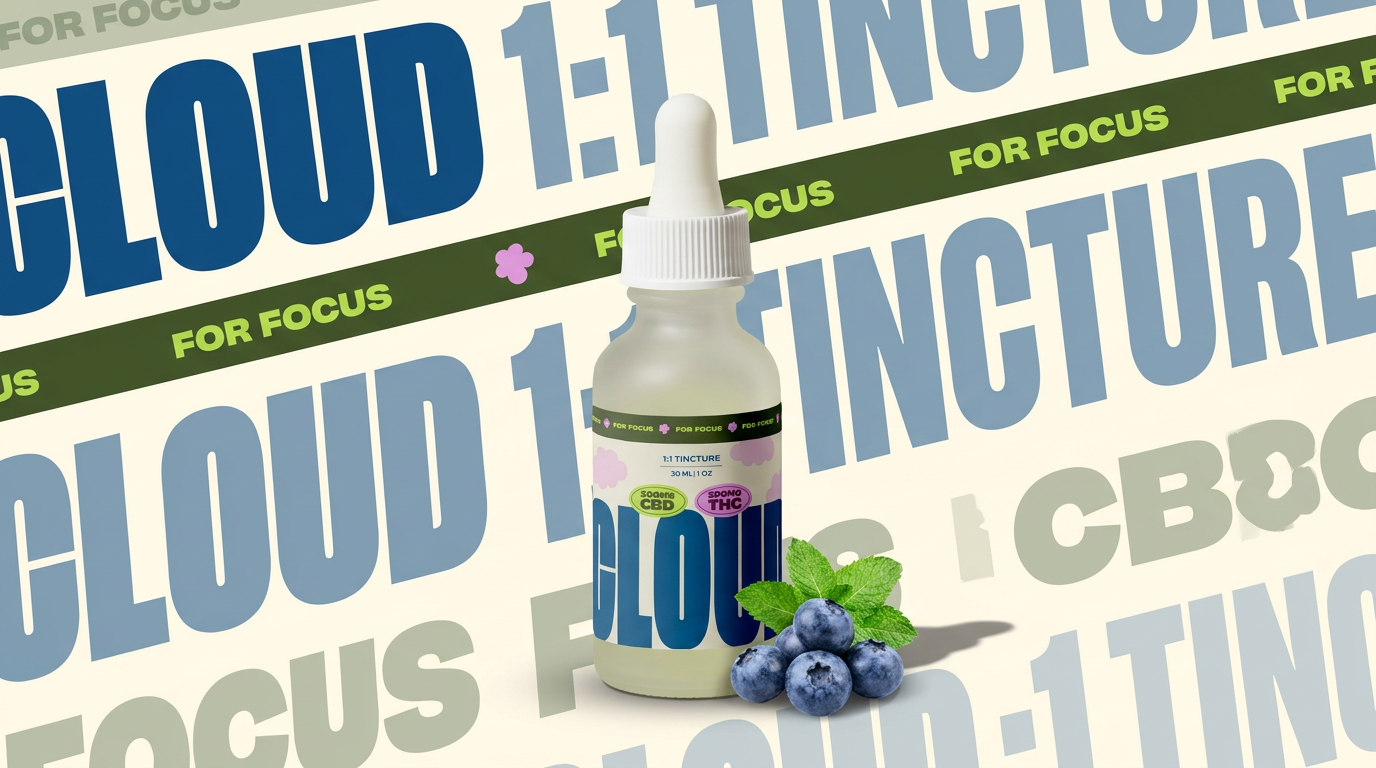
Turn any product shot into a clean, graphic landscape poster. It automatically pulls the text from your packaging to create a massive, semi-transparent repeated background pattern behind your item. Great for modern, typography-heavy brand showcases.
Regenerate using your own assets.
Workflow code: #myup-gxue-opd0
Product Post
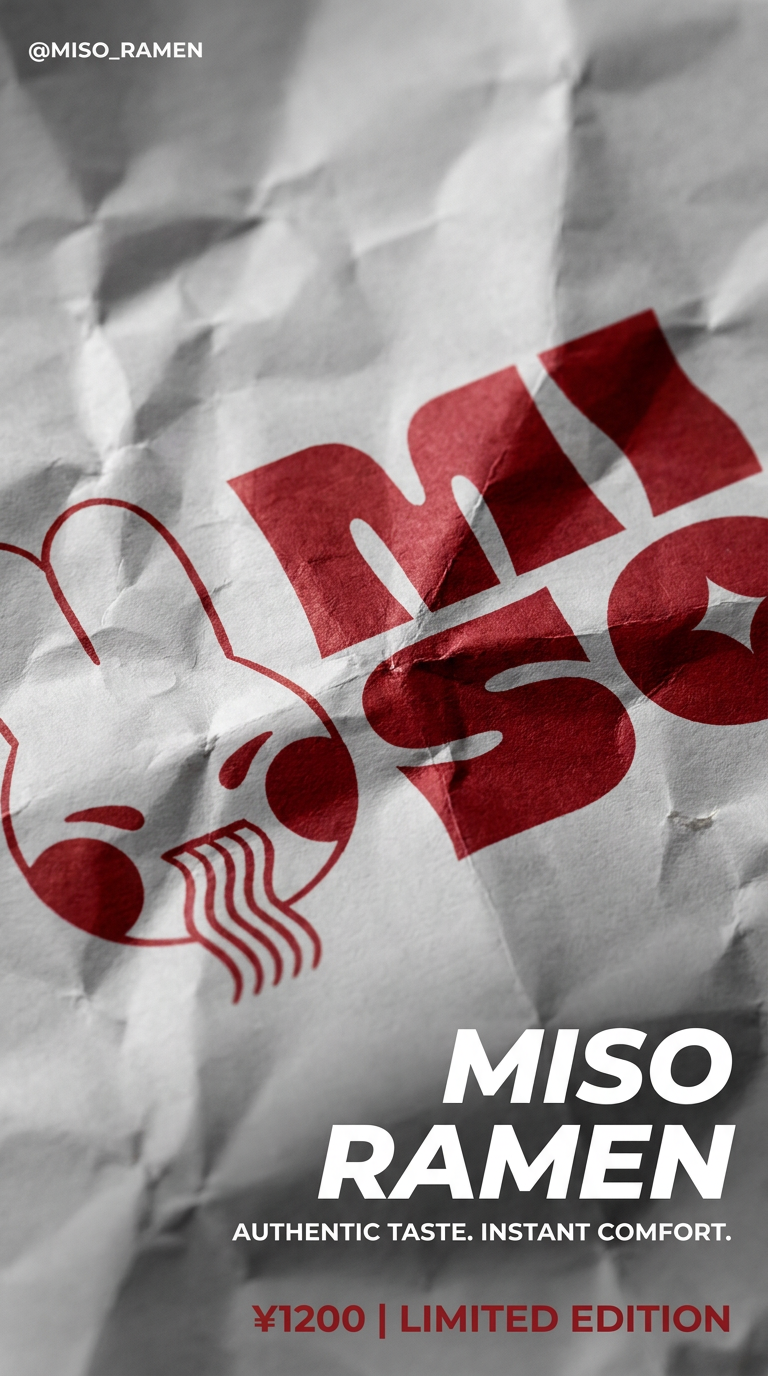
Turn a single product shot into a cohesive six-part Instagram story campaign. It mixes tactile crumpled paper textures with bold, stacked typography and custom mascot spots in your brand's signature colors.
Regenerate using your own assets.
The future is fast, but your brand is the constant
New models like Un-0 will continue to emerge, and each will be faster and more capable than the last. MyUP is built to integrate these new, more efficient models as they become stable and available, so you always have access to state-of-the-art power without having to change your process.
This is the key insight: your creative system should be anchored by your brand, not by a specific, transient AI model. Your Brandkit is the constant. Your workflows are the repeatable recipes for success. The AI model is simply the ingredient, and a good system can swap in better ingredients over time.
Whether you need a bold, professional ad or something more elegant and minimalist, the system remains the same. You simply run a different workflow that's tailored to the desired output, but it still pulls from your central Brandkit to ensure every asset, regardless of style, feels like it came from you. This is how you achieve professional, high-fidelity AI images consistently.
Want to create a different style of ad? The process is identical. Just launch a different workflow.
Workflow code: #myup-fy77-jljs
Minimalist Elegant Product Advertising Poster
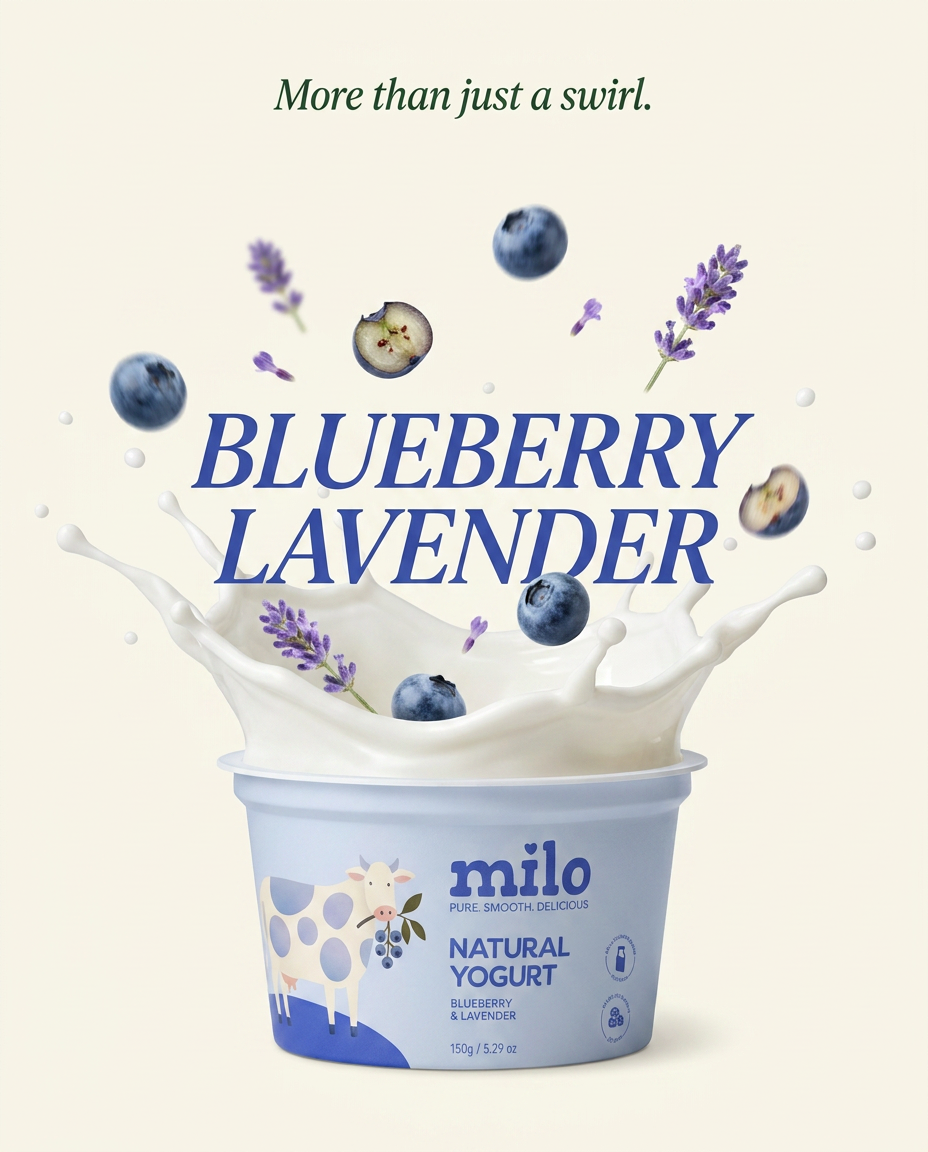
Turn any product shot into a high-end editorial ad. It places your item against a soft cream background with airy spacing and adds elegant, small serif typography at the top. Great for wellness or luxury brands wanting a calm, minimal aesthetic.
Regenerate using your own assets.
Stop chasing models, start building your system
The arrival of hyper-efficient models like Un-0 is fantastic news. It will accelerate creativity and lower the cost of experimentation for everyone. But for those of us with deadlines to meet and brands to build, the ultimate advantage doesn't come from having the fastest engine. It comes from having the most effective vehicle.
Chasing the latest model is a reactive strategy that keeps you locked in a cycle of re-learning tools and fragmented processes. Building a brand-centric workflow on a platform like MyUP is a strategic investment. It creates a system that absorbs new AI power and channels it directly into the repeatable, on-brand assets you need to grow.
The promise of 1000x efficiency is real, but it's only fully realized when it's connected to a workflow that's 1000x smarter.