You've mastered the art of custom AI visual creation. Whether it's crafting intricate scenes with Midjourney, building complex Stable Diffusion pipelines in ComfyUI, or engineering precise prompts for specific aesthetics, your skill is undeniable. But here’s the bottleneck: how do you move from bespoke, one-off projects to efficiently serving multiple clients with high-volume visual content, all while maintaining consistency and securing recurring revenue? This isn't about finding a new prompt; it's about building a scalable business. We’re going to break down how to productize your unique AI expertise, tackle the technical hurdles of deployment, and position your services for sustained growth. And for those ready to deploy their solutions, the MyUP creator program offers an immediate pathway to host, manage, and monetize your advanced AI workflows with a built-in audience.
 Become a creator and earn money
Defining your scalable AI product: beyond one-off projects
The first step to scaling is to stop thinking about individual deliverables and start packaging your expertise as a repeatable service. What specific visual content types do you excel at? Is it hyper-realistic product photography, consistent character generation for brand campaigns, or dynamic social media video ads? Instead of selling 'an AI image,' sell '50 consistent e-commerce product shots for a new collection' or 'a monthly retainer for 20 on-brand social media visuals.'Consider what problems your unique AI models solve for clients at scale. For instance, with Meta's recent Muse Glimmer (released August 10, 2026), creators have more power than ever to build highly customized, agentic, multimodal solutions. How can you abstract your custom builds into a clear, repeatable offering? This means identifying common client needs and designing a core 'product' around your AI capabilities that can be easily replicated and customized with minimal manual intervention. Think about the inputs you need from a client and the guaranteed outputs you can provide.Architecting for scale: infrastructure choices for custom AI models
Once you have a productized offering, the next challenge is the technical backbone. Running custom AI models for a single client is one thing; doing it for ten clients, each requiring hundreds of images or videos, demands robust infrastructure. You have a few options:Self-hosting and cloud functions
If your custom models are open-source (like those empowered by Muse Glimmer) or fine-tuned on platforms like HuggingFace, you might consider deploying them on cloud services like AWS Lambda, Google Cloud Functions, or Azure Functions. This offers flexibility and cost-efficiency as you only pay for compute when your models are actively running. However, it requires significant DevOps knowledge for setup, maintenance, scaling, and managing API endpoints for client access. You’ll be responsible for everything from load balancing to error handling.Managed AI platforms
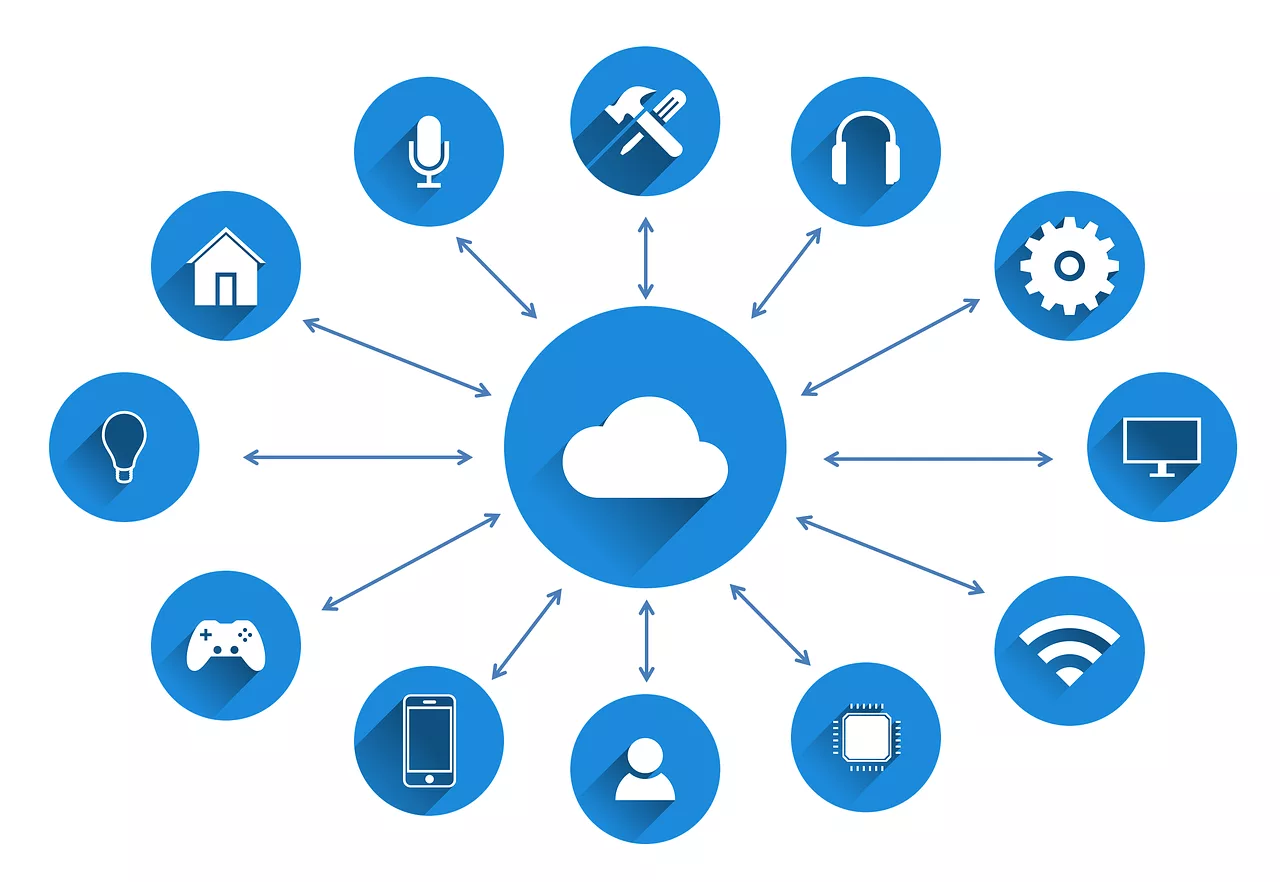
Alternatively, you can leverage platforms designed to host and scale custom AI models. These platforms abstract away much of the underlying infrastructure complexity. They handle containerization, GPU allocation, scaling, and API management, allowing you to focus on your model's performance and client delivery. This is often a faster route to market and reduces your operational overhead significantly. For AI builders looking to turn their custom solutions into a recurring revenue stream without the headache of infrastructure, the MyUP creator program is built precisely for this. It provides the platform to host your advanced AI models and workflows, handling the technical heavy lifting so you can focus on building and selling.Maintaining visual consistency across high-volume output
Consistency is paramount for client visual content, especially at scale. A brand needs its visuals to look cohesive whether you're generating 10 images or 10,000. This has historically been a major pain point for AI creators, as seen in recent discussions on Reddit where users express frustration over AI changing product backgrounds and lighting across shots. Fortunately, recent advancements are making this easier.Advanced prompt engineering and style references
Beyond basic prompts, develop a comprehensive 'style guide' for your AI. This involves using consistent seed values, negative prompts, and advanced parameters. Midjourney's v7 beta, released today (August 15, 2026), significantly enhances 'Style Reference' and 'Character Consistency' features. This means you can feed an initial image to the AI and have it consistently apply that aesthetic or character's likeness across a new series of generations. Master these features to ensure brand elements, character appearances, and overall visual tone remain identical.Automated consistency checks
For truly high-volume output, manual review isn't feasible. Implement automated quality control loops. This could involve using image similarity algorithms to flag outputs that deviate significantly from a defined style reference or employing smaller, specialized AI models to check for specific brand elements like logos or color palettes. For video content, new models like KineticFlow (launched August 14, 2026) are making strides in text overlay stability and object permanence, meaning logos and product details remain consistent even in dynamic scenes. Integrating such models into your pipeline is crucial for scalable video services.Operationalizing client workflows: automation and management
Scaling means automating more than just image generation. You need a streamlined process for client intake, content requests, generation, review, and delivery.Client intake and briefing
Develop standardized intake forms that capture all necessary client information: brand guidelines, visual preferences, specific product details, and desired output formats. This minimizes back-and-forth communication.Automated generation pipelines
This is where your custom AI models shine. Build robust pipelines that take client inputs and automatically feed them through your AI stack. The trend of marketers on X sharing 'AI agent' builds for automated social media campaigns highlights the demand for chaining AI tools together. Your system should be able to generate multiple variations, sizes, and formats of visual content programmatically.Review and feedback loops
Even with automation, human oversight is necessary. Provide clients with a clear, efficient way to review generated content and provide feedback. Integrate revision rounds into your service packages. Platforms that allow for easy sharing and commenting on visual assets can greatly simplify this process.Delivery and integration
How will clients receive their high-volume visual content? Consider direct integration with their CMS, cloud storage, or an automated delivery system that pushes approved assets to their desired destination. The goal is to make the process as hands-off for the client as possible once the initial brief is submitted.Pricing your scaled AI services: securing recurring revenue
Pricing your AI services correctly is critical for sustainable growth. Move away from hourly rates for bespoke work and embrace models that align with the value and volume you deliver.Retainer-based pricing
This is the gold standard for recurring revenue. Offer monthly or quarterly packages based on a set volume of visual content (e.g., '50 product images per month,' '10 social media ad variations per week'). This provides predictable income for you and predictable content for your client. Retainers for high-volume visual content can range from $1,500 to $10,000+ per month, depending on complexity and volume.Usage-based pricing
Charge per image, video, or generation. This can be layered on top of a base retainer or offered as a standalone option for clients with fluctuating needs. For example, $5-$20 per high-quality product image or $50-$200 per short video ad, with bulk discounts for higher volumes.Value-based pricing
Position your service by the ROI it delivers. If your AI-generated product photos boost conversion rates by X% or save the client Y hours in traditional photoshoot costs, price accordingly. Frame your service as a cost-saving, revenue-generating solution. For instance, charging $3,000 for a campaign that would cost $10,000 via traditional methods, even if your direct AI costs are minimal. For more insights on structuring your pricing, explore MyUP's pricing page and other resources for creators.Remember to factor in your own compute costs, platform fees, and the value of your specialized AI expertise.Finding your audience and distributing your scaled AI solutions
You've built a scalable AI service; now you need clients. This requires a targeted distribution strategy.Target niche industries
Focus on sectors with high visual content needs and budget, such as e-commerce, digital marketing agencies, or real estate. Tailor your messaging to their specific pain points. For example, e-commerce brands constantly need consistent product photos (a pain point highlighted in recent Reddit discussions) and diverse lifestyle imagery, an area where hyper-realistic AI models are excelling.Showcase your consistency
Build a portfolio that emphasizes consistency and scale. Don't just show one great image; show a series of 50 images from the same brand, all perfectly on-style. This directly addresses the market need for reliable, branded AI output, as seen in Behance showcases of 'AI-Generated Brand Guidelines' as a new design service.Leverage creator platforms
Instead of building your own client acquisition channels from scratch, consider platforms that connect AI builders with a ready audience. The MyUP creator program is designed for this. You can publish your advanced, custom AI models and content generation solutions, reach a built-in audience of businesses and marketers, and keep the majority of the revenue. It’s an instant activation with no application process, allowing you to focus on developing your AI expertise while MyUP handles distribution and sales.Build your AI automation empire with MyUP
The shift from bespoke AI creations to scalable, recurring visual content services is where the real opportunity lies for advanced AI builders. It demands a strategic approach to productization, robust technical architecture, a relentless focus on consistency, and smart operational management. By packaging your unique AI models as repeatable services, leveraging platforms that simplify deployment, and adopting value-driven pricing, you can transform your individual skill into a thriving, high-volume business.If you're ready to stop building in isolation and start scaling your custom AI solutions for a global audience, the MyUP creator program provides the infrastructure, reach, and revenue share you need to build your AI automation empire. Don't just create; productize, scale, and thrive.Already building with AI? Turn that skill into income. Become a MyUP creator — publish your own workflow, keep most of the revenue, reach a built-in audience.
Build once. Get paid on repeat.
Package your AI workflow and sell it to a built-in audience of creators.
Tags: