
You've just integrated OpenAI's new GPT-6 Astra to automate your visual content moderation. You were promised a revolution. Instead, your ad campaigns are getting rejected, and your e-commerce product photos are being flagged as inappropriate. If you're seeing this in the last 48 hours, you're not alone. The problem isn't the model's power; it's the context gap.
Your GPT-6 Astra ads are getting rejected. Here's why.
You've just integrated OpenAI's new GPT-6 Astra, released September 3rd, to automate your visual content moderation. You were promised a revolution. Instead, your ad campaigns are getting rejected, and your e-commerce product photos are being flagged as inappropriate. If you've been seeing this in the last 48 hours, you're not alone. The problem isn't the model's power; it's the context gap.
As reports on developer forums and Reddit are already showing, GPT-6 Astra is a powerful general-purpose tool, but it operates on general-world knowledge. It doesn't know your specific brand's rules, your industry's legal requirements, or the crucial difference between a commercial swimwear photo and sexually suggestive content. It's a powerful engine without a specific map, and that's why your visuals are getting stuck.
The 'context gap': why AI moderation flags legitimate content
The core issue is what we call the 'context gap.' A generic AI model sees pixels and patterns; it doesn't understand your business intent. For a model trained on the entire internet, a person in swimwear is just that. For your e-commerce brand, it's a product shot for a specific SKU. That context is everything.
True visual compliance is more than basic NSFW filtering. It involves a complex stack of rules that generic models are not equipped to handle out of the box:
- Advertising Platform Policies: Meta's 20% text rule, Google's restrictions on certain words in ad copy, TikTok's fast-paced visual guidelines—these are nuanced and constantly changing.
- Industry Regulations: If you're in finance, health, or wellness, you have strict legal requirements for disclaimers and are forbidden from making unsubstantiated claims. A generic AI can't audit for this.
- Brand Safety Rules: Your luxury brand might have a rule to never appear next to content that feels low-quality, political, or even just uses a competitor's color palette. These are your brand's specific guardrails.
Trying to solve this by writing ever-more-complex prompts is a losing battle. You can't describe your entire brand and legal rulebook in every single request. It’s inefficient and, as many are discovering, ineffective.
A practical method for automated, compliant creations
Instead of filtering problematic content after it's been created, the correct approach is to build compliance into the creative production process from the very beginning. A creative production platform like MyUP is designed to do exactly this. It closes the context gap by integrating your business rules directly into the creation itself.
The method is straightforward:
- Codify Your Rules in a Brandkit: Your MyUP Brandkit is more than just logos and colors. It's a central hub for your brand's specific compliance rules. You can define guardrails like, 'No using the word guarantee,' 'Text overlays must not contain medical claims,' or 'Avoid a competitor's signature red.' This is done once and applied automatically to all future creations.
- State Your Creative Intention: You don't think about tools; you think about the finished result. You simply describe your goal, such as, "A high-converting ad campaign for our new sportswear line."
- Receive a Finished, Pre-Validated Result: MyUP uses your Brandkit's rules to guide the entire production process. The output isn't a raw image that needs to be checked; it's a finished asset that is already validated against your specific criteria.
For example, instead of struggling with a generic model over a sportswear photo, you can use a production template built to create compliant visuals in that category. Template: #myup-ywpr-rqz6.
Professional Sportswear Ad
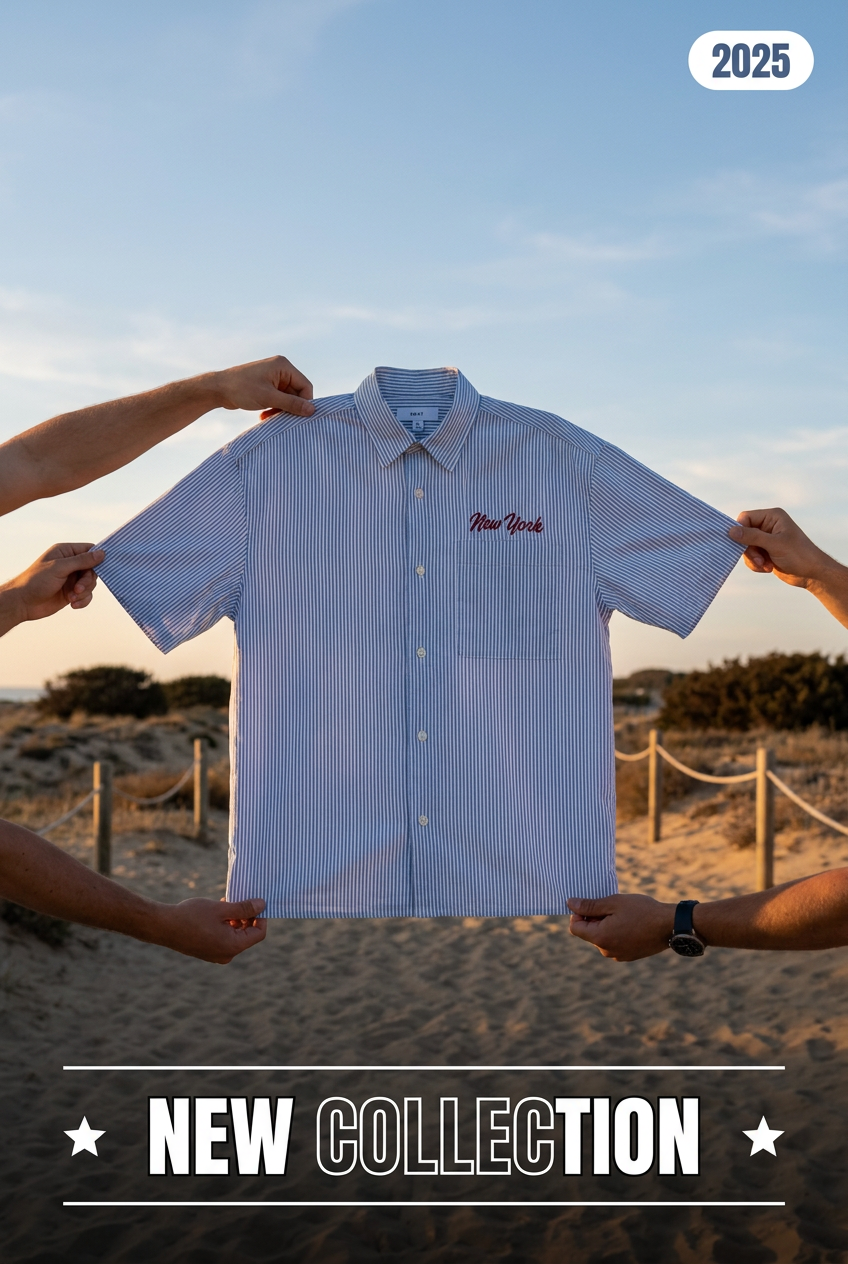
Suspends your apparel right in the center of a high-energy promo shot, held up by hands around the frame. It gives your shirts or jerseys a gritty, collaborative streetwear editorial look that feels alive and physical.
Regenerate using your own assets.
Case study: from a high-risk product to a compliant ad
Let's take a product in a sensitive category that faces heavy ad platform scrutiny, like a luxury skincare serum. A brand wants to create an elegant, aspirational ad for it. When using a generic tool, the risks are high: the AI might generate text with an unsubstantiated health claim ('erases wrinkles in 7 days'), leading to an immediate ad rejection. Or it might produce an image that a platform's algorithm misinterprets, flagging it for showing skin in a 'before-and-after' context that is prohibited.
Using a production platform flips this dynamic from reactive to proactive. The brand's MyUP Brandkit would contain rules like "Use aspirational language only (e.g., 'radiant glow'), not medical claims" and "Maintain a minimalist, elegant aesthetic." With these guardrails in place, the marketing team can confidently execute their vision. To create a polished, compliant ad for a luxury product, they can use a creative template that already understands the nuances of high-end branding and produces visuals that are pre-cleared for the brand's specific marketing standards.
This is how you stop AI sameness and create visuals that are not only beautiful but also consistently compliant. For an elegant wellness or luxury product ad, a dedicated template is the most direct path to a finished, approved result. Template: #myup-fy77-jljs.
Minimalist Elegant Product Advertising Poster
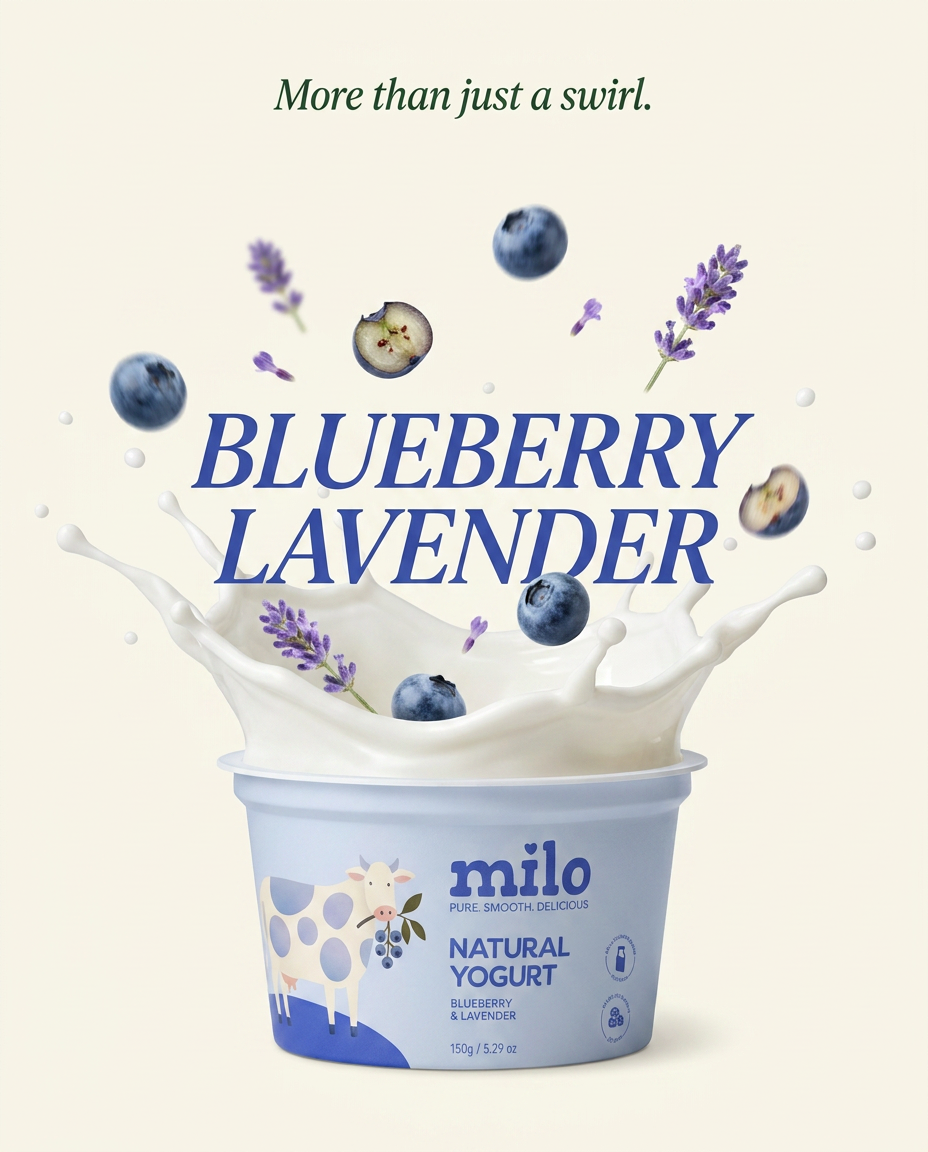
Turn any product shot into a high-end editorial ad. It places your item against a soft cream background with airy spacing and adds elegant, small serif typography at the top. Great for wellness or luxury brands wanting a calm, minimal aesthetic.
Regenerate using your own assets.
Beyond moderation: turning compliance into content intelligence
The same deep contextual understanding that ensures compliance can be repurposed to generate powerful creative insights. Because MyUP is involved in the production from start to finish—understanding the brand rules, the creative intention, and the final visual components—it can do more than just moderate.
It turns compliance data into content intelligence. You can begin to answer strategic questions like:
- Which compliant visual elements correlate with our highest engagement rates?
- What background styles appear most often in our top-performing, approved ads?
- Can we identify a pattern in the compliant visuals that lead to higher conversions?
This transforms moderation from a defensive cost center into a proactive source of creative strategy. You're not just ensuring content is safe; you're learning what makes it successful. This is a crucial step in developing a truly automated visual identity that gets smarter over time.
The right way to automate your brand's visual compliance
Generic AI models like GPT-6 Astra are powerful tools for experimentation. But for high-stakes, repeatable business processes like advertising and brand marketing, you can't afford the 'context gap.' The risk of rejected ads, wasted budget, and damage to your brand is too high.
True automation requires a production platform, not just a generative tool. MyUP is designed to turn your creative intention into a finished, on-brand, and—most importantly—compliant creation. By building your specific business rules into the production process itself, MyUP lets you move faster and publish with confidence. Stop reviewing. Start creating.