
Can AI generate true vector art? The answer is getting complicated. In the last few days of June 2026, tools like Adobe Firefly and Ideogram have launched features that promise direct SVG outputs. This has caused a surge of excitement, but also confusion, because they don't solve the core creative problem: forcing an AI model trained on photorealistic images to produce something clean, simple, and flat.
A 'Vectorize' button is a file conversion utility. It's useful, but it doesn't stop the AI from generating an initial image full of unwanted gradients, subtle shadows, and noisy textures. The real challenge isn't the file type; it's achieving the clean vector *aesthetic* in the first place. This is a battle of creative intent against the model's default behavior, and winning it requires prompt discipline.
Why is getting clean vector art from AI so hard?
Most diffusion models, from Midjourney to Stable Diffusion, are trained on a vast ocean of web images—the majority of which are photographs. Their fundamental bias is towards realism, detail, and complexity. When you ask for a simple illustration, the model often 'helps' by adding what it thinks is missing: light sources, surface textures, and soft edges. This is style contamination, and it's the reason your 'flat icon' prompts result in glossy, 3D-looking buttons.
Getting a clean vector look means actively fighting this bias. You have to systematically strip away the realism the model wants to add. It’s not about finding a magic keyword, but about enforcing a strict set of constraints through careful, deliberate prompting.
The anatomy of a perfect vector-style prompt
A successful vector-style prompt is built on two pillars: strong positive keywords to define the style, and even stronger negative keywords to eliminate everything else. Think of it less as a description and more as a set of rules for the AI.
Positive Keywords: The Foundation
These terms establish the core aesthetic. Be explicit and stack them for emphasis.
- Core Style: flat illustration, vector art, 2d graphic
- Simplicity: minimalist, simple shapes, clean lines
- Color: solid colors, limited color palette
Negative Prompts: The Great Un-Doer
This is where the real work happens. Negative prompts (often prefixed with --no or used with negative weighting) are your defense against style contamination. They are non-negotiable.
- No Realism: --no photorealistic, realistic, 3d render, CGI
- No Depth: --no shadow, gradient, lighting, shading, highlights
- No Noise: --no texture, details, grit, noise, complex
A disciplined prompt combines these. For example: Minimalist flat illustration of a coffee cup, vector art, clean lines, solid colors --no 3d render, photorealistic, shadows, gradients, texture.
To generate a simple, clean poster right now without wrestling with negative prompts, this workflow has all the rules built-in. Just provide the subject and the text.
Workflow code: #myup-k4td-9k6z
Minimalist Poster
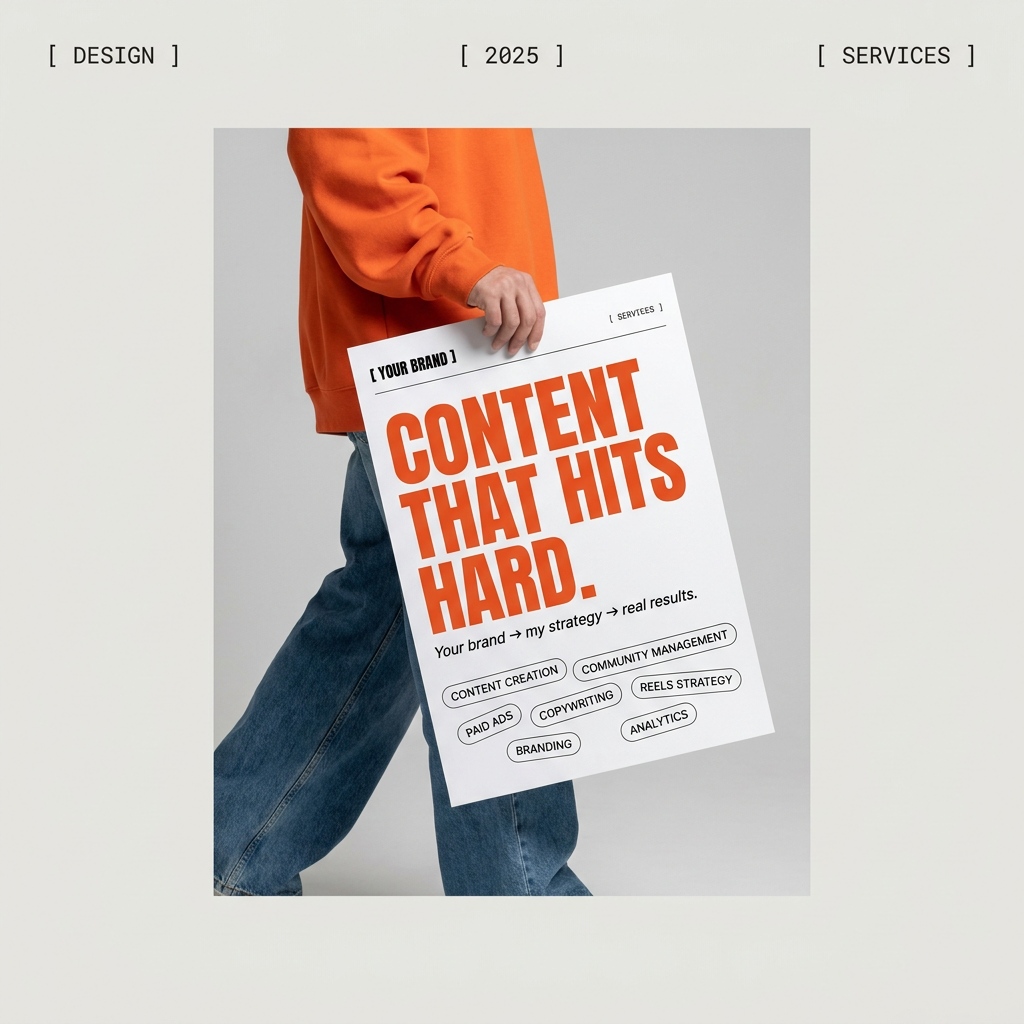
Give your social feed a clean, gallery-like aesthetic. This layout frames your images with structured mono typography and soft, neutral backgrounds for a high-end editorial look. It's perfect for minimal product launches or brand announcements.
Regenerate using your own assets.
Case study: From a messy default to a clean illustration
Let's see the theory in action. Imagine you prompt Midjourney with: "An astronaut planting a flag on a new planet, corporate illustration style." You'll likely get something with a metallic sheen on the helmet, soft shadows on the ground, and a subtle gradient in the sky. It’s a decent image, but it's not a clean vector illustration. It would be difficult to use as a website icon or part of a consistent set.
Now, let's apply prompt discipline: "Flat illustration of an astronaut planting a flag on a planet, 2d vector art, minimalist, simple shapes, solid colors --no 3d, photorealistic, shadows, gradients, lighting, texture, detail."
The result is dramatically different. The lines are sharp. The colors are flat blocks. The entire scene is readable at a small size. You didn't just change the description; you changed the rules of creation. The second image is a usable brand asset. The first is a one-off piece of art that needs manual cleanup.
This same discipline can be applied to more complex and stylized outputs, like this retro poster workflow that maintains a vector feel while incorporating specific aesthetic elements.
Workflow code: #myup-1hgd-9oz5
Retro Style Food Advertising Poster
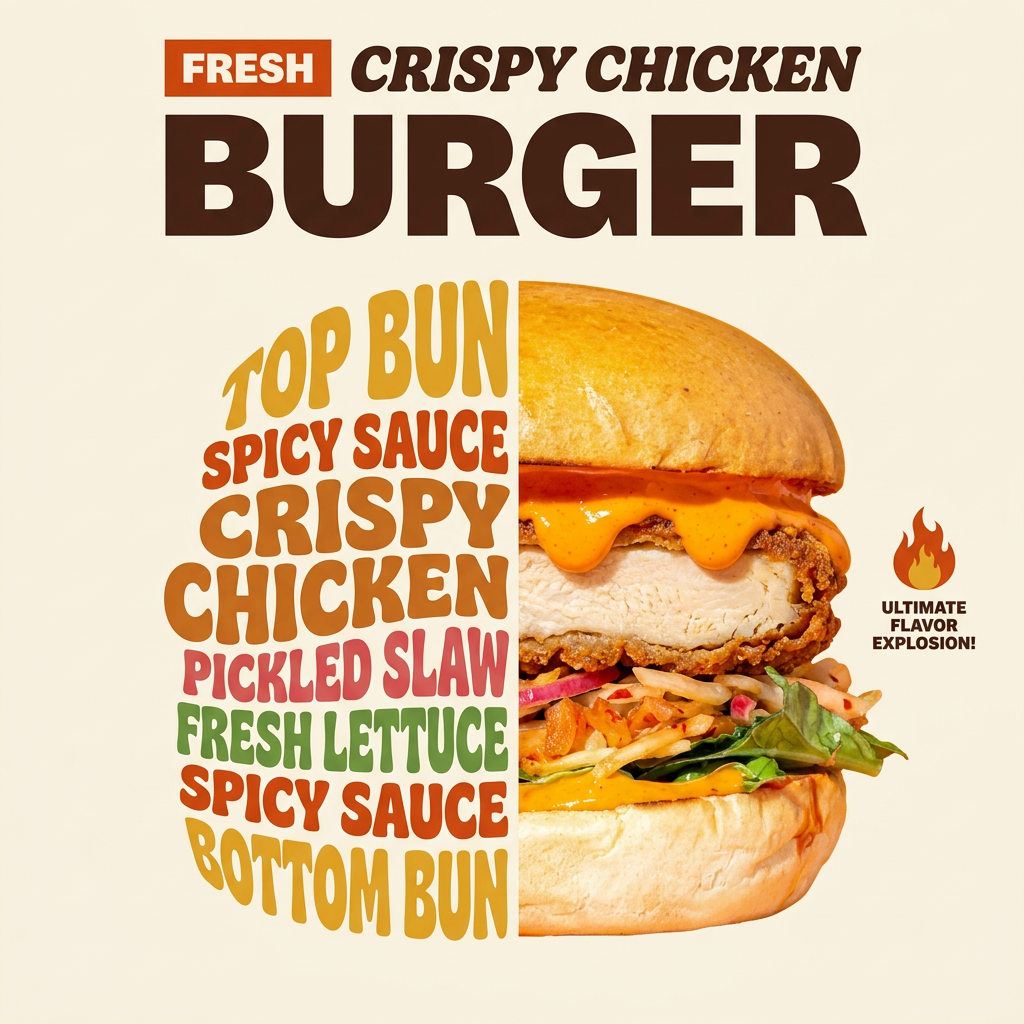
Turn any food product shot into a bold, nostalgic retro advertisement. It drops your item onto a warm cream background and automatically frames it with a color-matched header badge for that classic mid-century print ad look.
Regenerate using your own assets.
Beyond one-off images: Creating a consistent set
Generating one clean illustration is a good start. But brands don't need one illustration; they need a set of ten for their website's feature list, a dozen for a social campaign, and fifty for their icon library. Manually typing that perfect prompt every single time is inefficient and prone to error. Even a small variation can lead to a slightly different style, breaking the visual consistency of the set.
This is where the process needs to scale beyond the prompt box. The solution is to embed your style rules into a repeatable system. In MyUP, this system has two parts:
- Your Brandkit: You define your brand's specific color palette once. MyUP then automatically applies these flat colors to your illustrations, ensuring every output uses the correct hex codes without you having to specify them in the prompt.
- Saved Workflows: Your perfect prompt structure, complete with all the positive and negative keywords, is saved as a reusable workflow. You just input the new subject—'billing page,' 'team collaboration,' 'security'—and the workflow handles the rest, guaranteeing the same clean, on-brand vector style every time.
This approach transforms illustration from a series of creative gambles into a reliable production line. You approve the creative direction; MyUP executes the repetitive work. You can generate an entire icon set or a series of spot illustrations for a landing page, and they will all look like they were made by the same artist, because they were guided by the same system. For a full breakdown on this, see our guide to getting truly consistent AI illustrations.
This workflow for minimalist product ads is a perfect example of a saved style you can run repeatedly.
Workflow code: #myup-fy77-jljs
Minimalist Elegant Product Advertising Poster
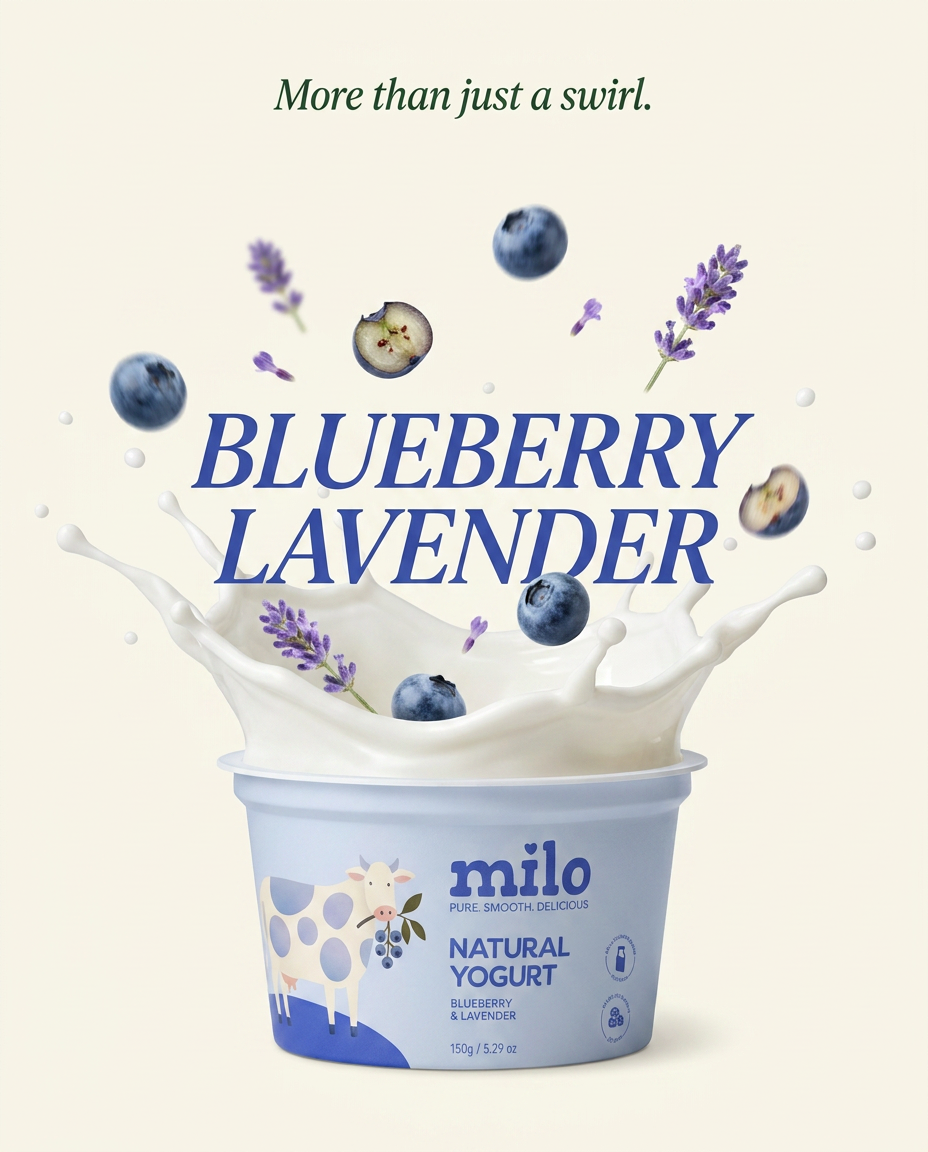
Turn any product shot into a high-end editorial ad. It places your item against a soft cream background with airy spacing and adds elegant, small serif typography at the top. Great for wellness or luxury brands wanting a calm, minimal aesthetic.
Regenerate using your own assets.
When you actually need a true SVG file (and when you don't)
Let's be clear: for 95% of digital use cases—website illustrations, social media posts, email graphics, presentation slides—a high-resolution PNG with a transparent background is all you need. The 'vector' part you care about is the aesthetic: the clean lines and scalability *to the eye*. A 2048x2048 PNG will look perfectly sharp in these contexts.
You only need a true, editable SVG file with mathematical paths and nodes for a few specific situations:
- Logo design: For infinite scalability from a business card to a billboard.
- Print production: When a commercial printer requires vector files.
- Interactive animations: For web animations where individual paths need to be manipulated with code (e.g., Lottie files).
For those cases, tools like Ideogram's 'Vectorize' feature or Adobe Illustrator's 'Image Trace' are excellent final-step utilities. You can use the prompting workflow here to generate the perfect *visual*, then run that clean PNG through a vectorizer to get the technical file format you need. The creative work comes first; the file conversion comes last.
Stop fighting the model, start building a workflow
The hunt for a single 'AI vector art generator' that reads your mind is a distraction. The messy, detailed outputs aren't a bug; they're a feature of how these models work. True creative control comes not from finding a better button to click, but from building a better process.
Prompt discipline gives you control over a single image. A workflow gives you control over your entire brand's visual output. By saving your stylistic rules—your specific color palette, your precise negative keywords, your preferred composition—you create an asset generation engine. You stop wrestling with the AI's tendencies on every image and start directing a system that produces predictable, on-brand results on demand. The user validates the output, but the workflow handles the production.