You tried using Claude to design your new menu. You saw the buzz, you read the articles, and you were excited to save time and money. But the result was... disappointing. The food photos look plastic, the layout is a chaotic wall of text, and your restaurant's logo and colors are nowhere to be seen. If you've been scrolling through Reddit forums like r/Restaurateur in September 2026, you know you're not alone. This is a shared frustration for business owners trying to use general-purpose AI for a specific, professional task.
The problem isn't your prompt. It's the tool. A large language model is an ingredient, not a finished dish. This guide will diagnose exactly why Claude fails at menu design and provide the practical method to produce a professional, appetizing menu that actually brings in customers.
Why your AI-generated menu looks like a 1998 website
You tried using Claude to design your new menu. You saw the buzz, you read the articles, and you were excited to save time and money. But the result was... disappointing. The food photos look plastic, the layout is a chaotic wall of text, and your restaurant's logo and colors are nowhere to be seen. If you've been scrolling through Reddit forums like r/Restaurateur in September 2026, you know you're not alone. This is a shared frustration for business owners trying to use general-purpose AI for a specific, professional task.
The problem isn't your prompt. It's the tool. A large language model is an ingredient, not a finished dish. This guide will diagnose exactly why Claude fails at menu design and provide the practical method to produce a professional, appetizing menu that actually brings in customers.
The three core failures of using Claude for menu design
Using a text-based AI like Claude for a visual design project like a menu fails for three specific reasons. Understanding them is the first step to fixing the problem.
1. The 'Uncanny Valley' of AI Food Photography
Generic image models are not trained by food stylists. They generate images that are technically 'food' but lack appetite appeal. The lighting is flat, shadows are incorrect, and textures have an unnatural, waxy sheen. Steam looks like smoke, and moisture looks like sweat. The result is food that looks fake and unappetizing, which actively discourages orders.
2. The Layout and Typography Disaster
Claude can write amazing dish descriptions, but it has no concept of visual hierarchy, typography, or layout design. It simply outputs a block of text. A real menu needs clear sections, readable fonts, strategic use of white space, and a layout that guides the customer's eye. Without this, you get a typographic nightmare that is confusing and looks unprofessional.
3. The Brand Identity Black Hole
Your menu is a critical piece of your brand. It needs your logo, your specific brand colors, and your chosen fonts. Claude has brand amnesia; it cannot see, use, or incorporate your existing visual identity. The result is a generic document that could belong to any restaurant, completely disconnected from your brand's look and feel.
The fix: from raw generation to creative production
The common, frustrating process for fixing these failures involves juggling multiple complex tools: you might get text from Claude, generate a few images in another AI tool, and then hire a designer to manually assemble everything in Figma or Photoshop. This is slow, expensive, and defeats the purpose of using AI in the first place.
The real solution is to shift from using raw generators to using a creative production platform. Instead of giving you disconnected parts, a platform like MyUP is designed to understand your intention—"I want a professional, on-brand menu"—and deliver a finished, ready-to-publish creation.
This is possible because MyUP integrates all the necessary components. It starts with your brand identity. MyUP's Brandkit feature learns your logo, colors, and fonts once, and then automatically applies them to every creation, solving the brand consistency problem instantly.
A practical guide to creating an appetizing menu that sells
Let's move from theory to practice. Here is the step-by-step method to go from a simple idea to a finished, sales-driving menu using MyUP. This isn't about writing the perfect prompt; it's about executing a professional creative production.
Step 1: Create your restaurant's brand identity in MyUP
Before you generate a single image, establish your brand's foundation. In MyUP, you can create your restaurant's Brandkit in minutes. Simply enter your website URL or upload your logo, and the platform automatically extracts your brand colors and identifies your fonts. This visual DNA is saved and becomes the default for all your future projects, ensuring every menu, poster, and social media post is instantly recognizable as yours. This single step eliminates the 'Brand Identity Black Hole' for good.
Step 2: Generate mouth-watering hero shots for your key dishes
Now, let's create food visuals that actually make people hungry. Forget the generic, glossy images. Your signature burger deserves a hero shot. To achieve this, you need to use a production template engineered by a professional food photographer, not just a generic text-to-image model.
For a signature dish that needs to look irresistible, use a template designed for dramatic, close-up shots that capture texture and emotion. The 'Bold Portrait Food Advertising Photo' template is perfect for this. It creates high-impact, realistic lifestyle shots of people enjoying your food, which is far more compelling than an isolated, sterile picture of a plate. Template: #myup-xjsb-hirr
Bold Portrait Food Advertising Photo
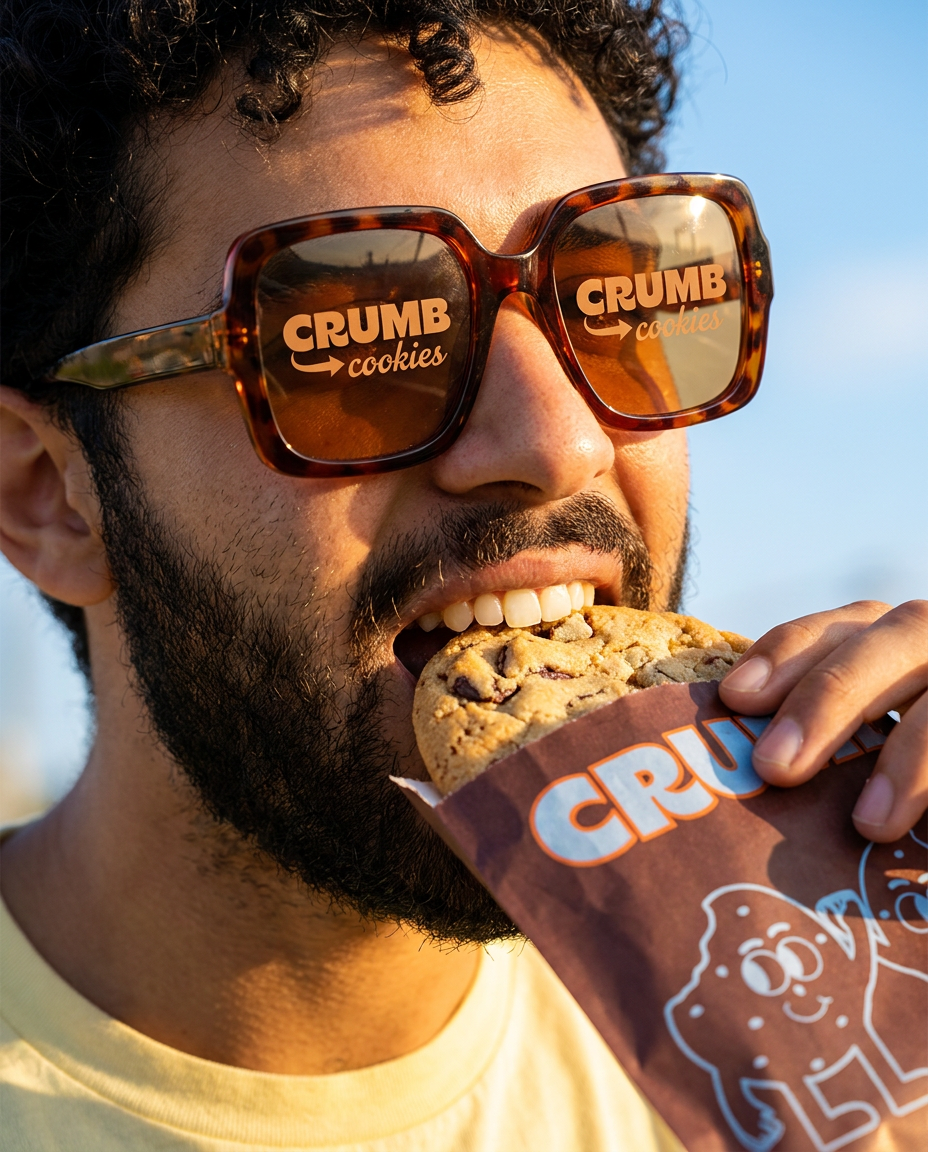
Get those high-impact, tight action shots of people actually enjoying your food brand. It drops your product right into a messy, realistic close-up bite shot that feels like a premium lifestyle campaign instead of a boring studio packshot.
Regenerate using your own assets.
Step 3: Produce an on-brand menu layout with your new visuals
With your Brandkit established and your appetizing visuals ready, assembling the final menu is no longer a chore. Instead of fighting with text boxes in a design tool, you use a template that understands layout and style. MyUP's templates combine your Brandkit and your new images into a cohesive, professional design.
For instance, to create a stylish menu board or a page for daily specials, you can use a layout-focused template. The 'Retro Style Food Advertising Poster' template provides a strong visual structure with a classic print ad feel that can be easily adapted for a menu. It automatically applies your brand colors from the Brandkit and gives you a professionally designed canvas. Template: #myup-1hgd-9oz5
Retro Style Food Advertising Poster
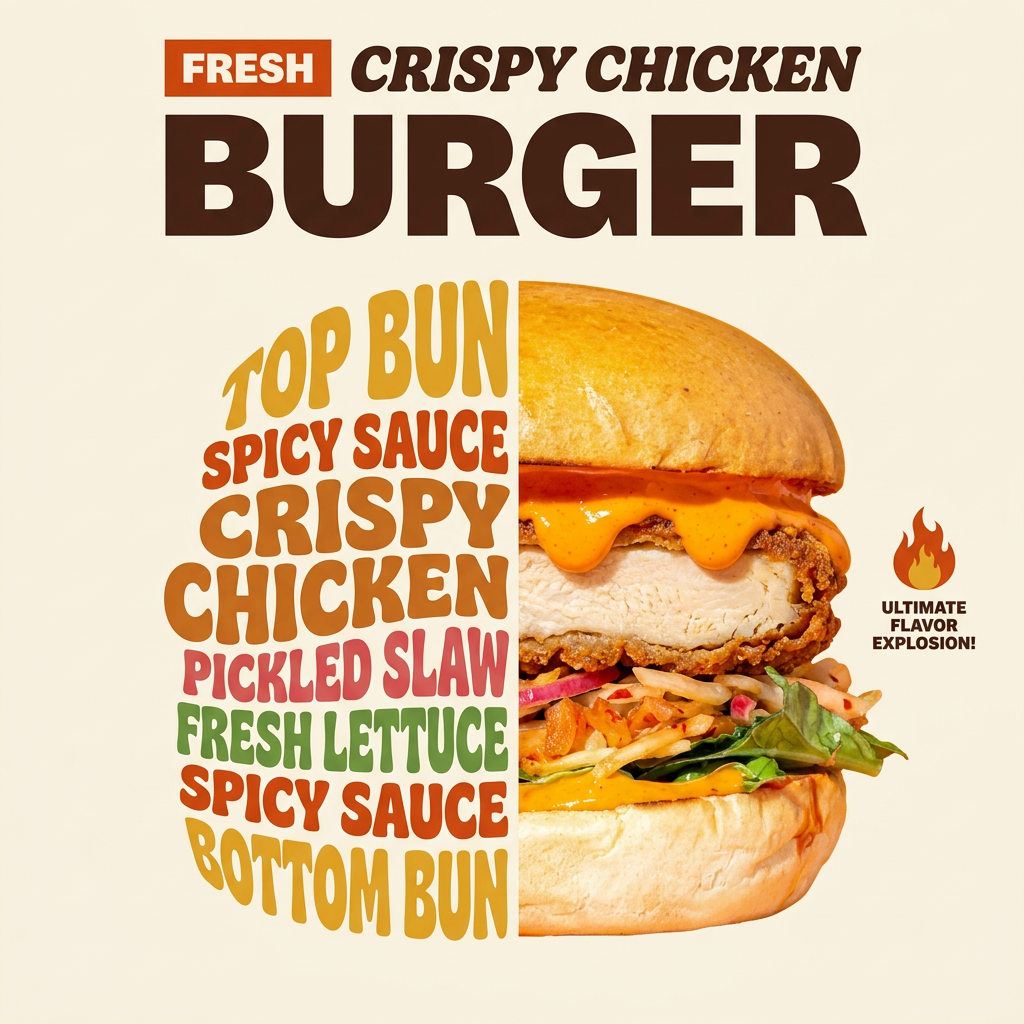
Turn any food product shot into a bold, nostalgic retro advertisement. It drops your item onto a warm cream background and automatically frames it with a color-matched header badge for that classic mid-century print ad look.
Regenerate using your own assets.
Bonus step: Create dynamic social media ads for your dishes
Your new food photos are valuable assets that can do more than just sit on a menu. The power of a creative production platform is the ability to repurpose creations for different channels instantly. You can take the visuals you just made and turn them into high-performing ads for Instagram, TikTok, or Facebook.
For example, take a great shot of your gourmet french fries and create a vertical ad for social media. The 'Vertical Gourmet French Fry Ad' template is specifically designed for this. It reformats your visual into a dynamic, eye-catching ad that’s ready to publish and start attracting customers in seconds. Template: #myup-fts6-4ihp
Vertical Gourmet French Fry Ad
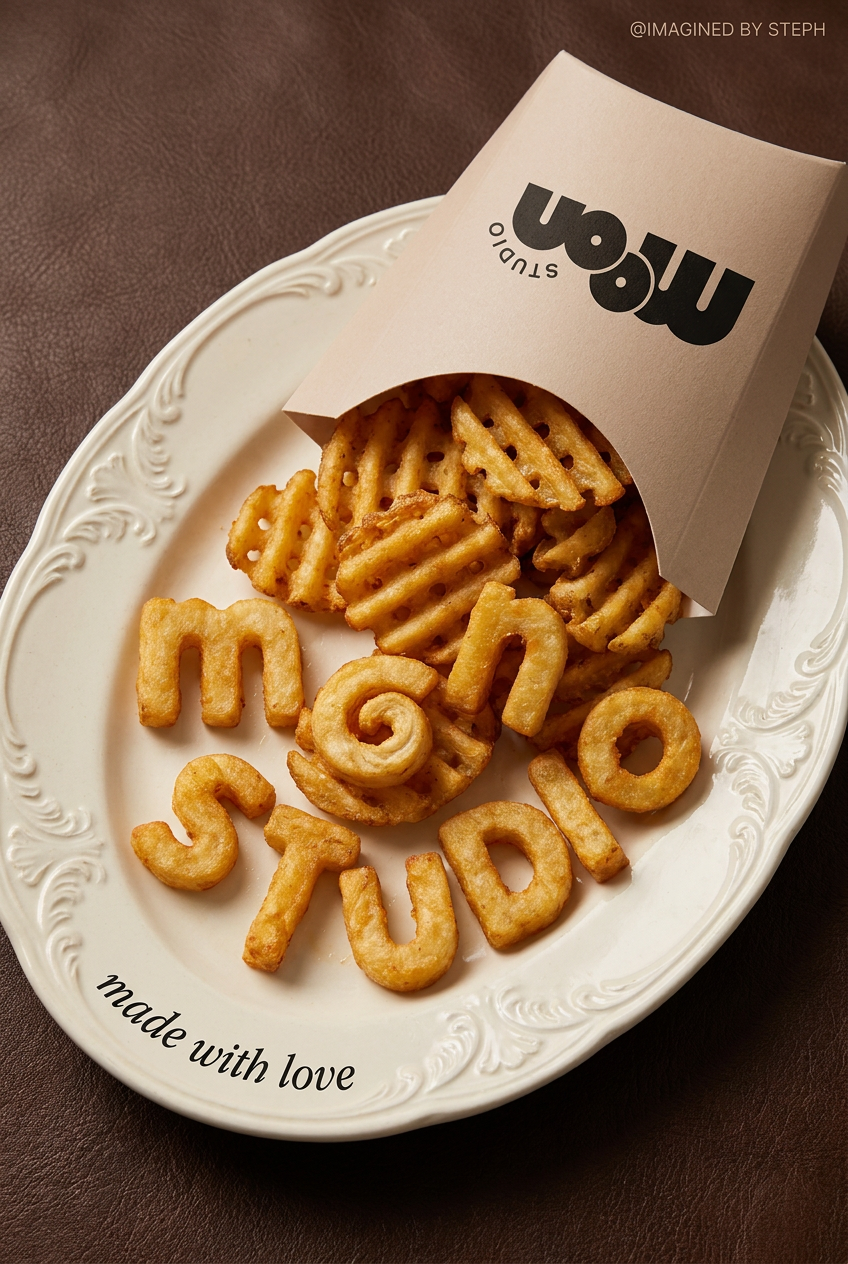
Transform your products into high-fashion editorial ads. This setup uses a dynamic diagonal layout and a slightly tilted overhead angle to give food and packaging incredible depth and texture. It's perfect for giving any brand a chic, premium look.
Regenerate using your own assets.
Stop being a line cook for AI—be the executive chef
Using the right tool for the job is the key to professional results. Claude is a brilliant sous-chef for brainstorming dish descriptions and menu copy. But when it's time to create the final dish—the visual menu that convinces a customer to order—you need an executive chef. MyUP is your creative production platform. It's built to take your intention and your brand's identity and deliver a finished, appetizing creation that drives real business for your restaurant.