Large Language Models (LLMs) like Claude have become indispensable for text generation, ideation, and even drafting complex creative briefs. It's easy to assume that if an AI can describe a visual perfectly, it can also create it. However, the leap from detailed text prompt to a visually consistent, on-brand design is where many creators hit a wall. Claude excels at the 'what' and 'why' of your design, but it isn't a visual designer. To bridge this gap and actually produce high-quality, branded visual content from your Claude-generated ideas, you need a dedicated AI design workflow. This article will show you how to leverage Claude's textual intelligence and combine it with MyUP's visual execution capabilities to create stunning, consistent designs.
The Claude advantage: Structuring your visual ideas
Claude's strength lies in its ability to process complex requests and output structured, detailed text. This makes it an excellent tool for crafting comprehensive creative briefs or refining initial design concepts into actionable prompts. Instead of asking Claude to 'make a social media post about coffee,' prompt it to 'generate a detailed creative brief for a new coffee brand's social media launch campaign, including target audience, key message, visual style (e.g., minimalist, rustic, vibrant), desired color palette, and specific elements for an Instagram carousel ad.'By treating Claude as your strategic ideation partner, you can extract rich, nuanced descriptions that lay a solid foundation for your visual work. For instance, Claude 3.5 Sonnet can provide highly specific details about lighting, camera angles, textures, and emotional tone—all elements critical for a compelling visual. The goal here is to get a text output that is so precise, it leaves little room for ambiguity when you move to the visual generation phase. This structured approach saves significant time in iteration later on, as you're starting with a clear vision.Translating Claude's text into effective visual prompts with MyUP
Once you have a detailed creative brief or refined prompt from Claude, the next step is to translate that textual intelligence into a visual reality. Generic image generators often struggle to maintain consistency or adhere to specific brand guidelines from a raw text input. This is where MyUP.ai steps in. MyUP is designed to take these sophisticated text inputs and convert them into high-quality, on-brand visual assets.You'll input Claude's descriptive text directly into MyUP's AI image generation interface. MyUP's system is built to interpret these detailed prompts, focusing on generating images that align with your specified visual elements, themes, and even the mood described by Claude. The process moves beyond simple 'text-to-image' and becomes 'concept-to-design,' ensuring that the AI understands the underlying creative intent.For example, if Claude provided a prompt for a 'professional product poster for an innovative tech gadget, featuring sleek lines, a futuristic aesthetic, and a subtle glow,' you'd feed that directly into MyUP. MyUP then uses its advanced models to render a visual that matches this description. You can launch a similar workflow to test this immediately: Workflow code: #myup-ysc9-ekcsWorkflow code: #myup-gxue-opd0
Product Post
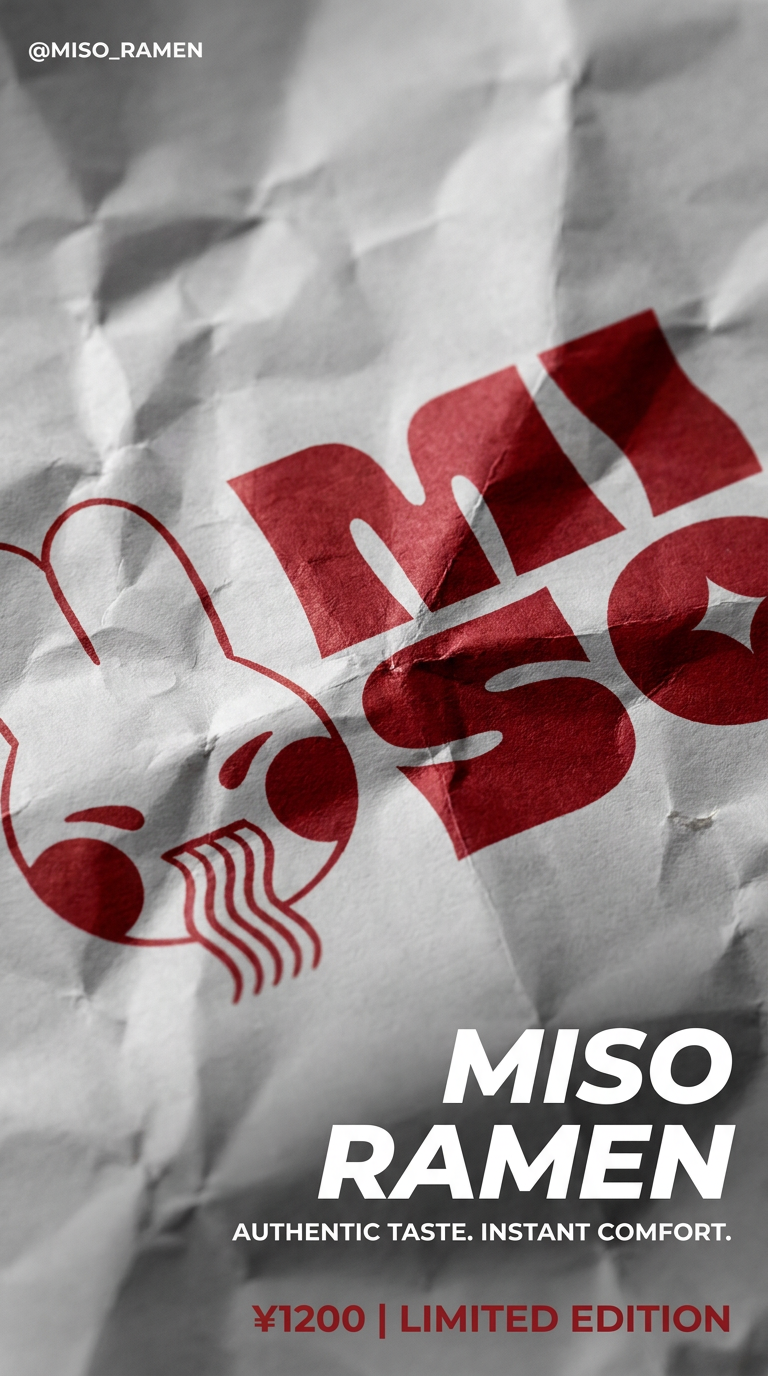
Turn a single product shot into a cohesive six-part Instagram story campaign. It mixes tactile crumpled paper textures with bold, stacked typography and custom mascot spots in your brand's signature colors.
Use for Free
Regenerate using your own assets.
Ensuring brand consistency: MyUP's Brandkit and Claude's input
The biggest challenge in AI design is maintaining visual consistency across multiple assets, especially when starting from varied text prompts. This is where MyUP's Brandkit becomes indispensable. While Claude can describe a brand's aesthetic, it can't enforce it visually. MyUP's Brandkit allows you to define your brand's visual identity—colors, fonts, logo, preferred styles, and even specific image filters—once. This Brandkit is then automatically applied to every visual asset MyUP generates.Imagine Claude has outlined a social media campaign for a new beverage, specifying 'refreshing blue and green tones, a modern sans-serif font, and a playful, energetic vibe.' With MyUP, you don't need to manually adjust each image. Your pre-configured Brandkit ensures that every visual output from MyUP, driven by Claude's prompt, automatically adheres to those blue and green tones, incorporates your brand's logo, and uses the approved fonts. This integration saves countless hours of manual design adjustments and guarantees that your visuals are always on-brand, regardless of the initial prompt's complexity. For creating consistent social media content, try this workflow: Workflow code: #myup-kbgo-tlleAutomating visual content creation from Claude-generated concepts
The true power of this integrated workflow emerges when you need to generate multiple, diverse visual assets from a single overarching concept provided by Claude. Instead of creating one-off images, MyUP allows you to automate the production of entire content series, like social media posts, product ads, or event posters, all while maintaining a cohesive brand identity.Let's say Claude has detailed a concept for a new clothing line launch, specifying various product types and the overall fashion aesthetic. You can then use MyUP's templates and workflows to generate a series of visuals for different platforms—an Instagram story, a Facebook ad, a banner for your website—all based on Claude's input and your Brandkit. MyUP handles the variations in layout, aspect ratio, and composition automatically, ensuring that each piece fits its intended platform while staying true to the brand. This level of automation is crucial for scaling content production efficiently.To generate on-brand visuals for a specific product category like apparel, consider this workflow: Workflow code: #myup-3sro-edbt. For event promotions with a distinct aesthetic, use: Workflow code: #myup-xbur-hzoi. You can explore more options to design custom social media templates with AI for rapid, on-brand content. This ensures a consistent brand presence across all your channels, transforming Claude's text-based ideas into a vibrant visual reality.Iterate and refine: Human control over AI-generated designs
While AI accelerates content production, human oversight remains critical. MyUP is built with this philosophy, ensuring that you—the creator—always have the final say. After MyUP generates initial visual concepts based on Claude's prompts and your Brandkit, you can review, approve, and make precise adjustments. This isn't a 'set it and forget it' system; it's a partnership where MyUP handles the heavy lifting of production, and you guide the creative direction.If a specific element in an AI-generated image isn't quite right, or if you want to experiment with a slight variation in composition or color intensity, MyUP provides intuitive editing tools. You can fine-tune details, swap out elements, or adjust overall aesthetics to ensure the final output perfectly aligns with your creative vision and brand standards. This iterative process allows you to leverage AI's speed without sacrificing creative control or quality, ensuring that every visual asset resonates with your audience and brand.Transforming text ideas into branded visual reality with MyUP
Claude is an exceptional tool for generating detailed creative concepts and prompts, providing the intellectual blueprint for your visual content. However, to move from text to a tangible, on-brand visual asset, you need a powerful execution platform. MyUP.ai bridges this critical gap, taking Claude's intelligent output and transforming it into consistent, high-quality designs.By integrating Claude's ideation with MyUP's Brandkit and automated workflows, you gain an efficient, scalable solution for all your visual content needs. Whether you're creating social media posts, product advertisements, or any other branded visual, MyUP ensures consistency, quality, and speed, all while keeping you in control of the creative process. Ready to turn your detailed Claude prompts into stunning, on-brand visuals? Try MyUP today and streamline your AI design workflow.Tags: