The promise and peril of the 'character sheet' prompt
You’ve spent hours with Claude, crafting the perfect brand mascot. You finally get an image that’s exactly right: the determined expression, the specific shade of blue in their jacket, the subtle scar above their left eye. You save it, thrilled. Then you try to generate a new image of them for a different ad—sitting at a desk, walking in a city—and they’re gone. A stranger with a vaguely similar description looks back at you. The jacket is now navy, the scar has vanished, and the face is completely different.
If this sounds familiar, you’re not alone. As of early September 2026, marketers and creators are flocking to blogs and Reddit threads, sharing complex “character sheet” prompts. This technique involves feeding Claude a massive, hyper-detailed text file describing every conceivable attribute of a character, hoping to force consistency. It’s a valiant effort born from a real need, but for professional marketing, it’s a creative lottery you can’t afford to play.
Why text-only methods for character consistency are a dead end
The core issue isn't the quality of your prompt; it's the nature of the tool. A large language model like Claude is a text interpretation engine, not a visual database. It has no persistent memory of the face it generated a moment ago. Each time you submit a prompt, it starts from scratch, re-interpreting your words. Even with a perfect character sheet, it’s still guessing at the visual execution. This leads to what we call “visual drift.”
- It can't see: Claude doesn't “see” the previous image. It only sees your text description. Minor variations in its interpretation of words like “wavy hair” or “kind eyes” result in entirely different people.
- It's a statistical lottery: The model generates the most statistically likely image based on your text. Your character's unique face is not a statistical probability; it’s a specific identity. Relying on text alone means you're hoping to win the same lottery twice.
- It's inefficient for campaigns: For a brand, a character isn’t a one-off creation; it's a reusable asset. Wasting time and budget re-rolling generations until you get something “close enough” isn’t a viable production process. You need reliability, not randomness.
This is why even the most detailed prompts eventually fail. You're trying to solve a visual lock-in problem with a text-only tool. It’s like giving a novelist a blueprint and asking them to rebuild the exact same house every time, using only words.
A production-ready method: from character brief to campaign asset
A professional creative process separates concept from production. Instead of fighting your tools, you need to use them for their intended strengths. Here is a practical, two-step method that delivers reliable, campaign-ready characters every time.
Step 1: Use Claude for the Character Brief (The 'Who')
This is where Claude excels. Use it to write a rich, narrative biography for your character. Don't focus on hyper-specific visual minutiae. Instead, define their identity:
- What is their backstory and motivation?
- What are their core personality traits (e.g., optimistic, world-weary, adventurous)?
- What is their role in your brand's story?
This brief will guide your creative vision. From this, generate a single, definitive reference image of your character. This one image will become your visual source of truth.
Step 2: Use MyUP to Lock In the Visual Identity (The 'What')
MyUP is the Creative Production Platform that turns your intention into a finished creation. Instead of relying on text, MyUP uses your reference image to create a visual lock. You’re no longer describing the character; you're providing their exact face and body as a direct input.
For this crucial step, you can use a dedicated creative template. For instance, the Consistent Character Face And Body Replacer is designed to capture a person's exact likeness from a photo and apply it to a new composition. Template: #myup-2gbp-wc6s
Consistent Character Face And Body Replacer
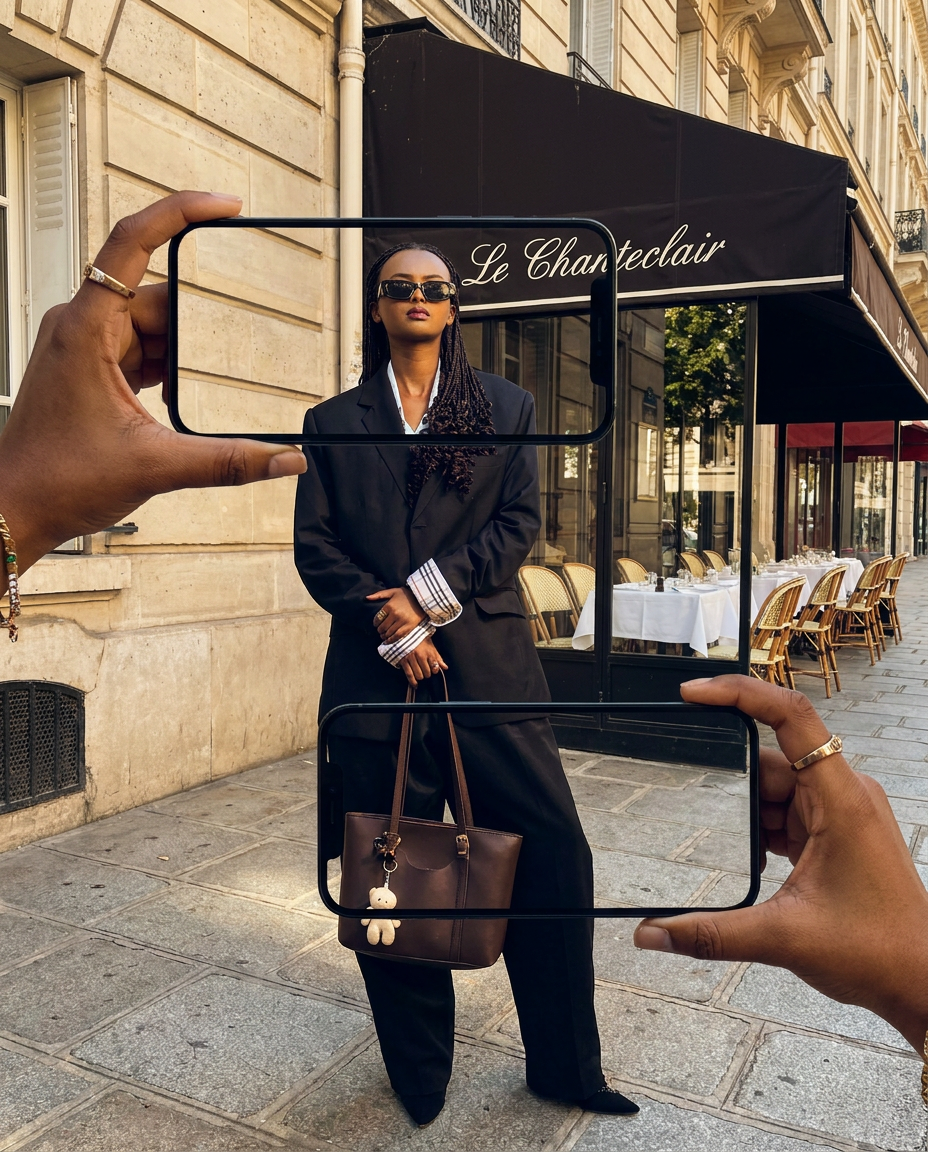
Capture the exact likeness of any person with incredible precision. This system maps every unique facial feature, skin tone, and hair texture onto your chosen subject, ensuring their physical appearance remains completely consistent across any pose or setting you decide to put them in.
Regenerate using your own assets.
With this approach, the character's identity is no longer a random outcome of a text prompt. It's a locked, reusable asset.
Putting it to the test: deploying your character in multiple scenes
Now that you have your character visually locked, you can deploy them across your entire campaign with 100% consistency. This is where a production platform moves beyond simple generation. You're not just creating images; you're directing your character in different scenes.
Imagine your brand mascot, Anya, needs to appear in three different ads: one working at a laptop in a modern office, one hiking in a forest, and one enjoying coffee in a cafe. With a text-only method, this would be three separate, high-risk gambles. With MyUP, it's a simple, repeatable production step.
Using your locked reference image of Anya, you can use a creative template designed for this exact purpose. The Consistent Character Face Swap Tool allows you to take a reference face and place it onto a new character in a different setting, preserving the identity completely.
Template: #myup-i83a-ze2t
Consistent Character Face Swap Tool

Lock in a subject's exact likeness and physical traits across any new scene. It maps every facial feature and body detail perfectly, keeping the person consistent no matter where you place them. Just drop in your photo and let the system handle the rest.
Regenerate using your own assets.
You simply provide the reference of Anya and describe the new scene: “A woman at a desk in a sunlit office.” MyUP handles the complex production of integrating her exact face and features into the new environment, maintaining perfect consistency across all three ads. Your team gets finished assets, not a folder of near-misses.
Beyond photorealism: applying new styles without losing identity
True creative control means being able to adapt your brand assets to different contexts without losing their core identity. What if you want to use your photorealistic mascot in a playful, animated social media campaign? With text-based prompting, you'd have to start over and hope the model interprets “claymation style” in a way that resembles your character. The result is almost always a completely new character.
A production platform solves this by separating identity from style. Because you have a locked visual reference of your character, you can apply new artistic treatments while preserving their likeness. It’s the difference between asking for “a clay model of a woman with brown hair” and saying “render *this specific person* as a clay model.”
MyUP has creative templates built for exactly this intention. For example, you can take your photorealistic character reference and run it through the D Clay Style Character Portrait template to instantly transform them into a charming 3D clay figure, ready for a more lighthearted campaign. Their unique facial structure and expression remain, even as the style changes completely.
Template: #myup-79ca-rzwg
D Clay Style Character Portrait

Transform any portrait into a charming, clay-modeled 3D character with soft, rounded features. It adds a playful plasticine texture and warm, vibrant lighting to your subjects while keeping their unique expressions intact.
Regenerate using your own assets.
This is a level of control that's simply impossible when your only tool is a text prompt. It allows you to build a versatile brand asset that can evolve with your marketing needs.
From a single face to a full campaign: a one-click example
The ultimate goal for any brand is scalability. Once you have your character, you need to produce a high volume of quality assets efficiently. Imagine you need a suite of professional headshots of your brand's AI-generated spokesperson for a press kit, website, and LinkedIn profiles. Each one needs to be perfectly consistent but with subtle variations in expression or lighting.
This is the final proof of a production-ready system. You take your single source-of-truth reference photo and use a high-fidelity template to generate an entire campaign's worth of visuals in minutes. The High Fidelity AI Face Swap Portrait template is engineered for this level of precision, mapping every detail from skin texture to hair parting with absolute accuracy.
Template: #myup-yppq-8dxq
High Fidelity AI Face Swap Portrait

Capture every nuance of your subject's physical presence with absolute precision. This system maps skin texture, hair density, and muscle definition directly from your reference, creating a hyper-realistic digital twin that maintains the character's exact physiognomy and scale in any new environment you choose.
Regenerate using your own assets.
Instead of wrestling with prompts for hours, you define your intention—“I need 10 professional portraits of this person”—and MyUP executes the production. This is the shift from being an AI operator to a creative director. Your vision is the input; the finished, consistent assets are the output.
MyUP Template : #myup-wacj-tk4g
High Fidelity AI Face Swap Portrait
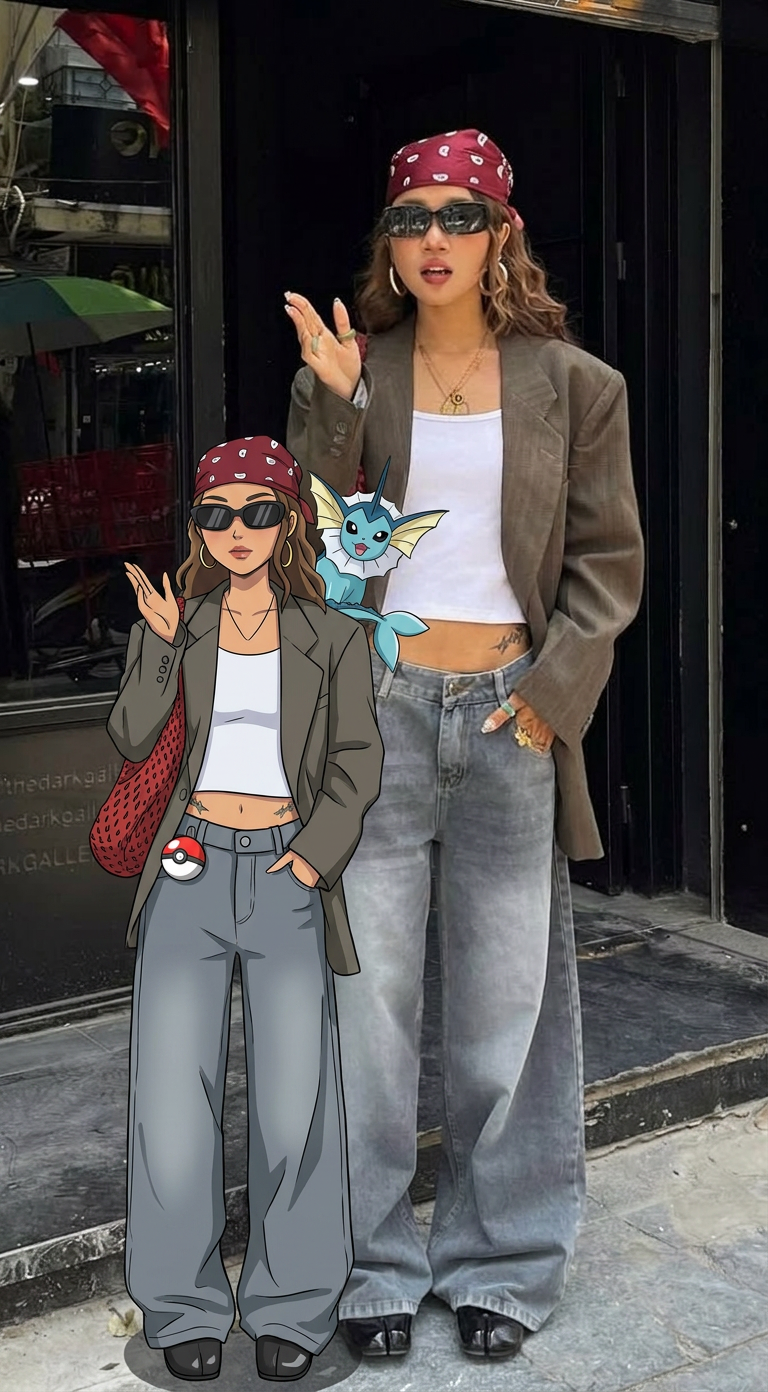
Capture every nuance of a subject's appearance with pixel-perfect precision. This system maps distinct facial features, skin tones, and physical textures onto your chosen target, ensuring your output keeps the exact likeness and character of the original person every single time.
Regenerate using your own assets.
Stop prompting, start producing: your character is a reusable asset
A brand character is more than a prompt; it's a valuable asset. Relying on the lottery of text-to-image generation for your brand's identity is not a strategy—it's a liability. The endless tweaking of 'character sheet' prompts is a symptom of using a conversational tool for a professional production task.
Use Claude for its narrative power to breathe life into your character's story. But when it's time to bring them to life visually, you need a production platform. MyUP provides the essential layer of control, consistency, and scalability required for professional marketing. By locking in your character's visual identity, you can stop generating strangers and start building a brand icon you can deploy with confidence in any campaign. Your intention is to create a consistent character; MyUP is how you produce that finished result.