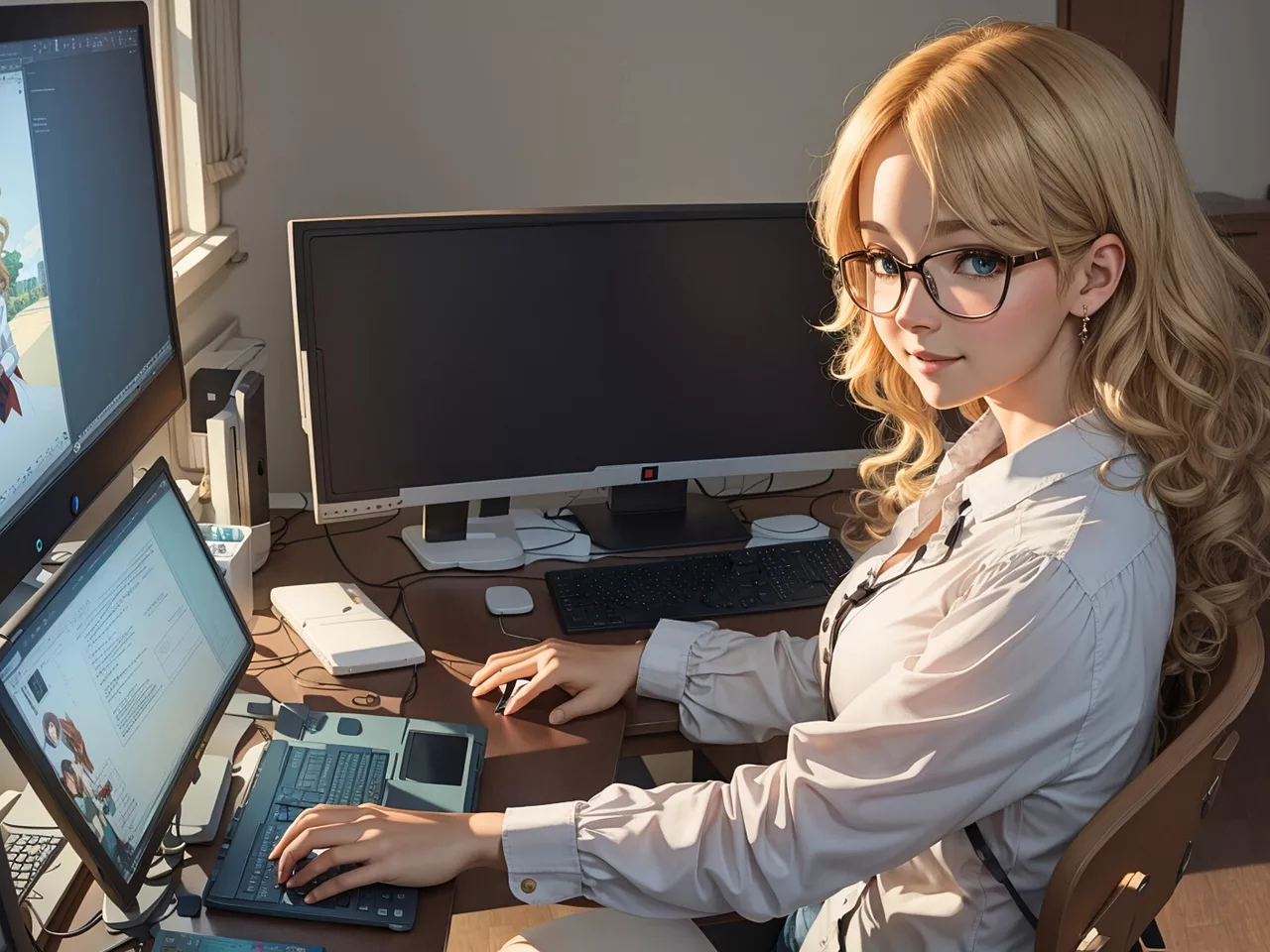
Yesterday, June 25, 2026, Stability AI released Stable Diffusion 3.5, and the creative corners of the internet lit up with examples of its improved text generation. For anyone who has tried to make an event poster with AI, this felt like a breakthrough. Finally, legible words on an image, straight from a prompt.
But as the initial excitement settles, a familiar frustration is setting in. You generate a poster for your summer festival, and while the text says "Summer Fest," it’s in a generic sans-serif, awkwardly placed, and completely disconnected from your brand's vibe. The image is cool, but the result isn't a poster. It’s an illustration with some words on it. This is the 'so close, yet so far' feeling that plagues every creator trying to use AI for real-world design tasks.
The promise and the problem: why new AI models still can't design your poster
The core of the problem is a misunderstanding of the tool. Models like Stable Diffusion 3.5, Midjourney, and Ideogram are becoming phenomenal illustrators. They can render text pixels accurately. But they are not graphic designers. They don't understand typography, visual hierarchy, kerning, or layout. They can't apply your specific brand font, use your exact hex code for color, or place your logo in the top-right corner.
Legible text is not the same as effective typography. A professional poster uses type to convey a mood, guide the viewer's eye, and reinforce a brand identity. An AI model simply renders a word as a visual element, often with strange spacing and no sense of design principles. This is why your AI-generated posters look amateurish, even when the underlying image is stunning. You get a technically correct but creatively soulless result that isn’t ready to be printed or posted.
The right tool for the job: AI as an illustrator, not a designer
The secret to creating professional posters with AI isn't a better prompt. It's a better workflow. At MyUP, we see AI-generated images as powerful ingredients, not finished assets. The reliable, repeatable way to get on-brand results is to separate the task into two distinct steps:
- Illustration: Use an AI image generator to create the core visual or background for your poster. This is where you leverage the creative power of models like SD 3.5.
- Design: Use a design system to apply your brand's typography, logo, colors, and layout on top of the generated visual. This is where you take control.
This two-step process, executed on a single platform like MyUP, gives you the best of both worlds: unique, AI-powered visuals and complete brand control. The AI executes the image creation; you validate and finalize the design.
Step 1: Generate your poster's core visual in MyUP
The first step happens right inside MyUP's AI image generator. The key here is to prompt for an image that serves as a strong foundation for your design. This often means creating a visual with intentional negative space where your text will live. Instead of asking for a finished poster, you ask for the background of one.
For example, instead of prompting: "Poster for a jazz festival called 'City Nocturne' on August 15th at The Blue Note..."
Try prompting for the visual ingredient: "A moody, atmospheric photo of a saxophone under a single spotlight on a dark stage, film noir style, with empty space on the right side for text."
This gives you a unique, high-quality image that's perfectly composed to receive your titles, dates, and branding. You get a custom illustration without the design constraints of a single-prompt generation.
Step 2: Apply on-brand typography and layout with a Brandkit workflow
This is where MyUP transforms your AI-generated ingredient into a finished asset. Once you have your background image, you use a MyUP workflow. This workflow is connected to your Brandkit—a saved profile of your company's specific fonts, colors, and logos.
The workflow isn't just a simple text-on-image tool. It's a repeatable design system. It automatically pulls your correct brand font (e.g., 'Montserrat Bold'), applies your primary brand color, and places the text in a professionally designed layout. You simply provide the event details, and the workflow handles the design execution. You then have the final say to approve or adjust the result.
For example, a business announcing a job opening can generate a professional office background and then apply a clean, corporate layout for the text. The result is a polished, on-brand hiring announcement, not a generic AI image. You can do this right now with the Modern Hiring Poster workflow.
Workflow code: #myup-eiob-7tbc
Modern Hiring Poster
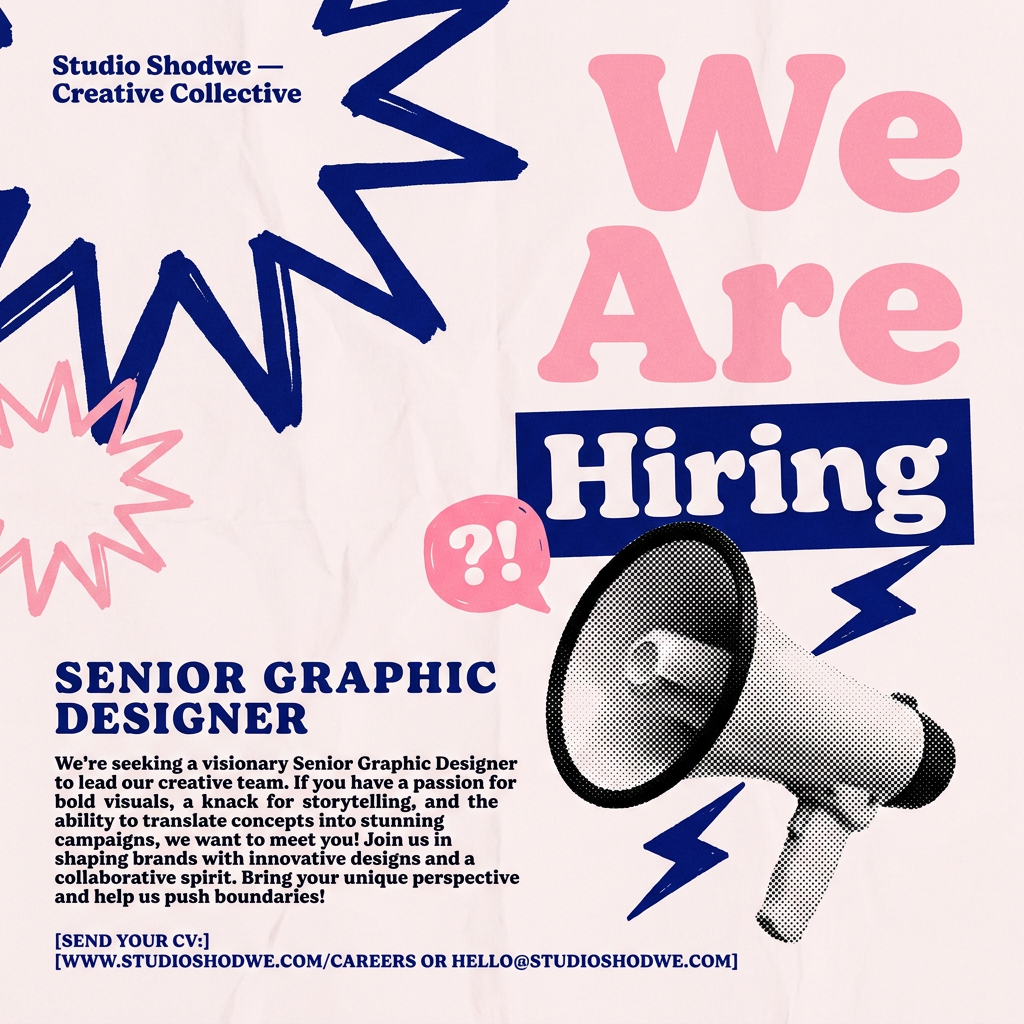
Turn your open roles into stylish social announcements. It sets your hiring details against a soft, textured paper background with clean, editorial typography. Perfect for giving your brand a polished, modern look when you're looking to hire.
Regenerate using your own assets.
Poster workflows you can use right now
The beauty of a workflow is that it can be adapted to any style while maintaining brand consistency. In MyUP, you can choose from various poster workflows to match the aesthetic you need. Here are a few examples you can launch immediately.
For a bold, retro look
If your event has a high-energy, vintage vibe, a simple text overlay won't cut it. This workflow combines your generated background with bold, pre-set typography and color schemes that evoke a classic retro feel, all while pulling from your Brandkit's core elements.
Workflow code: #myup-xbur-hzoi
Bold Retro Yellow Event Poster
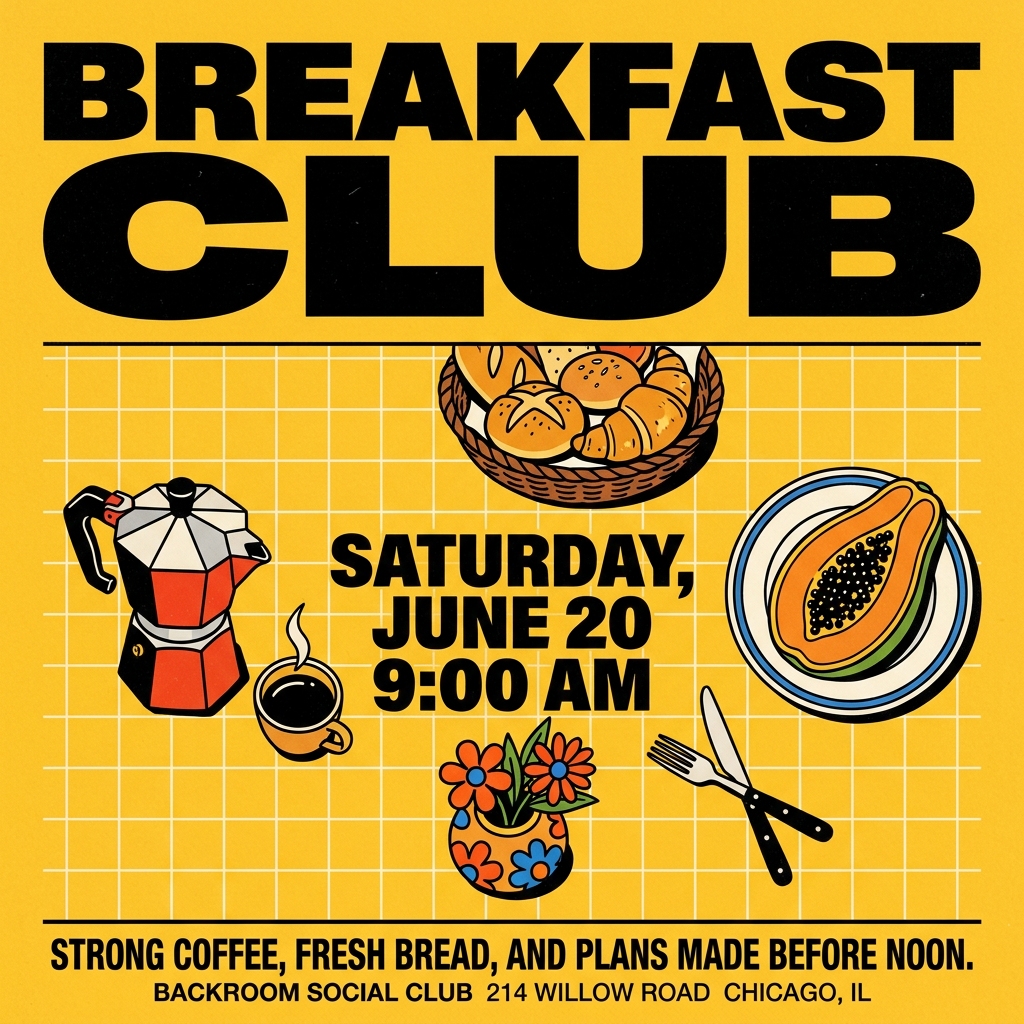
Turn your branding or event details into bold, nostalgic posters. It blends vibrant warm backdrops with a clean, retro square grid pattern to make any announcement look like a classic piece of mid-century graphic design.
Regenerate using your own assets.
For an indie, zine aesthetic
Need something with a bit more edge? The zine-style workflow applies a cut-and-paste, collage-like design to your image. It’s perfect for music gigs, art shows, or any event that needs to feel less corporate and more grassroots. The layout is handled for you, ensuring a cool, cohesive look every time.
Workflow code: #myup-msop-hlxf
Retro Zine Style Event Poster
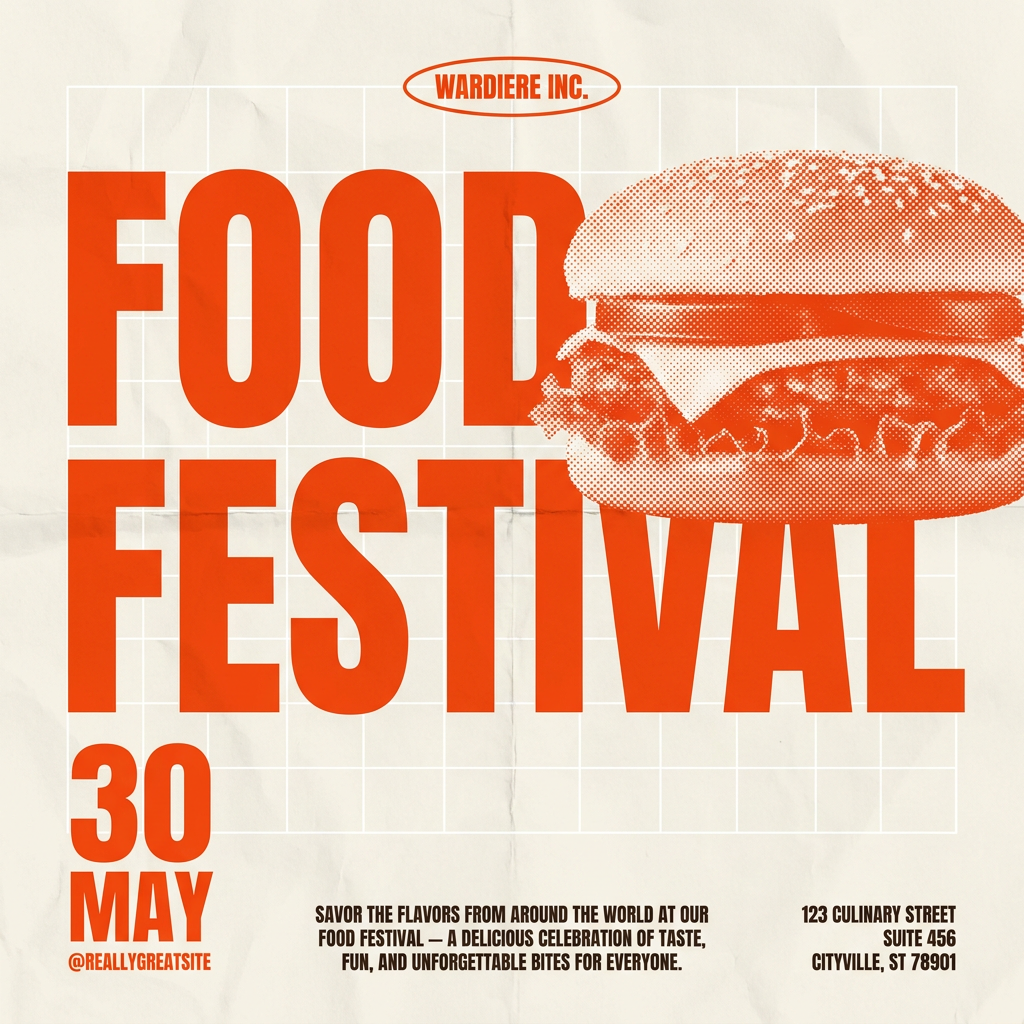
Give your social posts a gritty, analog zine aesthetic. It layers a crumpled paper texture and a subtle grid over a warm cream background to make any event graphic look like a tactile, photocopied flyer. Perfect for DIY gigs and bold promos.
Regenerate using your own assets.
For a vintage, textured feel
This workflow is designed to create posters with a tactile, printed quality. It uses textures and typography reminiscent of old-school risograph printing. Generate a simple graphic or photo, and this workflow will transform it into a piece that feels like a handcrafted print, perfect for markets, workshops, and festivals.
Workflow code: #myup-3xus-3l9x
Vintage Risograph Event Poster
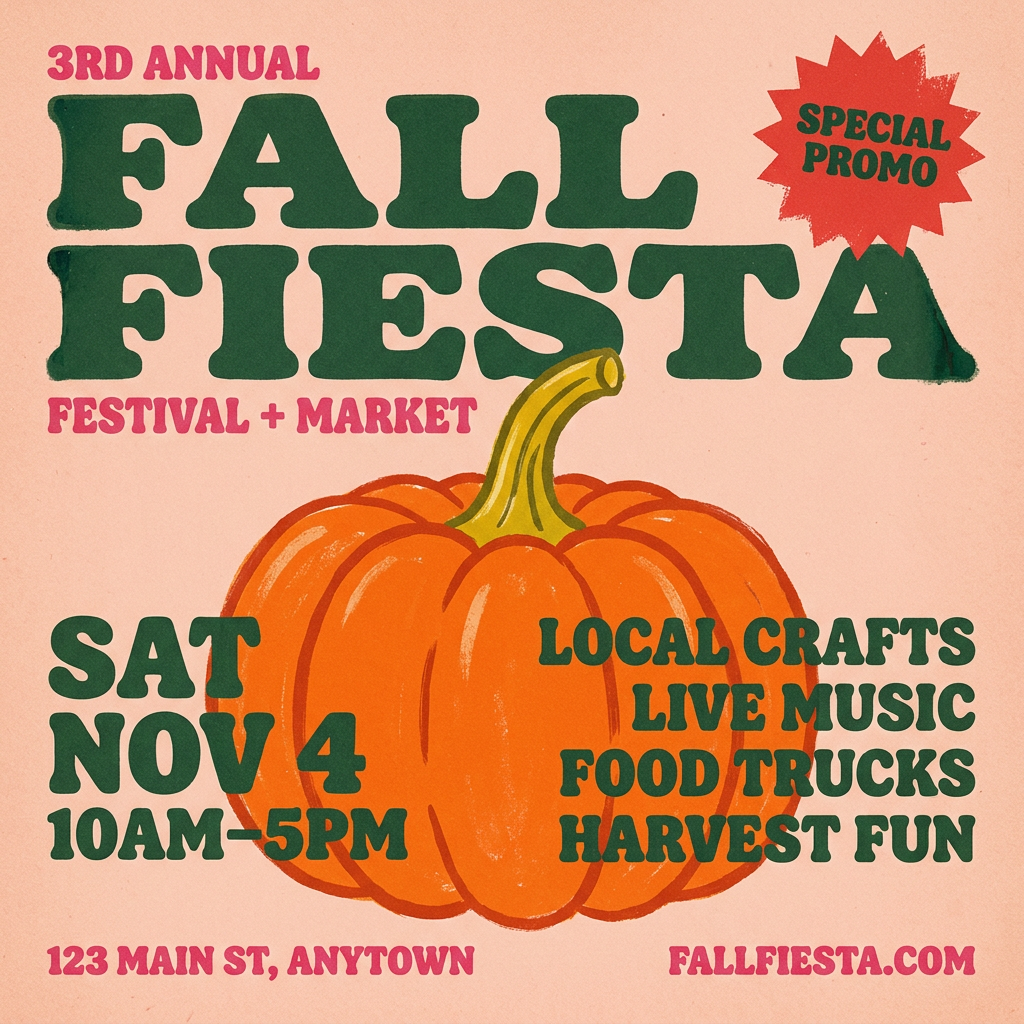
Turn any announcement into a gritty, tactile gig poster. It layers your text with an uneven letterpress ink texture over a dusty, warm pink risograph paper background. It’s perfect for giving social posts a real analog, screenprinted vibe.
Regenerate using your own assets.
An AI image is an ingredient, not a final asset
The arrival of better text generation in models like Stable Diffusion 3.5 is a fantastic development for creators. It makes AI an even more powerful tool for illustration and visual brainstorming. But it doesn't replace the principles of good design. Forcing a single prompt to create a finished poster will always lead to compromise and off-brand results.
The professional approach is to use a workflow that separates illustration from design. Generate your core visual with the creative freedom of AI, then apply your precise brand identity using a structured system like MyUP's Brandkit and workflows. This is how you move from generating interesting images to producing effective, on-brand creative assets, every single time. Stop wrestling with prompts and start building with a workflow.