
You need a thumbnail that grabs attention. You have the perfect emotion in mind—'thoughtful curiosity,' 'quiet confidence,' 'playful surprise.' You write a detailed prompt for your AI generator, and the result is… not quite right. The expression is too extreme, the eyes are vacant, or 'surprise' looks more like sheer terror. It's a common frustration that leaves your visuals stuck in the uncanny valley.
If you're tired of fighting with prompts to get the subtle emotions you need, you're not alone. The problem isn't your prompting skill; it's the method. This guide explains why basic prompts fail for emotional nuance and presents a production-focused approach to get the exact feeling you want, every time.
That's not 'surprise', that's a horror movie: why your emotional prompts fail
You’ve been there. You need a thumbnail for your new video, a key visual for an ad campaign. The concept is clear in your head: a face showing thoughtful curiosity. You type into your AI image generator: “photo of a woman looking curious.” The result is a person with a vacant, slightly confused expression. You try again, adding more detail: “cinematic close-up, woman with a subtle, curious expression, wondering about something.” Now she looks alarmed.
This is the frustrating reality for creators trying to evoke specific, nuanced emotions with AI. You ask for 'joy' and get an unnervingly wide smile. You ask for 'surprise' and get a face straight out of a horror film. Basic prompting treats emotion like a switch, flipping it to 100% intensity and creating exaggerated, often unusable caricatures. The AI isn't capturing the feeling; it's mimicking a keyword, and the result falls deep into the uncanny valley.
The creator's dilemma: the hard way to control AI emotions
To escape this, the most dedicated creators are forced to become AI technicians. They spend hours on forums learning complex prompting techniques like adding weights to emotional terms (e.g., `(curious:1.2), (thoughtful:0.8)`), hoping to balance the AI's interpretation. Others dive into node-based tools like ComfyUI, building intricate visual programs and training custom models called LoRAs just to get a consistent, subtle expression.
This technical arms race is powerful, but it's not a practical solution for a marketer, a brand owner, or a video creator who simply needs a finished, professional asset. Your job is to connect with an audience, not to wrestle with sliders and code. You shouldn't have to become an AI engineer to get a thumbnail that doesn't look like a low-budget sci-fi character.
The production method: from intention to finished emotional impact
The solution isn't to become a better prompter. It's to use a platform that understands your creative intention from the start. With MyUP, you don't describe pixels; you state your goal. Instead of trying to explain 'elegance' to an AI with a dozen keywords, you declare your intention: “I want a luxury commercial visual for my product.”
MyUP is the Creative Production Platform that translates your intention into a finished result. It uses creative templates—production systems built by top creators—that already contain the visual DNA for specific moods and emotions. You provide the vision and the key inputs (like your product or subject), and MyUP handles the entire technical production, from lighting and composition to camera angles and color grading, to deliver a studio-quality creation that matches your desired emotional tone.
Case study 1: creating 'elegance' and 'luxury' for a brand
Imagine you're launching a new perfume. Your goal is to create visuals that feel sophisticated, elegant, and desirable. Trying to prompt for this might result in generic, clichéd images of perfume bottles. The intention is lost in translation.
On MyUP, you simply state your goal and use a template designed for this exact purpose. It understands the visual language of luxury—the soft focus, the golden hour lighting, the slow, deliberate camera moves. It knows how to make a product feel iconic. By using a production template, you bypass the guesswork and go straight to the finished creation.
Template: #myup-mvtk-dmtt (Luxury Perfume Brand Commercial Video) instantly applies a cinematic, high-end aesthetic to your product, turning a simple photo into the star of a polished commercial.
Luxury Perfume Brand Commercial Video
Capture a cinematic glow that makes any subject look like a brand icon. This process blends a sharp, low-angle still with a fluid motion sequence to turn your product into the star of a golden hour commercial.
Regenerate using your own assets.
Case study 2: generating 'tension' and 'suspense' for cinematic content
Now consider a different creative need: a thumbnail for a historical documentary or a thriller short film. The required emotion is tension, suspense, and a sense of scale. Prompting for “a tense scene” is too vague and likely to produce confusing or generic results. The emotion of suspense is built through specific visual cues: low-angle shots to create dominance, atmospheric elements like fog, and a color palette that feels ominous.
A specialized MyUP template has this cinematic knowledge built-in. It doesn't just generate an image; it directs a scene. It understands how to build a narrative through visuals, creating a finished piece that communicates the intended mood instantly.
Template: #myup-e4ti-dcrw (Cinematic Trojan Horse Siege Short Film) is designed to create that feeling of suspense and scale, perfect for content that needs to feel epic and foreboding.
Cinematic Trojan Horse Siege Short Film
Build high-tension cinematic sequences that shift from massive exterior monuments to claustrophobic interior details. It tracks subtle movements like shifting shadows and creeping fog to weave a suspenseful narrative, perfect for turning any static subject into a gripping, atmospheric story that unfolds through tight, gritty visual perspectives.
Regenerate using your own assets.
Case study 3: capturing 'raw intensity' for a fashion shoot
What about an emotion that is more grounded and subtle, like the raw intensity of a high-fashion editorial? You don't want over-the-top drama, but a focused, powerful mood. This is another area where basic prompting fails, often confusing 'intense' with 'angry' or 'aggressive'. The goal is a controlled, hyperrealistic aesthetic that highlights a subject or garment.
This requires a production process that controls the entire composition—posing, camera angle, and lighting—to achieve a specific feeling. For example, a high-angle shot can create a unique, grounded intensity that feels authentic and modern. MyUP templates can enforce these specific art direction choices automatically.
Template: #myup-lkxt-mwbw (Hyperrealistic High Angle Fashion Editorial) uses a distinct high-angle composition and focused lighting to generate visuals with a raw, intense fashion aesthetic, delivering a finished result that feels deliberate and professional.
Hyperrealistic High Angle Fashion Editorial
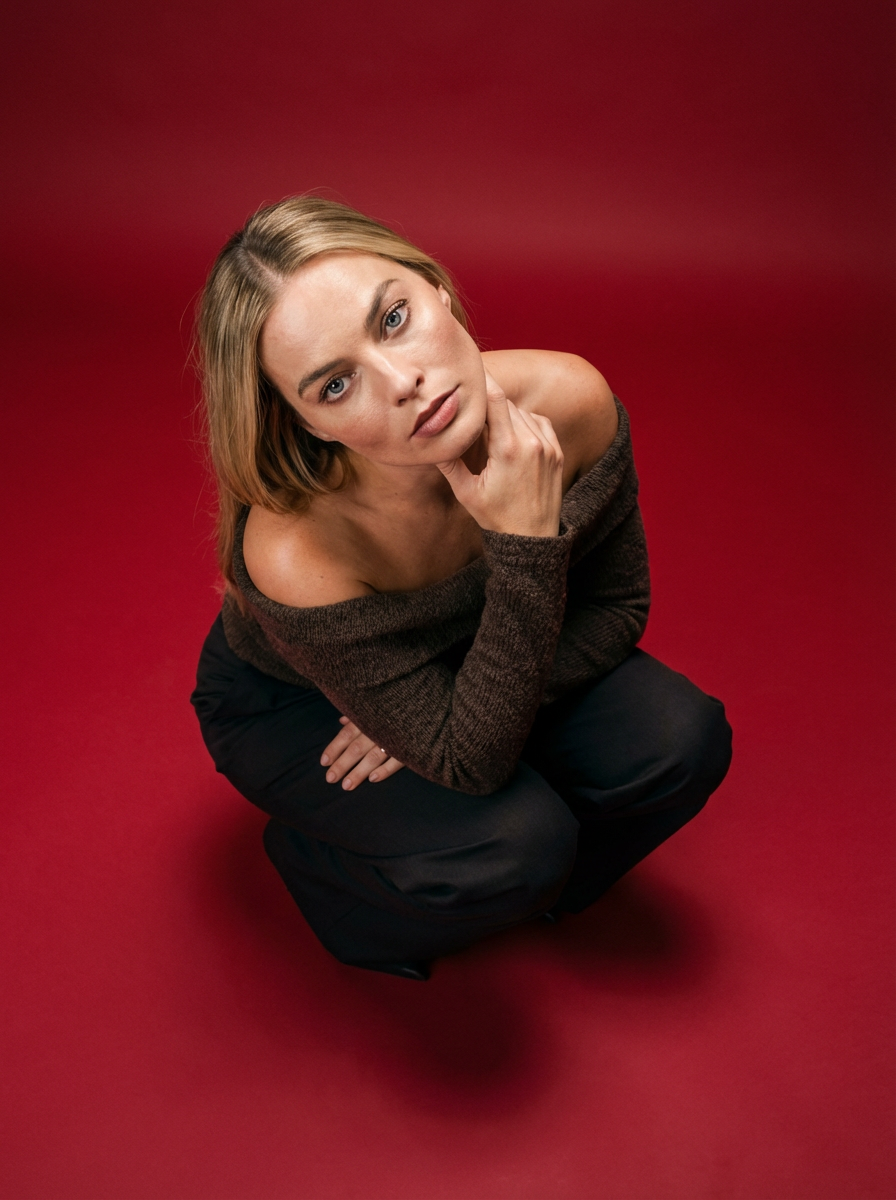
Frame your subject in a grounded, high-angle editorial style. This setup forces a compact, kneeling pose that brings out a raw and hyperrealistic fashion aesthetic, perfect for making any garment or accessory look sharp and intentional.
Regenerate using your own assets.
Beyond one image: achieving emotional consistency with your Brandkit
Getting the perfect emotion in one thumbnail is a win. But what about the next ten thumbnails for your video series or ad campaign? Maintaining emotional consistency is critical for building a recognizable brand identity. This is where prompting becomes a nightmare of trying to replicate random success.
MyUP solves this with the Brandkit. Once you've established your brand's visual identity—its colors, fonts, logo, and overall style—MyUP applies it automatically to every creation. This ensures that whether you're generating a visual for 'elegance' or 'intensity', it always feels like it comes from *your* brand. The emotional tone remains consistent, creating a cohesive and professional presence across all your content. You can explore this further in our guide to mastering consistent AI thumbnails.
Stop prompting, start producing
The struggle to get the right emotion from AI isn't a failure of your creative vision; it's a limitation of the tools. The future of creative production isn't about becoming a master psychologist for an AI model. It's about having a partner that understands your intention and handles the complex execution for you.
With MyUP, you can finally move from wrestling with prompts to directing finished creations. Define the feeling you want to evoke, and let the platform deliver the professional, emotionally resonant visuals your content deserves. Start producing on MyUP today and turn your unimaginable ideas into possible creations.