We’ve all been there. You have a clear vision for a visual, but the AI gives you something… close. So you tweak the prompt. Again. And again. Fifty generations later, you have the one. It’s a familiar part of the creative process, but a report published just last week has attached a new, invisible price tag to those 49 discarded images: a significant carbon cost.
A study from the research group 'Green AI' published on June 27, 2026, quantified for the first time the energy consumption of iterative generation. It turns out, our trial-and-error workflow is a form of creative waste with a real environmental footprint. The conversation is no longer just about what we create, but how much energy we burn to get there.
The hidden energy bill of your creative workflow
Why does generating a single JPEG file require so much power? Each time you hit 'generate,' you’re not just making a picture; you're running a complex computational process on power-hungry servers in a data center. Think of it less like opening a file and more like tasking a supercomputer to run a billion tiny calculations to render a unique result from scratch. When you do that 50 times, you’ve racked up a considerable energy bill.
For a long time, this cost was abstract. But as AI becomes a daily utility for creators, its collective energy use is becoming a serious industry-wide concern. The problem isn't the final, perfect image. It's the inefficient journey we take to find it.
Efficiency is the new frontier: Better models, better workflows
The good news is that the industry is tackling this problem head-on. We're seeing the rise of hyper-efficient models, like the technology behind Un-0, which promise to cut the energy cost of generation by orders of magnitude. This is a critical step forward, allowing for things like real-time creative iteration without a massive power draw.
But a more efficient model is only half of the solution. The other, more immediate lever you can pull is adopting a more efficient workflow. The most sustainable creative process is the one that gets you to a final, on-brand asset with the fewest wasted steps. This isn't about limiting your creativity; it's about channeling it through a smarter system that minimizes random-guess generations.
How to cut creative waste with a Brandkit
The biggest source of waste in AI generation is starting from a blank canvas every single time. You spend the first ten, twenty, or even thirty prompts just teaching the AI your brand's unwritten rules: the right shade of blue, the specific photographic style, the negative space you prefer, the mood of your typography.
This is where a platform built for workflows, not just one-off generations, makes a tangible difference. On MyUP.ai, you start by building a Brandkit. You input your brand's URL, and MyUP automatically extracts your colors, fonts, logo, and overall style. This Brandkit is then automatically applied to every asset you create. It eliminates the entire trial-and-error phase of establishing your identity. Instead of teaching a generic AI your brand from scratch, you're starting with an AI that already knows your visual language. This focus on a repeatable system is the key to ensuring your AI designs have consistency while drastically cutting down on discarded attempts.
Generate a minimalist ad poster with almost zero waste
Let's make this practical. You need a clean, elegant poster for a new product. Instead of prompting from zero—'a minimalist ad for a skincare bottle, soft lighting, pastel background, elegant font'—and iterating endlessly on the composition, you can use a structured workflow.
A MyUP workflow acts as a smart template. It pre-defines the structure, style, and goal of the asset, leaving you to simply provide the specific product details. You get 90% of the way to a finished design on the very first try because the creative heavy lifting is already done. The user validates the result, and MyUP handles the production. For a task like this, the 'Minimalist Elegant Product Advertising Poster' workflow is the direct, low-waste solution.
Workflow code: #myup-fy77-jljs
Minimalist Elegant Product Advertising Poster
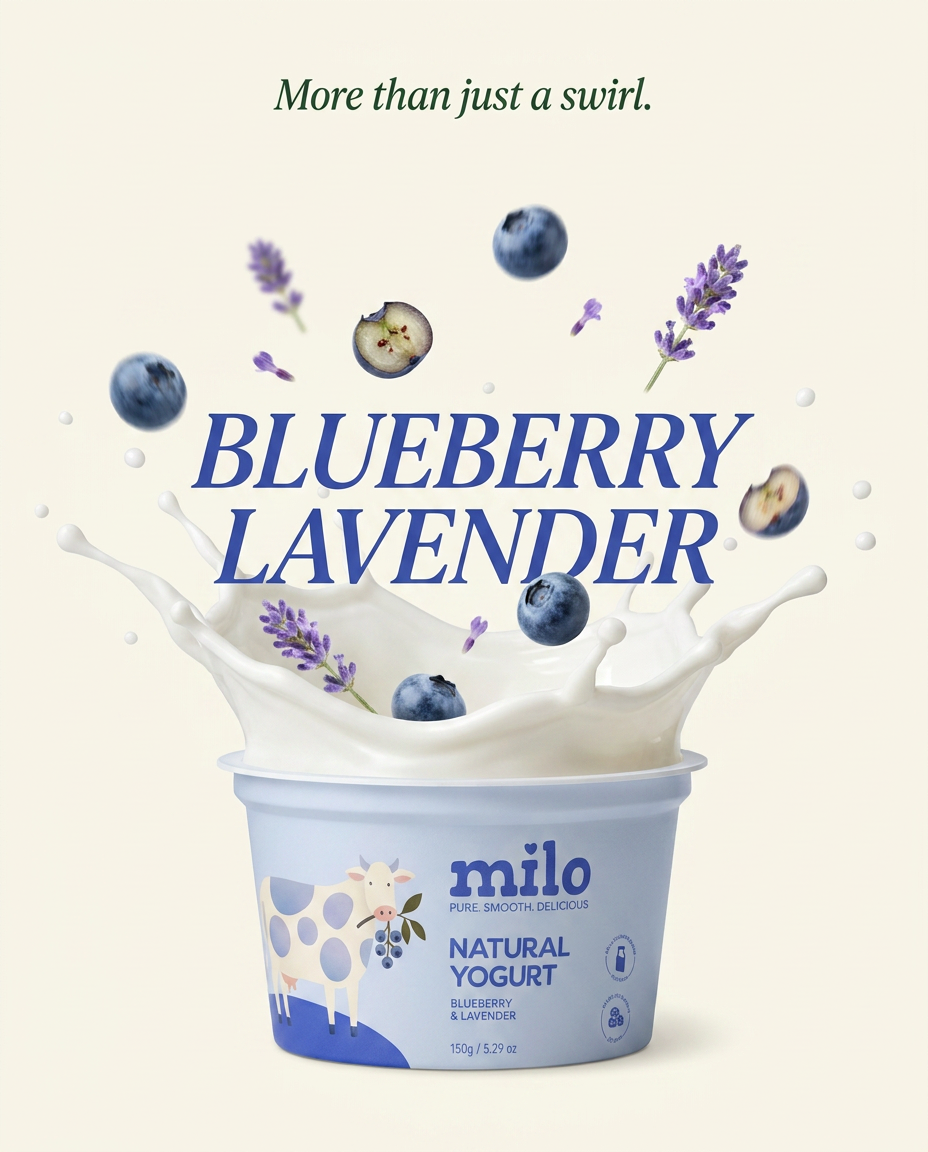
Turn any product shot into a high-end editorial ad. It places your item against a soft cream background with airy spacing and adds elegant, small serif typography at the top. Great for wellness or luxury brands wanting a calm, minimal aesthetic.
Regenerate using your own assets.
The sustainable workflow for professional product shots
The same principle applies to e-commerce and product marketing. Creating a suite of ten product photos that all feel consistent in their lighting, angle, and propping is an enormous source of generative waste. Trying to replicate a successful result with a new prompt is notoriously difficult.
A workflow-driven approach solves this. By using a dedicated template for product visuals, you lock in the core components of the scene. Every generation adheres to the same professional standard because it's built on the same foundation. You're not hoping for consistency; you're engineering it. This cuts the number of required generations from hundreds down to a handful, saving time and energy.
To create a high-end, studio-quality product visual without the iterative guesswork, use this MyUP workflow.
Workflow code: #myup-ysc9-ekcs
Professional Product Poster
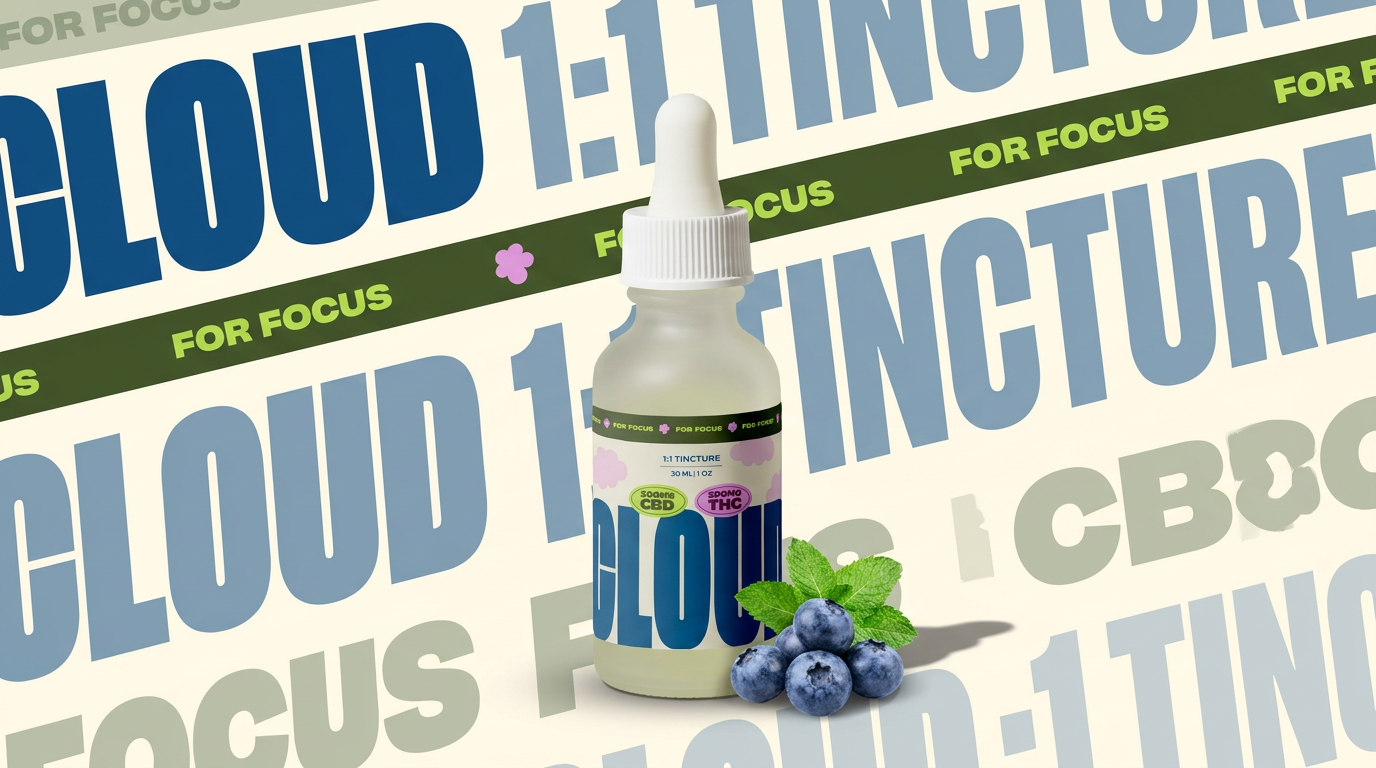
Turn any product shot into a clean, graphic landscape poster. It automatically pulls the text from your packaging to create a massive, semi-transparent repeated background pattern behind your item. Great for modern, typography-heavy brand showcases.
Regenerate using your own assets.
Create with power, not with waste
Creating with a conscience doesn't mean using less powerful tools or lowering your creative standards. It means being more deliberate. It's about shifting from a process of random discovery to one of intentional creation. By choosing a workflow that prioritizes consistency and repeatability, you inherently choose a workflow that is more sustainable.
MyUP is built on this philosophy. By using a Brandkit to establish your identity once and using structured workflows to execute specific tasks, you dramatically reduce the creative waste—and the associated energy cost—of your design process. It's a more professional, more efficient, and ultimately more responsible way to create.